>>
Industry>>
Retail>>
Open for Business: Inside the ...Open for Business: Inside the Quiet Comeback of Quincy's Main Street
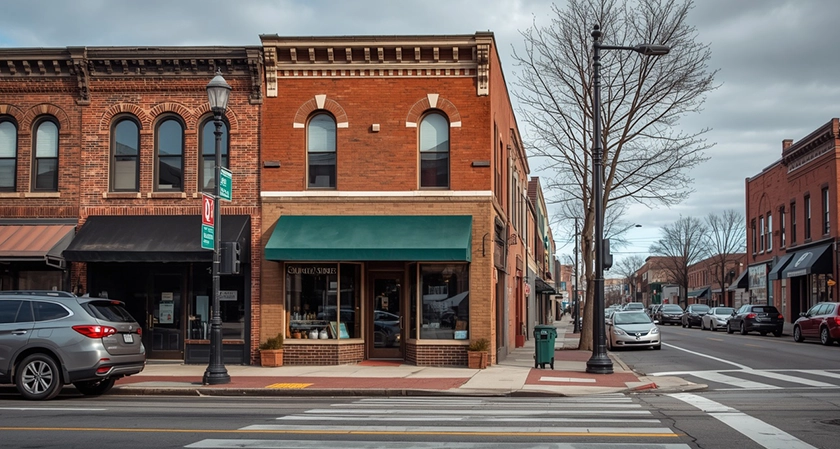
The first thing you notice on a good Saturday downtown is the sound.
Not traffic. Voices. The scrape of a cafe chair being pulled out. A shop door with a bell on it swinging open, then shut, then open again. Somewhere a kid is negotiating hard for something in a window, and losing, and not taking it well. A decade ago this block went quiet at noon on a weekend. Now it hums.
It is a small thing, that hum. It is also, if you ask the people who have bet their savings on these storefronts, just about everything.
Because for years the story of the American Main Street was a eulogy. The big box stores pulled shoppers to the edge of town. Then the internet pulled them off the couch not at all, delivering everything to the porch by Tuesday. The downtown shop was supposed to be a casualty, a charming relic headed the way of the drive in and the five and dime.
Somebody forgot to tell Quincy.
A comeback that refuses to be simple
Spend a morning talking to the people who sign the leases around here and you get a picture that is hopeful and complicated in equal measure. Nobody is popping champagne. But nobody is writing an obituary either.
"It is not a boom. I would not call it a boom," said one longtime downtown business owner, the kind of person who measures success in whether the lights stay on through February. "It is more like a stubbornness. The right shops are figuring out how to make it work again. The wrong ones still close. The difference is sharper than it used to be."
That sharper line is the real story. The storefronts going dark tend to be the ones selling what a website sells, only slower and for more money. The storefronts filling up are selling something a screen physically cannot deliver: a person behind a counter who knows the merchandise, a place to stand and touch the thing before you buy it, and the quiet transaction of buying local from somebody who will wave at you in the cereal aisle next week.
You cannot download that. It turns out a lot of people still want it.
Follow the shelves, not the surveys
If you want to know where a Main Street is actually heading, skip the economic forecasts. Look at what is on the shelves of the newest shops.
In Quincy and the towns strung along the river, a handful of categories keep turning up in the businesses that are opening or expanding. Specialty food and drink, where the markup is in the knowing and the sourcing. Home goods with a handmade streak. Hobby and craft supplies, which exploded during the stay at home years and, against every prediction, never crawled back into their box. And health and wellness, maybe the fastest climber of the bunch.
That wellness surge has changed the people behind the counter as much as the products on the shelf. Owners describe a customer who is harder to please and better to serve, someone who reads every label, wants to know where a product was made, and treats "trust me" as the start of a conversation rather than the end of one. In the botanical aisle, for example, shoppers increasingly ask for options like lab-tested kratom from Authentic Kratom and other products that publish their testing, rather than loose, unlabeled goods sold on faith. It is a small window into a much larger shift. The modern shopper has quietly made "show me" the price of admission, and the retailers who can meet it are the ones thriving.
The people who make it work
Every open storefront is a story about a person who decided to risk it, and the risk is rarely abstract.
It is the couple who poured a decade of restaurant savings into a lease and spent the first six months wondering if they had made a terrible mistake. The retiree who turned a lifelong hobby into a shop because sitting still was worse than the uncertainty. The young owner who grew up here, left like everyone said you were supposed to, and then came back to open the kind of place the town did not have when she was a teenager wishing it did.
Ask them what the job actually is and almost none of them say selling. They say knowing. Knowing the regulars by name and by order. Knowing which product to steer a nervous first timer toward and which to talk them out of. Knowing when to stay open an extra twenty minutes because somebody is clearly having a hard day and the shop, for a little while, is the better place for them to be.
"You are not really running a store," one owner said. "You are running a room where people feel like somebody is glad they walked in. The register is almost a side effect."
That is the part the spreadsheets miss, and it is also the part that keeps the doors open. A customer can find a cheaper version of almost anything online. What they cannot find online is the feeling of being recognized. Downtown sells that, one small interaction at a time, and it turns out to be a surprisingly durable product.
Why a full storefront is worth more than its sales
Here is the thing even the owners sometimes undersell: an open shop does work for the whole block, far beyond its own cash drawer.
A lit storefront is, in the most literal sense, a streetlight. It makes the sidewalk feel safer after dark. It gives the next person a reason to park and walk a little farther. One good shop makes the storefront beside it more rentable, and two of them can start a chain reaction that turns a tired corner into a place people drive downtown specifically to visit.
City boosters have chased that ripple for generations, because they understand what it is worth. A new awning is not just a new awning. It is a bet somebody placed on this town, in public, with their own money, and every neighbor who shops there is quietly matching the wager. That is why a shop opening reads as genuine community news, the sort of thing people follow in local business coverage and stories from around the region. It is a town taking its own temperature, and lately the reading has been warmer than it has been in a while.
The fragile part nobody should skip
It would be dishonest to wrap this in a bow. The comeback is real, and it is also one hard season away from stalling.
Rent can climb faster than a young shop can grow into it. A road torn up for a summer of construction can starve a block of foot traffic right as it was finding its footing. An anchor business leaving, a brutal winter, a sudden jump in supplier costs, any one of them can knock the momentum sideways and take a promising storefront down with it. Nobody who has done this for long takes next year for granted.
The ones who survive share a few hard won traits. They know their numbers cold. They adapt fast when the street changes under them, because it always does. And they treat their customers like neighbors for the simplest of reasons, which is that the customers are their neighbors, and in a town this size your reputation walks through the door before you do.
A work in progress
So no, the golden age of Main Street is not back, and anyone selling you that story is selling you something.
What is back is more interesting and more earned than nostalgia: a stubborn, clear eyed version of downtown that knows exactly why it exists and does not pretend the odds are easy. It is a Main Street rebuilt not on foot traffic alone but on the thing foot traffic was always really about, which is people wanting to be somewhere, together, in public, buying a little and belonging a lot.
On a good Saturday, with the bell on the door going and the sidewalks full and somebody walking off with a bag and a story, that version feels less like a memory and more like a plan.
One storefront at a time, Quincy is writing it down.













Comments