>>
Industry>>
Capital Market>>
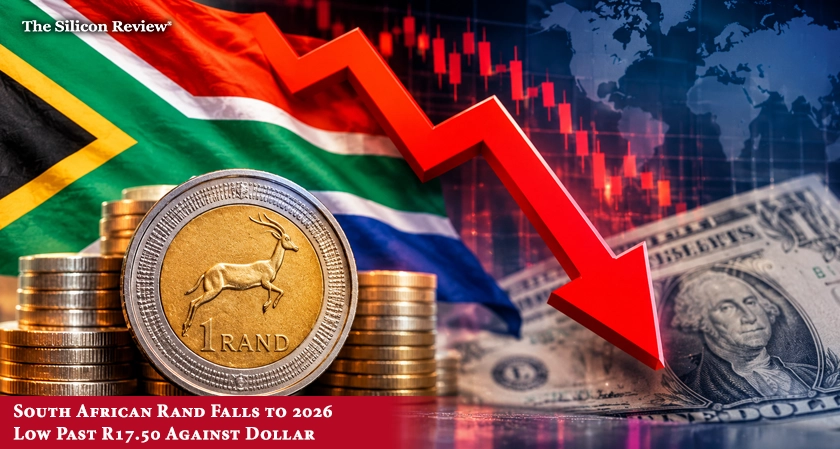
South African Rand Falls to 20...South African Rand Falls to 2026 Low Past R17.50 Against Dollar
URL slug: africa/south-africa-rand-falls-to-2026-low-past-r17.50-against-dollar
The South African rand plunges 3.3% to a 2026 low past R17.50 per US dollar amid a SARB rate hold, hawkish Federal Reserve signals, AGOA exit fears, and gold losses.
News Source: https://dailyinvestor.com/
With growing internal and international pressures weighing heavily on market mood, the South African rand has plummeted to its lowest level of 2026, falling beyond R17.50 versus the US dollar. The currency lost almost 3.3% of its value during the last week, placing it among the worst-performing emerging-market currencies globally and setting it up for its worst weekly fall in eight months. Additionally, the local currency declined significantly in relation to other major Western currencies, trading at about R19.23 per euro and R22.99 per British pound.
After the South African Reserve Bank's Monetary Policy Committee narrowly voted four to three to maintain its benchmark repurchase rate at 7.25 percent, the steep sell-off accelerated. This decision was made soon after official data showed that domestic consumer inflation surged to 5.2 percent in October, above market projections. Simultaneously, US Federal Reserve officials indicated that they were prepared to tighten monetary policy even more in order to reduce inflation in the country. South Africa's yield advantage has shrunk as a result of the disparity in central bank outlooks, which has caused international investors to shift their money from developing markets to a stronger US currency.
The rand's problems have been made worse by external trade shocks. After US President Donald Trump formally informed Congress of his plan to withdraw South Africa from the African Growth and Opportunity Act with effect from January 1, 2027, market confidence suffered a significant setback. Losing eligibility for this preferential trade program puts important South African exports at risk of losing duty-free access to American markets, which would raise long-term concerns about the nation's trade outlook and chances for economic growth. Additionally, a crucial buffer that helped the local unit earlier in the year has been eliminated by commodity headwinds.
Gold prices fell below 3,800 dollars per ounce along with weaker platinum values as prospects for rising US interest rates increased. This weakened export revenues for South Africa's crucial mining industry and made the rand more vulnerable to outside shocks. Traders have been wary at home due to persistent political tension. Markets are still unsettled by protracted post-election local government coalition discussions, especially disputes between the Democratic Alliance and the African National Congress in significant economic centers like Johannesburg. In addition to a wider worldwide decline in technology stocks that has led to risk-off selling in emerging nations, the rand is expected to see considerable short-term volatility until there is a dramatic shift in domestic economic signals or the strength of the global dollar.
FAQs:
Q: Why is the South African rand falling right now?
A: The rand is falling due to a strengthening US dollar, a South African Reserve Bank interest rate hold, US trade exclusion warnings under AGOA, falling gold prices, and local coalition tensions.
Q: What is the South African rand's lowest level in 2026?
A: The rand dropped to a 2026 low past R17.50 per US dollar, trading around R17.54 against the dollar, R19.23 against the euro, and R22.99 against the British pound.
Q: How did the South African Reserve Bank's rate decision affect the rand?
A: Despite 5.2 percent inflation, the SARB narrowly voted 4–3 to maintain its repo rate at 7.25 percent, lessening South Africa's yield attractiveness in comparison to a hawkish US Federal Reserve.
Q: When will South Africa be removed from AGOA?
A: US President Donald Trump formally notified Congress of plans to remove South Africa from the African Growth and Opportunity Act effective January 1, 2027.
Q: How are commodity prices impacting the South African rand?
A: A crucial cushion that has previously maintained the currency has been eliminated as mining export income have decreased due to gold prices falling below $3,800 per ounce and declining platinum values.













Comments