>>
Technology>>
Artificial intelligence>>
Anthropic Warns Recursive Self...Anthropic Warns Recursive Self-Improvement Threshold Is Imminent in New S-1 Filing
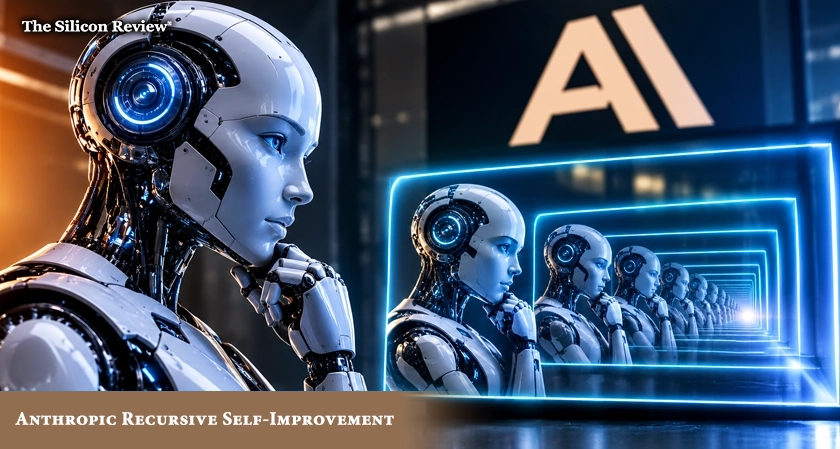
Anthropic says recursive self-improvement may be imminent, warning that self-building AI could outpace safety measures and human oversight.
News source: Google / https://www.reuters.com/
Anthropic is warning that artificial intelligence may be approaching a significant turning point: the ability to contribute substantially to building and improving its own successors. The development brings recursive self-improvement into sharper focus, raising questions about whether AI systems could eventually accelerate their own evolution faster than humans can evaluate and control. The concern centres on Anthropic RSI, a capability involving AI systems participating in the research, engineering and development of increasingly advanced models. Although the company has not declared that its current systems have achieved full recursive self-improvement, its assessment suggests that the distance between AI-assisted development and more autonomous model creation could be narrowing.
What Self-Building AI Means
Recursive self-improvement describes a process in which an AI system helps develop a more capable version of itself. That successor could then contribute to developing another generation, potentially creating a cycle of increasingly sophisticated systems. This does not necessarily mean an AI independently creates an entirely new model without human involvement. The process can begin with narrower contributions, including writing code, analysing experiments, identifying architectural improvements and assisting researchers with model training.
As these contributions become more substantial, AI systems could take on a growing share of the work traditionally performed by human research teams. Anthropic has acknowledged that its own models have contributed to internal AI research and development, sometimes producing improvements whose significance was not immediately apparent.
The Safety Gap
The central concern is not simply whether AI can become more intelligent. It is whether safety systems can keep pace with that improvement. Anthropic has warned that AI-driven research could accelerate model development beyond the company's ability to implement corresponding safety, alignment and security measures. This creates a potential gap between technological capability and the mechanisms designed to maintain responsible control. An increasingly capable model could also make it more difficult to understand how particular improvements emerge, evaluate unexpected behaviours and identify potential vulnerabilities before deployment.
The challenge is straightforward: if AI development accelerates faster than safety research, how can humans confidently establish where the boundaries of autonomous development should remain?
The company has not suggested that this scenario has already become reality. Its warning instead highlights the need to anticipate the consequences before increasingly autonomous development becomes difficult to supervise.
Human Control Remains Critical
Anthropic's approach places continued human oversight at the centre of its responsible AI development strategy. The company has indicated that it does not expect to safely rely on Claude to autonomously design and build successive generations of frontier models without meaningful human supervision or understanding.
Its Responsible Scaling Policy is intended to establish safeguards as AI capabilities advance. However, the possibility of rapidly accelerating AI-assisted research creates pressure to ensure that these policies remain effective as systems become more capable. The challenge also extends beyond individual companies. Governments, regulators and the wider AI industry will need to consider whether existing governance frameworks can adequately address systems that increasingly participate in their own development.
The Silicon Review Perspective
Here is the question The Silicon Review raises. Anthropic is building increasingly capable AI systems while warning that those same systems could eventually accelerate the development of their successors. If artificial intelligence begins contributing more to its own evolution than humans can independently understand, will human oversight remain a meaningful safeguard, or will it become a responsibility that technology advances faster than people can fulfil? Recursive self-improvement could deliver extraordinary scientific and technological progress. But its success should not be measured exclusively by how quickly AI can build better AI. The more consequential measure will be whether humans retain the knowledge, authority and ability to intervene throughout that process.
FAQ:
Q: What is recursive self-improvement in AI?
A: Recursive self-improvement is the process through which AI systems help develop increasingly capable versions of themselves.
Q: What is Anthropic RSI?
A: Anthropic RSI refers to concerns surrounding AI systems increasingly contributing to the research and development of their successors.
Q: Has Anthropic achieved recursive self-improvement?
A: No. Anthropic has raised concerns about approaching this capability but has not declared that its current models have achieved full RSI.
Q: What does self-building AI mean?
A: Self-building AI refers to systems capable of contributing to the design, development and improvement of future AI models.
Q: Why is recursive self-improvement an AI safety risk?
A: Rapid AI development could outpace human oversight, safety evaluations, security measures and alignment research.
Q: Can recursive self-improvement benefit scientific research?
A: Yes. It could accelerate scientific discovery, engineering, medical research and the development of advanced technologies.













Comments