>>
Industry>>
Oil and gas>>
Energy Permitting Bill Heads t...Energy Permitting Bill Heads to Senate Floor as Whitehouse Promises Amendment Votes Next Week
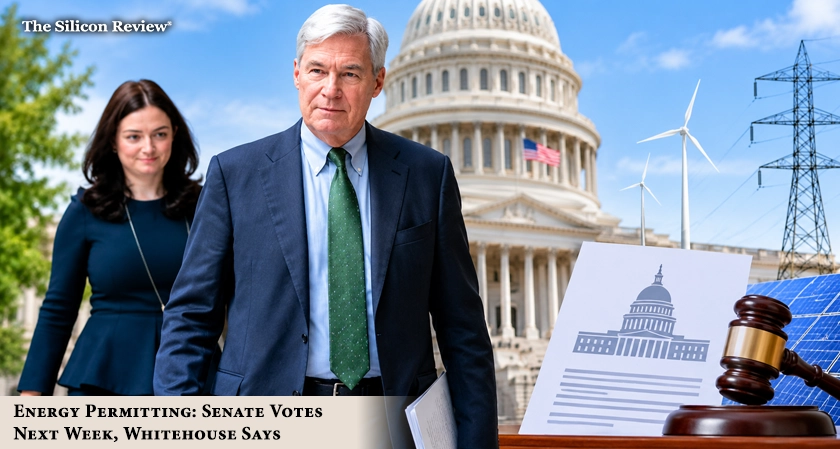
Energy permitting reform returns to the Senate floor next week, with Whitehouse promising amendment votes on the bipartisan package before final passage.
News source: Google / https://cnalifestyle.channelnewsasia.com/
The Senate will take up votes on the Bipartisan American Affordability and Jobs Act next week, according to Senator Sheldon Whitehouse, one of the bill's four lead negotiators. The Rhode Island Democrat, speaking by phone from Turkey where he is attending the COP31 climate conference, said he would return Monday for the next round of energy permitting votes. Senators are submitting amendments to the legislation this week, setting up what Whitehouse has repeatedly described as a "very healthy amendment process."
The Senate voted 73-25 earlier this week to advance the 494-page package, a procedural step that cleared the way for floor debate and amendment consideration. The margin was lopsided: 51 Republicans and 21 Democrats plus independent Angus King voted to proceed, while 23 Democrats, independent Bernie Sanders, and one Republican opposed it.
What the Bill Actually Does
The energy permitting overhaul would impose new limits on the duration and scope of environmental reviews under the National Environmental Policy Act and Clean Water Act, and restrict the window for legal challenges to approved projects. It expands federal authority to site certain large interstate transmission lines, though weekend revisions dialed back some provisions to attract utility support. A manager's amendment released Saturday exempts certain vertically integrated utilities from new planning requirements and preserves existing rights of first refusal for transmission construction.
For data centers, the bill creates a Department of Energy technical assistance program to help state and local governments evaluate proposed projects, and builds on provisions allowing states and utilities to require data centers to cover infrastructure costs associated with their operations. A revision limits a potential loophole to resources under 5 megawatts.
"This bill is the floor, not the ceiling, of our climate and environmental aspirations," Whitehouse told reporters before the procedural vote.
If the bill's supporters describe it as a floor rather than a ceiling, what exactly is being conceded to get it across the finish line?
The Tribal Sovereignty Obstacle
The most significant remaining hurdle is tribal opposition to provisions affecting the National Historic Preservation Act. The manager's amendment removed a contentious provision defining which properties hold cultural significance to tribal groups, but the 106 Strong Coalition of tribal advocacy organizations have called for the entire section to be stripped. National Congress of American Indians President Mark Macarro said the amendments "merely put lipstick on a pig," adding that "tribal sovereignty continues to be diminished in this bill."
Senator Catherine Cortez Masto, a Nevada Democrat, has said she will oppose final passage if the historic preservation changes remain. Whitehouse said the vote to proceed had improved the bill's chances in the House, where members of the bipartisan Problem Solvers Caucus have assured senators that the chamber would take up the measure.
Trump's Wind Problem
President Trump has backed the bill, calling it a "BIG WIN for U.S. ENERGY INDEPENDENCE and DOMINANCE" and urging followers to contact their senators. But hours before the procedural vote, Trump told reporters he would not approve wind turbines, despite wind provisions being part of the package. Whitehouse said a provision in the bill would end the administration's practice of paying energy companies to abandon offshore wind leases, which has cost nearly $4 billion.
The House remains the binding constraint. Minority Leader Hakeem Jeffries has criticized the Senate product, and his office said it "falls short" in several areas. Whether the amendment votes next week produce a bill that can survive the House is the question Whitehouse and his co-authors must answer.
FAQ:
Q: When will the Senate vote on energy permitting?
A: Next week, with amendment votes and a potential final passage vote.
Q: Who is leading the bill?
A: Senators Capito, Whitehouse, Lee, and Heinrich negotiated the bipartisan package.
Q: What did the procedural vote show?
A: The Senate voted 73-25 to advance the bill, with 21 Democrats supporting.
Q: What is the tribal sovereignty issue?
A: Provisions affecting the National Historic Preservation Act have drawn opposition from tribal groups.
Q: Does Trump support the bill?
A: Yes, though he has said he will not approve wind turbines.
Q: What happens after the Senate?
A: The bill moves to the House, where its prospects remain uncertain.













Comments