>>
Industry>>
Compliance and governance>>
Nvidia Accounting under SEC In...Nvidia Accounting under SEC Investigation as Singapore Revenue and Circular Financing Face Scrutiny
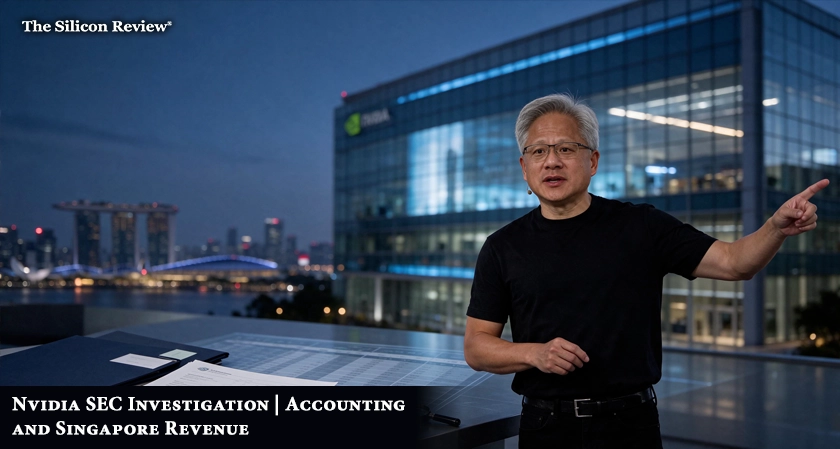
Nvidia faces a US SEC investigation into potential accounting issues, renewing scrutiny of Singapore revenue disclosures, customer transactions, and circular financing arrangements.
News Source: https://techcrunch.com/
The US Securities and Exchange Commission (SEC) is investigating potential accounting issues at Nvidia, according to two people briefed on the matter, bringing renewed attention to the chipmaker's financial disclosures, Singapore revenue reporting, and complex financing arrangements. The inquiry adds to growing regulatory scrutiny surrounding the world's leading AI chipmaker, although the investigation's precise scope and potential outcome remain unknown.
The SEC Investigation: What Is Under Scrutiny?
The SEC's enforcement staff is examining potential accounting issues at Nvidia, according to two sources who spoke to Reuters on condition of anonymity. The investigation follows an earlier report by The Wall Street Journal that the US securities regulator was investigating the company. However, the earlier report did not establish the specific focus of the inquiry. Reuters subsequently reported that the investigation involves potential accounting concerns, although it could not independently determine when the SEC opened the inquiry or which accounting practices are being examined.
Neither the SEC nor Nvidia immediately provided substantive clarification. An SEC spokesperson declined to comment, while Nvidia did not immediately respond to Reuters' request for comment. An important distinction: An SEC investigation does not establish that a company has violated securities laws. Regulatory inquiries can conclude without enforcement action, and no finding of accounting misconduct has been announced in this case.
Singapore Revenue: Why Nvidia's Reporting Change Matters
One of the issues attracting renewed attention is Nvidia's decision to change how it reports geographic revenue. Previously, the company classified regional revenue using customers' billing addresses. Last year, Nvidia shifted to identifying revenue based on the headquarters locations of its customers. The change resulted in Singapore disappearing as a separately identified geography in Nvidia's revenue breakdown. The timing has attracted attention because Singapore had represented a substantial portion of Nvidia's reported revenue. According to figures cited in recent reporting, Singapore accounted for approximately $10.2 billion in Nvidia revenue in the second quarter of fiscal 2026, representing around 22% of total revenue and an 81% increase from the previous year.
The Financial Times also reported, citing company accounts that Singapore sales had increased substantially before the reporting change. Nvidia has previously explained that using customer headquarters rather than billing addresses provides a more accurate representation of its geographic revenue distribution. However, the disclosure change has raised questions among investors and market observers about how revenue is classified, where customers ultimately operate, and how accurately regional disclosures communicate the company's business exposure.
The central governance question is not simply how much Nvidia earns, but whether investors can clearly understand where its revenue originates and the commercial relationships supporting it.
Circular Financing: The Bigger Question about AI Revenue Quality
Beyond geographic disclosures, another issue drawing investor attention is the growing use of circular financing arrangements across the artificial intelligence industry. Circular financing generally refers to financial relationships in which technology companies invest in, lend to, or otherwise support customers that subsequently use those funds to purchase their products or services. In Nvidia's case, the broader concern involves financing arrangements with AI companies and infrastructure developers that purchase its advanced graphics processing units (GPUs).
These arrangements can support the development of AI infrastructure and create legitimate commercial opportunities. However, they also raise questions about the independence and sustainability of customer demand. If a supplier provides substantial financial support to a customer that subsequently purchases the supplier's products, investors may want greater clarity about how much demand comes from independently financed customers and how much depends on vendor-supported arrangements.
This does not automatically make the resulting revenue improper or incorrectly reported. The accounting treatment depends on the contractual terms, transaction structure, applicable accounting standards, and underlying commercial substance. For Nvidia, the issue is particularly relevant because the company occupies a central position in the AI infrastructure market. Investors are increasingly examining whether financing relationships, strategic investments, and customer purchasing commitments could create financial dependencies that are not immediately apparent from headline revenue figures.
Regulatory Pressure Extends Beyond Accounting
The SEC investigation is unfolding alongside other regulatory scrutiny involving Nvidia's business activities. US authorities are separately examining potential violations of export controls involving advanced AI chips allegedly diverted to China through Southeast Asian commercial networks.
A Singapore-based company, Megaspeed, has attracted attention in connection with those investigations. US authorities have been examining possible export-control violations involving Nvidia chips, while Megaspeed has maintained that it conducted lawful business. These export-control matters are separate from the SEC's accounting inquiry and should not be treated as evidence of accounting misconduct.
The US Department of Justice has also been reviewing Nvidia's acquisitions and business practices, including its proposed $12.9 billion acquisition of Hugging Face, according to earlier Reuters reporting.
Together, these developments place Nvidia under scrutiny across several areas of corporate governance:
- Financial reporting: Whether accounting disclosures adequately represent the company's revenue and commercial relationships.
- Geographic revenue: How customer headquarters and billing locations affect regional revenue reporting.
- Export compliance: Whether products reach restricted destinations through intermediary businesses.
- Financial arrangements: Whether customer financing and strategic investments create additional financial dependencies.
- Competition oversight: Whether acquisitions and business practices raise antitrust concerns.
What Investors Should Watch Next
The immediate question is whether the SEC will provide further clarity about the scope of its investigation or take any formal enforcement action. Investors will also be watching Nvidia's future financial disclosures, particularly how the company explains geographic revenue, customer relationships, financing commitments, and potential exposure to intermediary businesses. Another important consideration is the distinction between reported revenue growth and the underlying quality of customer demand.
Nvidia remains a major beneficiary of global investment in AI infrastructure. However, as its commercial ecosystem becomes more complex, transparency around financing, customer concentration, and revenue recognition will remain important governance considerations. The investigation also highlights a broader challenge facing the AI industry: rapid commercial expansion can create financial relationships that require more detailed scrutiny from investors and regulators.
For Nvidia, the next phase of scrutiny may depend less on the scale of its AI business and more on how transparently it reports the financial relationships supporting that growth. Read more on The Silicon Review.













Comments