>>
Platform>>
Wireless>>
Starlink Mini: SpaceX Designs ...Starlink Mini: SpaceX Designs Rooftop Cell Tower to End Indoor Dead Zones
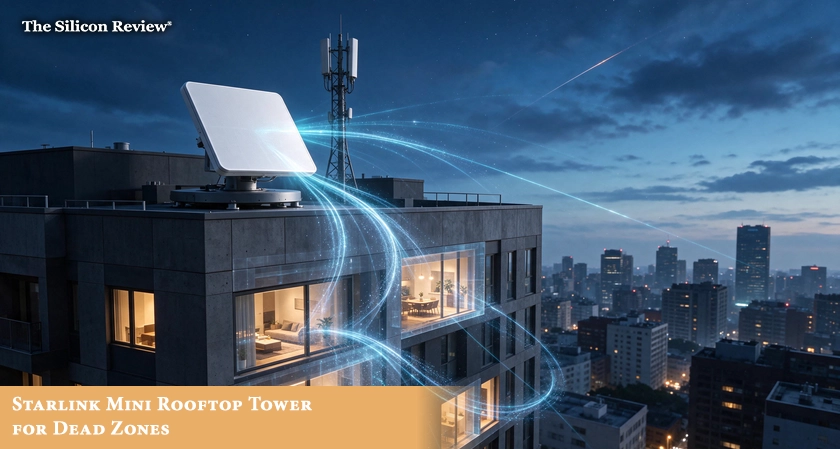
Starlink mini rooftop cell towers will enter production in 2027, pairing with Direct-to-Cell V2 satellites to eliminate indoor dead zones.
News Source: https://techcrunch.com/
SpaceX has completed the design of a miniature rooftop cell tower intended to eliminate mobile dead zones inside buildings, CEO Elon Musk said at the DealBook Summit this week. The device, which Musk described as "a micro cell tower thing that you just put on your roof, like a Starlink dish," is expected to enter production in 2027.
The problem it addresses is physical. Starlink's Direct-to-Cell service connects ordinary phones to satellites overhead, but signals from space struggle to penetrate thick roofs, particularly metal ones.
Musk acknowledged the gap directly: "If you're indoors, especially if you have a metal roof, which blocks the signal from space. So we need something that's terrestrial."
The Spectrum Backing
The Starlink mini tower builds on SpaceX's aggressive spectrum acquisitions. The company received FCC approval in 2024 for direct-to-phone service with T-Mobile, struck a $17 billion deal with EchoStar in 2025, and agreed this year to acquire an $8 billion low-band spectrum portfolio. Low-band spectrum, particularly the 800 MHz band SpaceX is buying, travels farther and penetrates walls more effectively than higher frequencies, making it suited to indoor coverage.
SpaceX President Gwynne Shotwell said in August that the company would not build large cell towers, opting instead for small, low-power base stations. Musk said one approach would bundle the micro towers with Starlink terminals, though packaging details remain unsettled.
If the fix is a box on every roof, how many boxes does it take to cover a city?
The Competitive Posture
Musk downplayed the threat to incumbent carriers, arguing that future bandwidth demand from AI and robotics will expand the market rather than simply redistribute it.
"I don't think this means AT&T, Verizon, or others go out of business," he said. "The demand for bandwidth will be tremendous in the future, and that bandwidth will be driven primarily by superintelligence and robots."
The technical and commercial picture is more complicated. SpaceX's spectrum holdings in top US markets remain well below those of the major carriers, and analysts have described small cells as suitable for pinpoint offloading rather than as a network backbone. The rooftop units, known as femtocells, may cover a single home rather than a neighbourhood, leaving the economics of dense urban deployment unresolved.
The Timeline Caveat
Musk hedged on production, saying the units were "going into production, I think, next year." He has a history of missing deadlines, and SpaceX has not announced a consumer launch date, pricing, or service terms. The Direct-to-Cell V2 constellation, which Musk said will increase bandwidth 40-fold, is also scheduled for 2027.
The design milestone is real. The shipping date is not yet a commitment.
FAQ:
Q: What is the Starlink mini?
A: A rooftop cellular base station designed to provide indoor phone coverage where satellite signals cannot reach.
Q: When will it enter production?
A: Musk said 2027, though he hedged and SpaceX has not confirmed a launch date.
Q: Why is it needed?
A: Satellite signals struggle to penetrate thick or metal roofs, leaving indoor dead zones.
Q: What spectrum does SpaceX use?
A: Low-band spectrum, including an 800 MHz portfolio, acquired through EchoStar and other deals.
Q: Will it replace AT&T or Verizon?
A: Musk says no, citing future bandwidth demand from AI and robotics.
Q: What is Direct-to-Cell V2?
A: SpaceX's next satellite constellation, expected in 2027 with 40 times the bandwidth of the current version.













Comments