>>
Industry>>
Construction>>
Wall-Mounted vs. Pedestal Wash...Wall-Mounted vs. Pedestal Wash Basin: Choose the Right Fit for Your Home
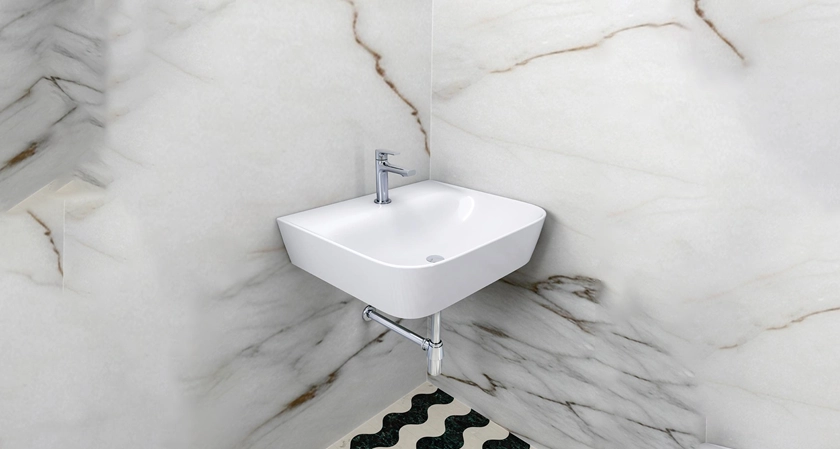
A wall-mounted wash basin is a practical choice for bathrooms that need more open floor space, while a pedestal wash basin suits those who prefer a traditional look and concealed plumbing without extensive wall reinforcement. Both options can last for decades when installed correctly. However, the right choice depends on the bathroom size, installation costs, cleaning needs, wall support and personal taste.
Understanding Wall-Mounted and Pedestal Wash Basins
A wall mounted wash basin is fixed directly to the wall using concealed brackets or threaded bolts anchored into the supporting structure. Since there is no pedestal beneath the bowl, the basin appears to float above the floor.
The plumbing arrangement also contributes to its clean appearance. The trap and water supply lines can be concealed inside the wall cavity when an in-wall frame is used. Alternatively, they can be placed discreetly behind the bowl.
A pedestal washbasin consists of two main parts; the basin bowl and a ceramic column beneath it. The bowl is secured to the wall, while the pedestal rests on the floor and sits directly underneath the basin.
The column serves two purposes. First, it conceals the P-trap, water supply lines and drain pipes that run down towards the floor. Second, it helps transfer some of the basin's weight to the floor, reducing the load on the wall fixings.
Wall-Mounted and Pedestal Wash Basin Comparison at a Glance
Both basin styles can provide a neat finish, but their differences become clearer when their practical features are compared.
|
Factor |
Wall-Mounted Wash Basin |
Pedestal Wash Basin |
|
Mounting |
Fixed to the wall with no floor contact |
Bowl supported by wall fixings and a floor-standing column |
|
Plumbing |
Concealed inside the wall or positioned behind the bowl |
Hidden inside the pedestal |
|
Floor space |
Leaves the area below open |
Occupies space with its base |
|
Cleaning |
Easier access beneath the basin |
Dust may collect around the pedestal |
|
Wall support |
Requires solid masonry or a braced carrier frame |
The column shares the basin's load with the floor |
|
Installation height |
Can be set to suit the user |
Determined by the pedestal's height |
|
Appearance |
Modern, minimal and floating |
Classic, traditional and symmetrical |
|
Installation cost |
Maybe higher because of reinforcement and framing |
Generally lower when additional building work is unnecessary |
|
Suitable projects |
Small bathrooms, hotels and public washrooms |
Homes, mid-range hotels and retrofit projects |
The comparison shows that neither option is automatically better for every bathroom. A wall-mounted model offers greater flexibility in floor space and installation height, while a pedestal model can simplify plumbing concealment and reduce the need for structural work.
When to Choose a Wall-Mounted or Pedestal Wash Basin
The best choice becomes clearer when the basin is matched to the bathroom's layout, the available support and the way the space will be used.
When a Wall-Mounted Wash Basin Makes More Sense
Choose a wall-mounted basin when an open floor and a modern appearance are important. It is particularly useful in smaller bathrooms, hotels and public washrooms where floor space and ease of cleaning can make a difference.
It may also suit bathrooms where the basin needs to be installed at a particular height. The open area below can help provide wheelchair clearance when the installation is planned appropriately.
A wall mounted basin design is worth considering if:
- The bathroom feels crowded around the basin.
- You want to make floor cleaning easier.
- You prefer a floating, minimalist appearance.
- You need flexibility in basin height.
- You are planning recessed or wall-mounted storage.
Wall-mounted storage can help make use of the surrounding wall space. Slim bathroom cabinets are one option to consider alongside the basin.
Before finalising the design, confirm that the wall can support the basin or that a suitable carrier frame can be installed. This check is important because structural work can affect the overall budget.
When a Pedestal Wash Basin Is the Better Choice
Choose a pedestal basin when you prefer a traditional design and want to conceal plumbing without undertaking extensive wall reinforcement.
The column creates a balanced appearance and hides the pipes and trap beneath the bowl. It also shares the basin's weight with the floor, which can make the support arrangement more suitable for installations where a wall-mounted fixture would require additional reinforcement.
A pedestal basin is worth considering if:
- You prefer a classic, symmetrical bathroom design.
- You want the plumbing hidden inside the pedestal.
- You want to avoid unnecessary wall reinforcement.
- The floor provides stable support.
- You do not need storage directly beneath the basin.
A pedestal model can also work well in retrofit projects, where replacing an existing fixture without extensive building changes is a priority.
However, account for the space occupied by the column. If the bathroom is small in size, the pedestal may make cleaning & movement around the basin less convenient. Separate shelving can provide storage when the area beneath the bowl cannot be used for a cabinet.
How to Make the Final Decision
Before selecting a basin, compare the practical requirements of your bathroom rather than relying on appearance alone.
Use these checks to narrow down the options:
- Measure the available space. Consider how much room remains around and beneath the basin.
- Check the supporting structure. A wall mounted basin needs suitable wall support, while a pedestal basin needs a stable floor.
- Set an installation budget. Include materials, labour and any reinforcement or framing.
- Consider cleaning and repairs. Decide whether open floor space or concealed plumbing is important.
- Think about everyday use. Account for the preferred basin height, accessibility needs and storage arrangements.
For example, a small bathroom that needs an open floor and easier cleaning may be better suited to a wall-mounted basin. A home bathroom where a traditional appearance and concealed plumbing are more important may benefit from a pedestal basin.
Neither choice needs to be treated as a universal rule. The more suitable basin is the one that fits the room without creating unnecessary installation or maintenance difficulties.
Conclusion
A wall-mounted wash basin and a pedestal wash basin offer different advantages. The wall-mounted option leaves the floor open, makes cleaning easier and allows greater flexibility in height. It is a practical choice for compact bathrooms and spaces where accessibility is important, provided the wall has adequate support.
A pedestal basin offers a traditional appearance, conceals plumbing within its ceramic column and generally costs less to install when extra structural work is unnecessary. Its main limitation is the floor space occupied by the base.
Both designs can last for decades when fitted correctly. Before making a final decision, consider the bathroom's size, wall support, floor stability, installation budget and maintenance needs. Compare these factors first, then select the basin that fits in your space and daily routine.













Comments