>>
Industry>>
Industrial Automation>>
Why Equipment Mobility Is Beco...Why Equipment Mobility Is Becoming a Growing Challenge for Businesses
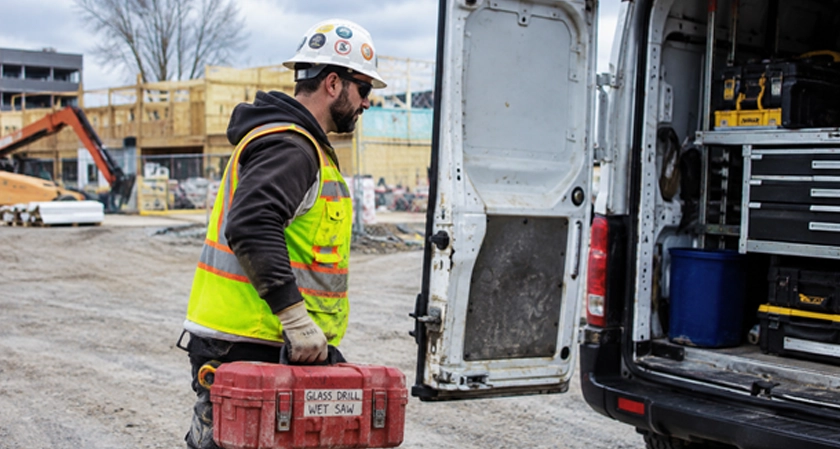
Business equipment rarely stays in one place anymore. Construction contractors move machinery between job sites, technology companies transport expensive hardware for installations and service providers carry specialized tools to customer locations. These arrangements help businesses operate efficiently, but they also create risks that are harder to manage than those involving equipment stored at a permanent facility.
As companies expand their service areas and adopt more flexible operating models, protecting mobile assets requires greater attention to transportation, storage, employee responsibilities and insurance arrangements.
Equipment mobility is changing business risk
Traditional equipment management often centered on a fixed location. Businesses could maintain inventories, monitor access and establish security procedures for machinery stored inside their facilities.
Mobile operations complicate that arrangement.
A telecommunications contractor, for example, might dispatch several teams to different installation sites each morning. Each vehicle could carry thousands of dollars in testing equipment, specialized tools and electronic components.
Equipment may change hands throughout the day, sometimes without returning to a central facility for weeks.
These movements increase the number of situations in which assets can be damaged, misplaced or stolen. A machine could be damaged while being unloaded, while electronic equipment left in a service vehicle could disappear overnight.
The challenge isn't simply that equipment travels more frequently. Businesses must maintain visibility and accountability while their assets operate beyond traditional security boundaries.
Insurance protection must reflect equipment movement
Insurance arrangements that work well for stationary property may not adequately address equipment regularly transported between business locations.
Commercial property insurance typically focuses on insured property at specified premises, although policies may provide limited protection elsewhere. Businesses shouldn't assume that equipment receives identical coverage regardless of where it's being used or stored.
For companies that routinely transport machinery, tools or specialized electronic devices, inland marine insurance coverage can address certain physical loss or damage exposures involving movable business property, depending on the policy terms.
Consider a company transporting a $35,000 industrial inspection device between manufacturing facilities. If the equipment is damaged during transportation, the financial consequences extend beyond the repair bill.
The company might need to postpone scheduled inspections, arrange temporary replacement equipment or reassign technicians until the device becomes available again.
Businesses should therefore examine both the circumstances covered by their policies and the operational consequences of losing essential equipment. Insurance for physical damage doesn't automatically cover every expense resulting from interrupted work.
Digital tracking improves equipment accountability
Technology has made it easier for companies to monitor assets operating across multiple locations.
GPS-enabled trackers, barcode systems and RFID tags can help businesses document where equipment is assigned and when it moves between facilities. Cloud-based asset management platforms can also maintain records of maintenance schedules, equipment condition and employee assignments.
These systems are particularly useful for companies operating numerous service vehicles or maintaining large collections of portable tools.
For example, a regional maintenance company could use barcode scanning to record when technicians collect equipment from a warehouse and return it after completing assignments.
If an expensive diagnostic tool goes missing, managers can review its last recorded assignment rather than contacting every employee who might have used it.
Tracking systems aren't perfect, however. GPS devices can lose connectivity, RFID systems require suitable readers and inventory records become unreliable when employees skip check-in procedures.
Technology works best when supported by clear operational responsibilities. A tracking platform cannot compensate for inconsistent equipment handling.
Transportation creates overlooked vulnerabilities
Moving equipment introduces physical risks that aren't always obvious during routine operations.
Improperly secured machinery can shift inside vehicles, damaging sensitive components or creating safety hazards. Repeated vibration may also affect instruments requiring precise calibration.
Businesses transporting expensive equipment should establish handling procedures appropriate to the equipment's weight, sensitivity and intended use.
An industrial testing company, for instance, may need protective cases and specialized mounting systems for instruments that cannot tolerate significant impact.
Vehicle security also deserves attention.
Leaving equipment inside a locked van may appear reasonable, but the risk changes considerably when that vehicle remains unattended overnight in an unsecured parking area.
Companies should evaluate parking arrangements, loading procedures and employee training rather than relying exclusively on vehicle locks.
Small operational improvements can prevent losses that insurance alone cannot resolve, particularly when replacement equipment has a long delivery time.
Business expansion makes asset oversight harder
Equipment management often becomes more complicated as companies grow.
A business operating from one warehouse may have a reliable understanding of its equipment inventory. Once it establishes additional branches, hires field technicians or begins serving customers across several states, maintaining accurate records requires greater coordination.
Different departments may purchase similar equipment without following the same documentation procedures.
A regional manager might approve a $20,000 machine while the central operations team remains unaware that it has entered service.
That disconnect can affect maintenance planning, insurance schedules and financial reporting.
Businesses can reduce these problems by integrating equipment purchases with centralized asset management procedures. New assets should be recorded with serial numbers, assigned locations, replacement values and responsible departments.
The process should also account for rented and borrowed equipment, which may create contractual responsibilities even when the business doesn't own the property.
Equipment downtime can be more costly than replacement
The purchase price of a machine doesn't always reflect its importance to business operations.
A relatively inexpensive device may perform a function that cannot be completed without specialized equipment.
Suppose a commercial maintenance company relies on a $12,000 diagnostic system to complete inspections required before machinery can return to service.
If that system becomes unavailable, the company may face delayed projects and additional labor expenses while sourcing a replacement.
Management should identify equipment whose absence would interrupt essential services and develop realistic contingency arrangements.
These might include access to rental equipment and relationships with alternative suppliers or backup units shared between regional teams.
Companies should also distinguish physical damage protection from business interruption or extra expense coverage. Different policies and endorsements may be required, and availability depends on the insured circumstances.
The objective is to reduce the time between equipment failure and restored operations, not merely recover its financial value.
Build equipment protection into everyday decisions
Equipment risk management is most effective when it becomes part of ordinary business operations rather than an occasional administrative review.
Purchasing departments, operations managers and insurance representatives should share relevant information about high-value assets.
Before introducing new equipment, businesses should establish where it will be used, how it will be transported and who will be responsible for maintaining it.
Periodic reviews can then identify changes in equipment values, service territories and storage practices.
A company that begins transporting machinery across several states may face different exposures from those it encountered when operating within a single metropolitan area.
Keeping procedures and insurance arrangements aligned with those changes helps businesses avoid relying on outdated assumptions.
Conclusion
Equipment mobility gives businesses flexibility, but it also increases the importance of knowing where valuable assets are, who is responsible for them and how quickly operations can recover when something goes wrong. Companies that treat equipment protection as an ongoing operational responsibility are better positioned to expand without allowing preventable losses to disrupt their work.













Comments