>>
Industry>>
Space>>
SETI neural network detects se...SETI neural network detects several radio emissions from a distant galaxy
The Silicon Review
11 September, 2018
Author:
The Silicon Review Team
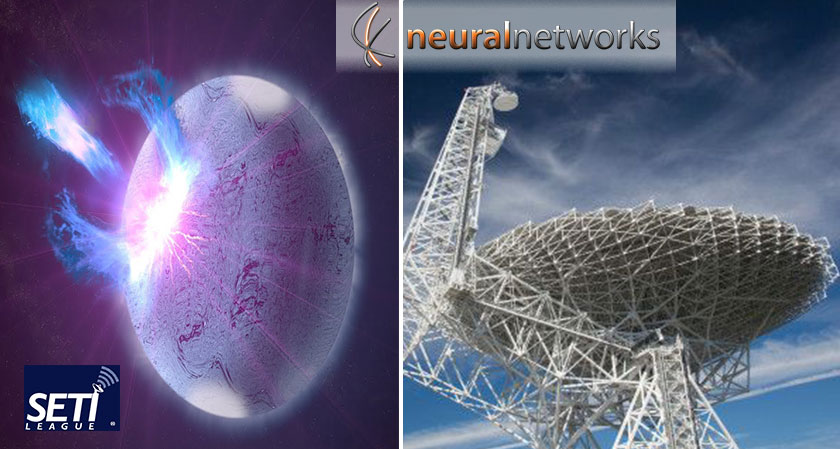
Artificial intelligence has yet again proven its usefulness. This time in analyzing large amounts of data gathered by astronomers to find recurring radio emissions from a distant galaxy, located about 3 billion light-years away. The Breakthrough Listen team at SETI (Search for Extra-Terrestrial Intelligence) at the University of California, Berkeley applied machine learning and used a new neural network to analyze huge sets of data, approximately 400 Terabytes and found out radio emissions hidden in the data set.
The emissions also called fast radio bursts or FRBs, originated from a galaxy designated as FRB 121102. The data set to which the new technique of analysis was applied comes from the Green Bank Telescope located in West Virginia. It was pointed to the source of these emissions in August 2017. The 400 Terabyte sized information was obtained in a period of mere five hours. The initial FRBs were identified by standard analysis algorithms after assessing one hour of observations. But, a graduate student at the University of California, Berkeley named Gerry Zhang created a convolutional neural network that would process the massive dataset with much greater efficiency