>>
Industry>>
Space>>
Cubesats MarCo-A and B stop tr...Cubesats MarCo-A and B stop transmitting after completing their historic mission
The Silicon Review
06 February, 2019
Author:
Thesiliconreview
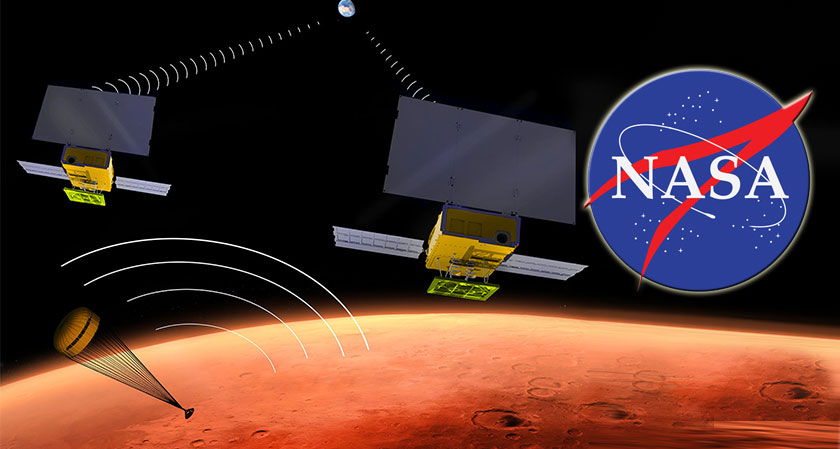
When NASA launched the Insight Mars Lander to the red planet in May of last year, it was hoping to study the geology of Mars and get a clearer picture of the red planet’s core. There were many firsts associated with that mission, and one of them was the MarCo (Mars Cube One) project that accompanied the main lander. MarCo included 2 cubesats, MarCo-A and B that would act as communication relays and transmit important data about the status of the Insight mission. What is so exciting about this project is that it demonstrated the feasibility of cubesats and showed that they could indeed be sent into deep space. A cubesat is a tiny satellite whose size ranges from a few cubic inches to that of a briefcase, approximately.
Furthermore, cubesats can easily be assembled using commercially available off-the-shelf parts at a fraction of the cost of conventional satellites. The MarCocubesats have traveled longer than any satellite of their kind and successfully completed their mission to provide auxiliary observation and connectivity. Their mission was deemed successful and complete after the Insight Lander touched down on the surface of Mars. The two tiny satellites have now stopped communicating. They were built for a limited purpose and designed to function for a few days, unlike other probes that have been active for several years.
The cubesats together cost under $20 million to build the very fact that they made it that far into space is in itself a huge milestone in space exploration. The entire mission’s chief engineer stated that the purpose of the little satellites was to test and push the limits of miniaturized technology.