>>
Industry>>
Clean energy>>
What Can You Expect From the S...What Can You Expect From the Solar Panel Installation Process?
The Silicon Review
15 March, 2022
Author:
The Silicon Review Team
During the summer, what's the hottest time of day?
Summer heat reaches a peak around 4:00 to 5:00 p.m. Solar arrays need to be sprayed down with a hose before these hot evening hours. Properly maintaining your solar array will make it easy for you to have an efficient electricity-producing setup!
Of course, first, you have to figure out the steps towards installation. Are you ready to learn how to harness energy from the sun? Read on to learn all about solar panel installation.
Finding the Right Contractor
Before the solar panel installation can take place, you'll have to find the right contractor for the job. If you live somewhere like New Jersey or California with a robust rebate program, finding reputable contractors will be easy. However, there will also be a lot of companies out there who are trying to steal your money with less than great business.
Keep an eye out for any companies that don't seem up to par. You'll definitely want to read customer reviews and get referrals from friends and family. You also want to avoid companies that will overcharge you just because they're a big brand name.
Make sure to get more than one quote and study all of the quotes closely. Companies that perform a lot of solar installs with low overhead or going to be your best option.
A low-profile installer will have a lot of experience without costing too much. If you're having trouble getting referrals for contractors, you can always look in the yellow pages under solar.
Then you can take things one step further by contacting your state energy office and asking for their referrals. Another source of quality referrals is the North American board of certified energy practitioners.
It's one of the only organizations that currently test and certifies solar electric installers. The program is voluntary, and it costs a lot. Any contractor that's part of the program is serious about their work.
On-Site Inspection for Green Energy
To give you a quote that's close to right, the contractor has to perform an on-site inspection. Every house is different. One roof will be facing west, and another top will be facing east.
The various layouts, locations, and obstacles will affect the cost of your installation. For instance, a roof that's covered with all sorts of materials and shaded by dense trees is going to be harder to install.
If the contractor gives you a firm quote without at least driving by your home, that's a red flag. If there's any potential obstruction, such as a tree or a building, you're going to have shading problems. A contractor will have to use a Solar Pathfinder to discover your solar windows.
What About a DIY Panel Installation?
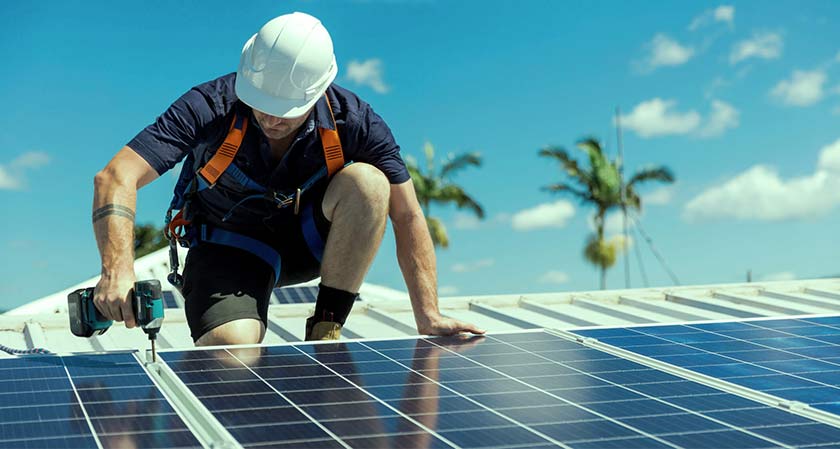
Would a DIY panel installation make sense? Unless you have experience with a solar installation, we suggest hiring a team of professionals. Installing a grid-side system can be an overwhelming project to undertake by yourself.
There's a lot of paperwork required, and you'll be dealing with lethally high voltages. There are also a lot of financial incentive programs that have a self-install penalty. For instance, the amount of money you get back for your rebates could be less if you install the solar panels on your own.
When it comes to finding the equipment, you can still shop for all of the major components on your own. You can save the solar contractor all of the markups on parts.
There are manufacturers who are willing to sell directly to end-users. Sometimes manufacturers themselves will offer you special rebate programs!
There are also standardized packages you can look into, along with customized options. Just be careful.
If you start browsing for the lowest price, you're going to get poor service. Instead of price shopping, quality shop.
Lowball deals will not prepare your hardware until they receive your check. Otherwise, how would they pay for the equipment? These aren't the type of companies you want to deal with.
Tips for Signing a Solar Contract
Let's say you find a contract you can trust and the price that makes sense. What's next? Now the contractor is going to drop a contract for you to sign.
The contract will be a legal document that finalizes your agreement. If you and the contractor end up in some type of dispute, it's the contract that will determine the outcome of your lawsuit.
When you find a contractor you trust, it can be exciting. You might be eager to sign the contract right away and get started on your clean energy project. But hold off just a second.
First, you need to read the contract carefully and consult a lawyer if there's anything questionable you don't understand. The contract needs to cover a few key points.
For instance, it should have the name and physical address of the contractor along with the party responsible for paying for the project. There should be a clear description of the work that's going to take place.
The description needs to include detailed plans. These plans have to list the make and model of the individual equipment components that will be purchased In regards to the contract.
There needs to be a date as well. Without one, the contractor could take as long as they like!
The contract also needs to include the total amount that you plan on paying. This will be the amount you owe, along with the payment arrangements set up. There should also be stipulations for which the final payment needs to be made.
Inspecting the Energy From the Sun
One of the reasons the contractor has to perform a site evaluation is to find the best location. But that's not the only reason. They also have to look for any obstacles that might create shade throughout different times of the year.
Your solar contractor will be doing an on-site analysis using high-tech tools such as a pathfinder. They'll also be using special software that only contractors have access to. You might also see your contractor using some type of handheld device that uses a digital camera.
The digital camera will have a fisheye lens along with computer access to capture and analyze data about your potential solar sites. Your site evaluation will be a one-time project. Once the contract determines the best site to put your solar array, they can start with the mounting process.
Where to Mount Your Panels
If the roof doesn't slope towards the South, you can use special angled supports to get the array into the perfect sunlight position. Don't know how to tell North from South? Check out this guide for help!
The contractor will measure the slope of your roof by degrees. They'll probably use a special roof angler tool to determine the exact degree. They'll also need to check under your roof to make sure that it has the stability to support a solar array.
A solar panel can weigh quite a bit. For instance, it's normal for a silicone solar panel to weigh anywhere from 30 to 40 lb. That amount of weight can really add up.
When you take into account the hardware and mounting fixtures that have to attach to the roof, the weight becomes even greater. The contractor may have to consult with an architect to double-check that your roof can withstand the solar array.
Green Energy Maintenance Tips
Once you own your solar system, you have to regularly clean your solar array. Letting dust and debris build-up means having a less efficient system. The grime and dust will block the sunlight, making it hard for the solar panels to generate electricity.
Make a plan for how you'll clean the solar panels if they're on your roof. We suggest asking the contractor to mount the panels close to the lower edge of the roof. This will make them easier to reach with the ladder.
You could also ask the contractor about wall mounting opportunities. As long as they don't protrude too far from the house, they can be incredibly effective. An alternative would be mounting the array to a shed.
Finally, there are also ground mounting options. You can ask a contractor to create a frame that goes on the ground where the solar array mounts to.
A ground-mount can take up quite a bit of space in your yard. However, ground mounts are one of the easiest types of solar arrays to clean and maintain.
Preparing for Your Solar Installation
Now you know the ins and outs of what happens during the solar panel installation process. Hiring the right contractor for the job, reviewing the contract, and finding the best place for your solar array takes time. So get the ball rolling today!
Reach out to a solar contractor and ask them to perform an on-site inspection. Find out if your house is a good candidate for solar, and discover exactly what it'll cost you. For more ways to stay on top of things, read another one of our blog posts.