>>
Other>>
Others>>
The Evolution of Startup Ideas...The Evolution of Startup Ideas: From Simple Solutions to Complex Industrial Challenges

The Silicon Review
13 February, 2024
Author:
The Silicon Review Team
In the world of startups, a small but noticeable shift is occurring. While startups once thrived on solving basic consumer needs like booking holidays or hailing cabs, today's entrepreneurial landscape is steering towards tackling more intricate, industrially significant challenges. However, this evolution brings its own set of challenges, particularly in the realm of investment and innovation.
The New Frontier: Industrial Startups
The startup ecosystem has pivoted from consumer-oriented solutions to addressing complex industrial challenges. This shift is driven by technological advancements in AI, IoT, and robotics, which open new avenues in manufacturing, logistics, energy, and agriculture. As industries undergo digital transformation, startups are finding fertile ground for innovation. But the path is not an easy one.
Investment Timelines and the Complexity of Innovation
One significant hurdle for startups venturing into complex industrial challenges is the extended investment timeline. Unlike consumer-focused startups, where returns can be rapid and evident, industrial startups often require more substantial capital investment over a longer period. The development cycle for industrial solutions can be lengthy, and the path to profitability can be protracted. Quick returns are of course preferred by all!
Underestimating the Challenges of Innovation
Another critical aspect is the general underestimation of the probability of success for hard things, and vice versa. Starting a company in a proven niche is simpler. There are benchmarks and success stories to refer to, making it easier for investors to grasp and support a slightly modified vision of an existing idea. This familiarity breeds a sense of security and predictability, attracting investment and support more readily.
Innovating in uncharted territories is a different ball game. Entrepreneurs who venture off the beaten path face the daunting task of not only developing their solution but also convincing stakeholders of its viability. These pioneering paths are often fraught with unpredictability and scepticism, as they lead to destinations that are difficult for many to visualise.
The Perils and Potentials
Embarking on a startup journey that doesn’t follow a proven path is tricky and for the general entrepreneur it might seem more straightforward to emulate existing models. But that quickly leads to direct competition, where startups find themselves playing catch-up with established players.
On the other hand, startups that carve their own niche, despite facing initial obstacles have the potential to become industry leaders if they successfully find a product-market fit. They can solve problems that haven't been addressed before, setting new industry standards and leading innovation.
Case in Point: Fractory
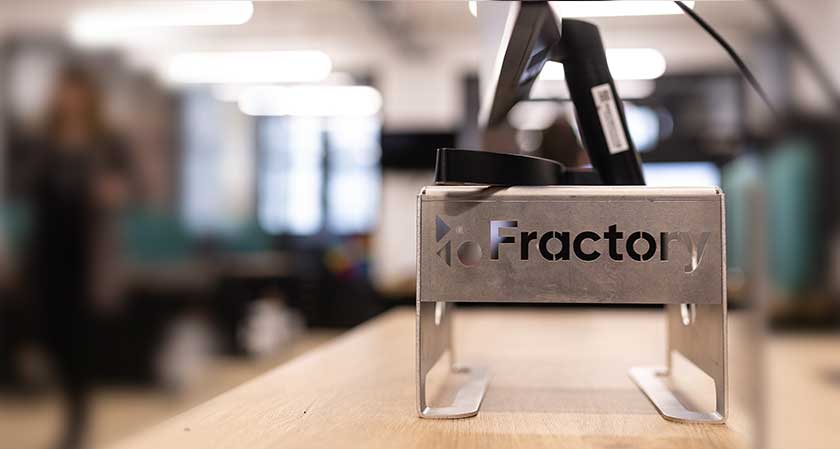
Fractory – born in 2017 and now well-established – is in most ways a tech business tackling a significant universal problem in the world of manufacturing. Fractory’s journey has seen it handle the challenges faced by modern startups, as well as those which are specific to players in the industrial arena. If Fractory simply provided instant prices and quotes for manufacturing processes like cutting, punching, bending and CNC machining it would be easy to understand, at least for engineers. But because it is plugged into a large manufacturing partner network and because it navigates complex international supply chains for its customers, simplifying all aspects of manufacturing procurement, it is very much one of those companies which tackles difficult tasks, which solves long-standing problems, and is deep into tackling complex industrial challenges.
The Changing Landscape of Startup Innovation
Happily, more startups are now more focused on solving specific industrial problems than on less vital consumer issues. This shift signifies a commitment to creating impactful solutions, to tackling serious issues.
Yet despite this evolving landscape, elements of the investment community can be slow in adapting to these changes. Many startups now resemble ambitious experiments, with some destined to redefine industries and others possibly failing to gain traction.
Tackling harder problems brings a range of difficulties and opportunities. As the focus moves from addressing simple problems to more complex, industrial issues, startups are set to play a crucial role in shaping the future of various industries. This evolution, while challenging, opens up unprecedented opportunities for innovation and impact and success.