>>
Technology>>
Aerospace>>
F-35 Alaska Incident Highlight...F-35 Alaska Incident Highlights Advancements in Safety and Operational Resilience
The Silicon Review
29 January, 2025
Author:
The Silicon Review Team
A recent F-35 incident in Alaska underscores ongoing advancements in military aviation safety, operational resilience, and the evolution of next-generation defense technologies.
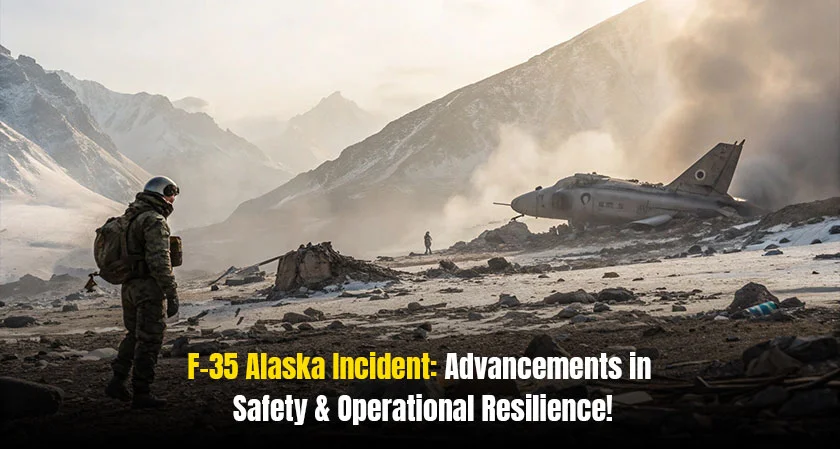
An F-35 fighter jet encountered an accident at Joint Base Elmendorf-Richardson in Alaska, with the pilot ejecting safely and sustaining no serious injuries. While the aircraft suffered significant damage, the crash serves as an opportunity to refine safety protocols, enhance pilot training, and further strengthen the resilience of advanced defense technology. The F-35 program, well known for its cutting-edge stealth capabilities and multi-role adaptability, continues to evolve with rigorous testing and innovation. Each operational challenge contributes to refining predictive maintenance, improving risk mitigation strategies, and reinforcing military readiness. This latest event underscores the unwavering commitment of defense engineers, aviation experts, and policymakers to advancing national security through continuous improvements in aerospace technology.
Beyond military applications, advancements in safety mechanisms and autonomous diagnostics from the F-35 program influence commercial aviation and industrial automation. Enhanced ejection seat technologies, real-time flight data monitoring, and AI-driven predictive maintenance tools are shaping the future of aerospace safety. Furthermore, the ability to analyze real-world operational data from incidents like this drives continuous system optimization, ensuring that the next generation of aircraft is more resilient, efficient, and intelligent. This incident also highlights the strategic importance of Alaska as a key location for military operations, given its proximity to critical global airspace. As investigations continue, insights gained will contribute to refining both training protocols and aircraft capabilities, reinforcing the United States' position at the forefront of defense aviation innovation.
For industry leaders and investors, this highlights the importance of sustained investment in artificial intelligence-driven diagnostics, next-gen simulation training, and advanced material sciences. Such innovations not only enhance the reliability of defense aviation but also drive technological advancements with commercial and civilian applications.