>>
Industry>>
Compliance and governance>>
Trump Directs Treasury to Ceas...Trump Directs Treasury to Cease Penny Production amid Rising Costs
The Silicon Review
10 February, 2025
Author:
The Silicon Review Team
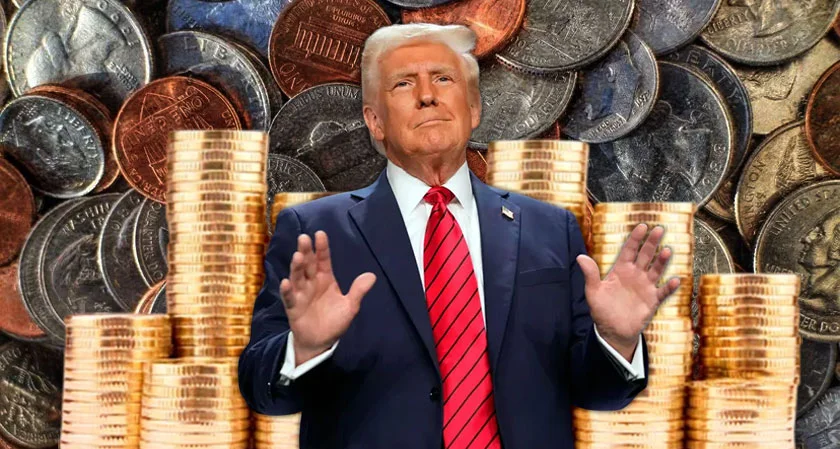
In a decisive move to curb unnecessary federal spending, President Trump has ordered the Treasury to stop minting pennies, highlighting the coin's production cost exceeding its face value.
In a strategic initiative to streamline government expenditures, President Donald Trump announced on Sunday that he has instructed Treasury Secretary Scott Bessent to halt the production of new pennies. Citing the coin's production cost surpassing its monetary value, Trump emphasized the need to eliminate wasteful spending within the federal budget. "For far too long, the United States has minted pennies which literally cost us more than 2 cents. This is so wasteful!" Trump expressed on his Truth Social platform. He further stated, "I have instructed my Secretary of the US Treasury to stop producing new pennies."
The U.S. Mint's 2024 annual report revealed that producing a single penny costs approximately 3.7 cents, leading to a loss of over $85 million in that fiscal year due to penny production alone. This financial discrepancy has been a point of contention, with discussions about the penny's relevance surfacing periodically. Historically, the penny has been a staple of American currency since 1793, featuring President Abraham Lincoln's likeness since 1909. However, its declining purchasing power and the increasing costs associated with its production have led to debates about its necessity. Economists have pointed out that the resources allocated to minting pennies could be redirected towards more impactful economic initiatives.
For business leaders, this development signals potential shifts in cash transaction practices. The elimination of the penny may lead to the rounding of cash transactions to the nearest five cents, affecting pricing strategies and point-of-sale systems. Companies are advised to assess their pricing models and prepare for adjustments in cash handling procedures. While the directive showcases a commitment to fiscal responsibility, it also raises questions about the broader implications for currency production and the economy. Businesses should monitor this development closely, considering both the immediate operational impacts and the longer-term economic effects.