>>
Industry>>
Environmental sustainability>>
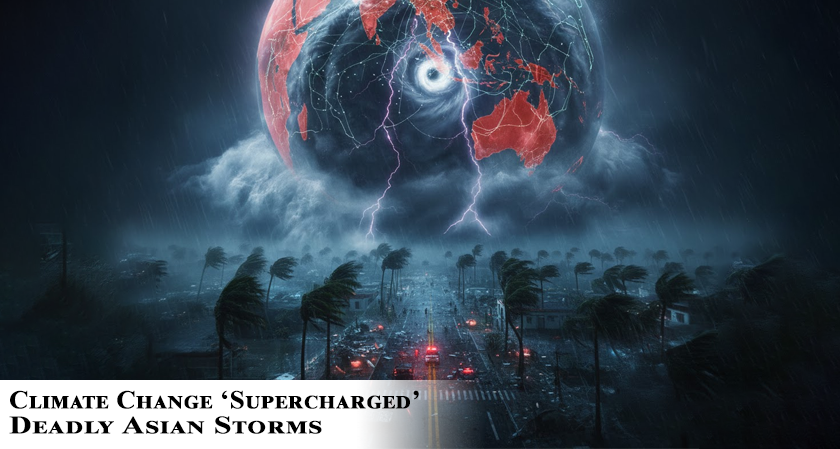
Climate Change 'Supercharged' ...Climate Change 'Supercharged' Deadly Asian Storms
The Silicon Review
11 December, 2025
Author:
The Silicon Review Team
Researchers find that climate change supercharged the deadly storms that devastated parts of Asia in November, intensifying rainfall and impacts.
Scientists have concluded that the deadly storms that ravaged parts of Asia in November were significantly intensified, or ‘supercharged,’ by climate change. A rapid attribution study by an international research consortium found that global warming dramatically increased the rainfall intensity and overall destructiveness of these events. This research provides concrete, scientific evidence linking specific extreme weather disasters to human-induced climate change, moving the discussion from projection to documented impact and strengthening calls for urgent climate adaptation and emissions reduction policies.
This scientific attribution contrasts with past uncertainty in linking single events to the broader climate crisis. The research findings demonstrate that warmer ocean temperatures and increased atmospheric moisture hallmarks of climate change acted as a multiplier for the storm systems. Quantifying the climate change influence on specific rainfall totals is the critical deliverable. This matters because it translates abstract global temperature rises into tangible, localized increases in community devastation and economic damage, providing a powerful tool for disaster preparedness planning and holding major carbon-emitting nations accountable.
For disaster response agencies, infrastructure planners, and reinsurance companies, the implications are immediate and financial. This attribution necessitates a fundamental revision of extreme weather risk models, which have historically been based on past climate data. The forecast is for more frequent and severe climate-enhanced disasters, requiring greater investment in resilient infrastructure and early warning systems. Decision-makers in vulnerable regions must now accelerate adaptation funding and integrate climate projections into all long-term planning. The next imperative is to scale climate attribution science to provide near-real-time analysis of disasters, enabling faster, more targeted humanitarian aid and more effective policy responses to the escalating climate emergency.