>>
Industry>>
Energy and Utility>>
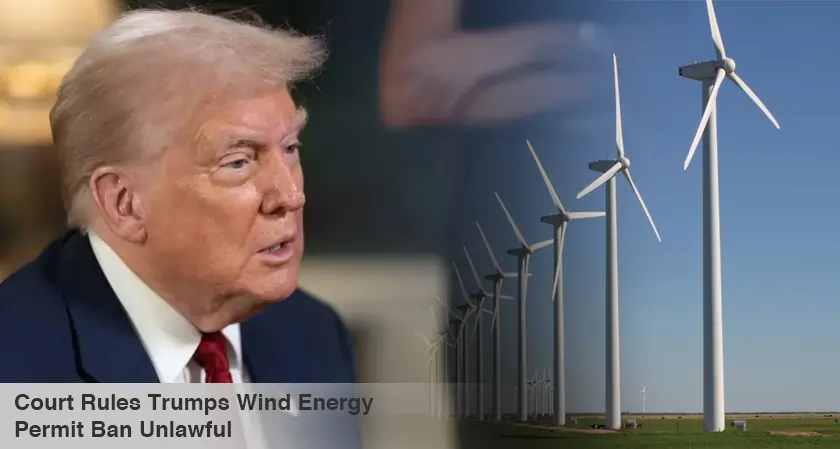
Court Rules Trump's Wind Energ...Court Rules Trump's Wind Energy Permit Ban 'Unlawful'
The Silicon Review
10 December, 2025
Author:
The Silicon Review Team
A federal court has ruled that President Trump's ban on issuing new wind energy permits is unlawful, a major decision for the renewable energy sector.
A federal court has delivered a landmark ruling, declaring President Trump's ban on wind energy permits unlawful. The decision strikes down an executive action that had imposed a moratorium on new wind leases and project approvals on federal lands and waters. This judicial rebuke represents a significant victory for the renewable energy industry and a substantial check on executive authority over energy development. The ruling immediately reactivates a key pipeline for utility-scale wind projects and reinforces the role of statutory environmental review processes over presidential discretion.
This judicial rejection contrasts sharply with the administration's use of executive power to direct national energy policy. The court's finding hinges on the argument that the permit ban violated procedural mandates under laws like the National Environmental Policy Act (NEPA). The court ruling is a critical deliverable that dismantles a major regulatory barrier, providing legal certainty for developers and investors. This matters because it affirms that the executive branch cannot unilaterally halt renewable energy development without a legally defensible rationale, protecting billions in planned infrastructure investment.
For wind developers, utility planners, and energy investors, the implications are immediate and financial. This decision necessitates a rapid reactivation of paused project portfolios and permitting processes within agencies like the Bureau of Ocean Energy Management (BOEM) and Bureau of Land Management (BLM). The forecast is for accelerated activity in key wind corridors, though potential appeals loom. Decision-makers must now navigate a landscape where judicial review serves as a backstop against abrupt policy shifts. The next imperative is for the administration to either accept the ruling or pursue a legally sound energy policy framework that aligns with congressional statutes, ensuring stability for the nation's clean energy transition.









-Recovered-Recovered-Recovered_2026-07-25_10-24-34.webp")

-Recovered-Recovered-Recovered_2026-07-25_10-03-12.webp")