>>
Industry>>
Compliance and governance>>
State AGs Warn AI Giants over ...State AGs Warn AI Giants over ‘Delusional’ Outputs
The Silicon Review
12 December, 2025
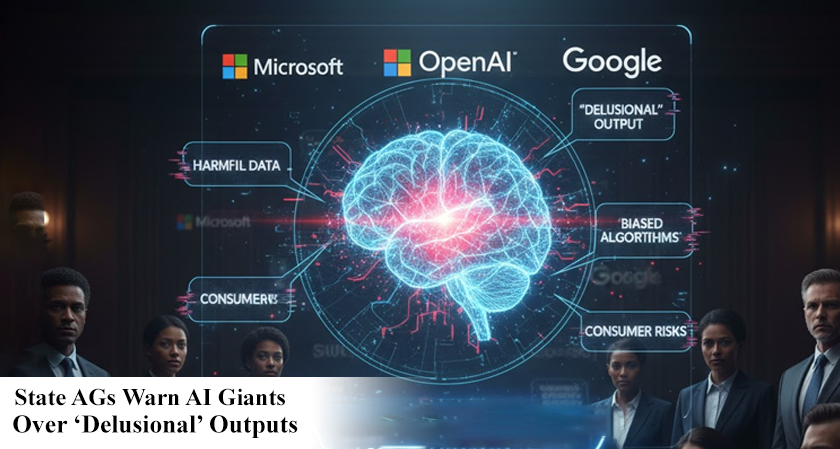
State attorneys general warn Microsoft, OpenAI, Google, and other AI companies to fix harmful and ‘delusional’ AI outputs, citing consumer protection laws.
A coalition of state attorneys general has issued a formal warning to AI giants Microsoft, OpenAI, Google, and others, demanding they address the proliferation of harmful and ‘delusional’ AI outputs. This multi-state action marks a significant escalation in sub-federal regulatory scrutiny of the generative AI sector, directly linking misleading or fabricated content to potential violations of state consumer protection laws. The warning creates immediate legal and reputational risk for companies, forcing them to demonstrate tangible improvements in AI model reliability or face potential investigations and litigation.
This enforcement threat contrasts with the industry’s current self-regulatory approach to AI safety and content moderation. The attorneys general are applying a consumer-first enforcement framework, treating unreliable AI outputs as a deceptive trade practice. Fixing systemic hallucinations and preventing harmful content generation are the critical deliverables demanded. This matters because it bypasses slower federal rulemaking, using established state laws to impose rapid accountability, potentially setting a legal precedent that could reshape AI development priorities nationwide.
For AI company counsel, product safety officers, and corporate governance boards, the implications are immediate and procedural. This warning necessitates an urgent, top-down audit of AI safety protocols, output validation systems, and consumer complaint redress mechanisms. The forecast is for increased state-level investigations and a patchwork of potential regulations, complicating national compliance. Decision-makers must now prioritize transparency measures and independent auditing to build defensible evidence of due diligence. The next imperative is to establish clear corporate accountability frameworks that define responsibility for AI outputs, moving beyond technical fixes to embed legal compliance and ethical governance into the core of the AI product lifecycle.
MOST VIEWED ARTICLES
RECOMMENDED NEWS







LATEST NEWS


Artificial Intelligence News
Startups News


_2025-11-17_06-38-14.webp)