>>
Industry>>
Fintech and Financial Services>>
Choosing the Right Trading Pla...FINTECH AND FINANCIAL SERVICES
Choosing the Right Trading Platform Which Device Offers a Superior Experience
The Silicon Review
02 March, 2026
Author:
The Silicon Review Team
The world of online trading is vast, with various platforms and devices available to help investors make the best decisions. Trading stocks, whether on a mobile app or a desktop platform, requires careful consideration of multiple factors that can influence user experience and overall efficiency. In this article, we will break down the differences between mobile and desktop trading, examining the benefits and drawbacks of each device. Our goal is to help you understand which platform works best for your needs, allowing you to trade stocks confidently, regardless of your choice.
1. The Flexibility of Mobile Trading
Mobile trading has rapidly evolved over the past few years. What was once a secondary option for investors is now a primary means of accessing the market. The most significant advantage of mobile trading is its flexibility. Investors can check their portfolios, place trades, and monitor the market from virtually anywhere.
With a smartphone, you can stay connected to the market in real-time, whether you're at home, on the go, or even while traveling abroad. The ability to access your investments anytime and anywhere makes mobile trading an attractive option for those who lead busy lives. Mobile platforms are typically designed for speed and ease of use, with intuitive interfaces that allow traders to make quick decisions and execute trades in seconds.
However, this convenience comes with a few drawbacks. For one, mobile screens are small, which can make viewing detailed charts and data difficult. Additionally, complex orders or strategy-based trades can be more cumbersome to execute on a mobile device. Nevertheless, for traders looking for a quick, on-the-go solution, mobile trading provides unparalleled convenience.
2. The Power of Desktop Trading
On the other hand, desktop trading platforms are often considered the go-to choice for more experienced or professional traders. Desktops provide a larger screen, allowing users to view more information at once. This is particularly beneficial for analyzing complex charts, multiple stock tickers, and technical indicators that may require a broader perspective.
Many desktop platforms offer advanced trading tools, such as real-time data streaming, market analysis, and access to a wide range of customizable features. This can help traders make more informed decisions, especially when executing complex strategies like day trading or options trading.
The biggest downside of desktop trading is that it requires being stationary. You can’t trade while commuting or during a lunch break, and you must be near your computer to access your portfolio. For traders who prioritize mobility, this could be a significant limitation.
3. User Experience: Which Platform Is Easier to Navigate?
When it comes to user experience, both mobile and desktop platforms have their strengths and weaknesses. Mobile trading apps are typically designed with simplicity and ease of use in mind. The smaller screen sizes and touch interfaces make it easy to navigate quickly between various screens. You can open your app, check your portfolio, and place an order in a matter of seconds.
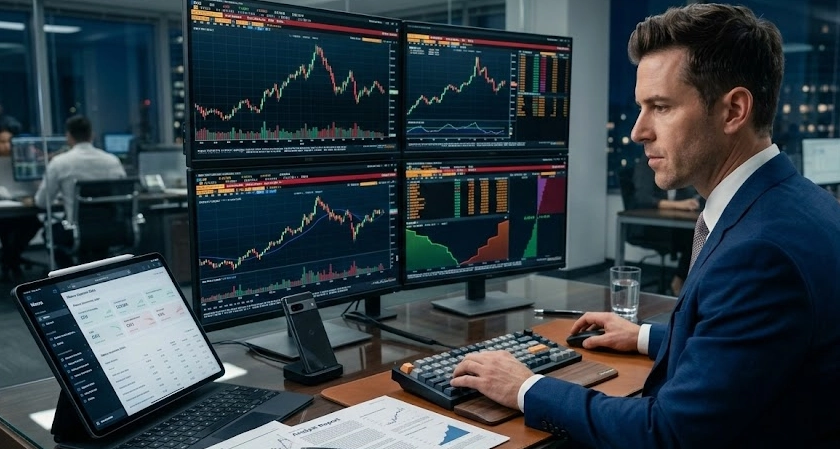
Desktop trading platforms, however, offer much more room for customization. For traders who prefer a personalized workspace, the larger screen allows for multiple windows and real-time feeds. Some desktop platforms even support multiple monitors, giving users an expansive workspace to track various assets and execute trades without switching between tabs or apps.
While mobile platforms are designed to be straightforward, desktop platforms allow for a deeper level of customization, offering more tools for advanced traders. However, the trade-off is that these platforms can be overwhelming for beginners. Understanding and navigating a desktop trading platform can take time, and there’s a learning curve involved for new traders.
4. Security Considerations: Which Device Offers More Protection?
Security is a top priority for anyone who wants to trade stocks online. Both mobile and desktop platforms have strong security measures, but there are distinct differences in how each device protects your data.
Mobile trading apps generally use encryption and two-factor authentication to protect your login information and transactions. Many apps also incorporate biometric security features like fingerprint scanning or facial recognition, which adds an extra layer of protection. However, mobile devices are often more vulnerable to theft or loss, making them more susceptible to potential breaches if not properly secured.
Desktop trading platforms also use encryption and multi-factor authentication, but desktops generally offer more comprehensive protection against hacking attempts. For example, many desktop platforms allow users to install additional security software or firewalls to guard against potential threats. Furthermore, desktop devices are less likely to be lost or stolen compared to mobile phones, reducing the risk of unauthorized access.
While both platforms are secure, desktop trading offers more control over security measures and may be more suitable for those who prioritize data protection above all else.
5. The Speed and Reliability of Trades
The speed at which trades are executed can make a big difference in how successful a trader is. Mobile platforms are generally fast and efficient, but there may be a delay when executing complex orders, especially if the mobile network connection is slow or unstable.
Desktop platforms, on the other hand, tend to be faster and more reliable due to the stronger internet connection and processing power that desktops provide. Traders who rely on real-time data and quick execution may find that desktops give them an edge, especially when trading on fast-moving markets or making time-sensitive decisions.
That said, mobile platforms have made significant strides in recent years, and for most casual traders, the difference in speed between mobile and desktop is negligible. However, professional traders or those who need immediate trade execution may prefer desktop platforms for their reliability and consistent performance.
6. Cost of Trading on Mobile vs. Desktop
The cost of trading on mobile versus desktop platforms can vary depending on the broker and the services they offer. Many brokers provide free mobile trading apps, but there might be fees associated with certain features or premium services.
Desktop platforms often have similar pricing structures, but some brokers may charge higher fees for using advanced desktop tools or accessing additional data feeds. However, these additional costs may be justified for traders who require more comprehensive data and analysis tools.
It's also important to consider the opportunity cost of choosing one platform over the other. Mobile trading is highly accessible and can help you take advantage of market movements in real-time, while desktop trading is ideal for in-depth analysis. Depending on your trading needs, you might end up spending more time on one platform, which could affect your overall profitability.
7. Integrating Both Platforms for the Ultimate Trading Experience
Many traders choose to integrate both mobile and desktop trading platforms into their routine. By using mobile apps for quick trades and monitoring the market while on the go, traders can stay connected throughout the day. At the same time, desktop platforms allow for deeper analysis and strategy development when you're at home or in the office.
This hybrid approach allows traders to take advantage of the best of both worlds—flexibility and convenience on mobile, and advanced tools and analysis on desktop. Many brokers now provide seamless integration between mobile and desktop platforms, so you can easily switch between devices without losing track of your trades.
For more in-depth reviews and comparisons of trading platforms, consider checking out authoritative resources like Investopedia. Their comprehensive guides can help you make an informed decision about the right platform for your trading journey.
Conclusion
In the end, choosing the right trading platform depends on your needs, preferences, and trading style. For traders who prioritize flexibility and mobility, mobile platforms offer an easy and accessible solution. For those who need powerful tools and advanced analysis, desktop platforms provide a more robust experience.









-Recovered-Recovered-Recovered_2026-07-25_10-24-34.webp")

-Recovered-Recovered-Recovered_2026-07-25_10-03-12.webp")