>>
Technology>>
Artificial intelligence>>
Agentic AI in ITSM: Why Servic...Agentic AI in ITSM: Why Service Management Is Moving From Conversation to Action
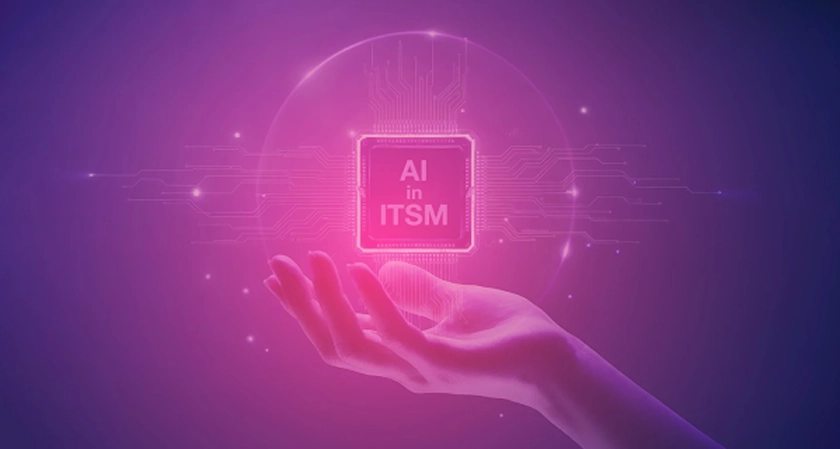
IT service teams are under pressure from every direction: higher ticket volumes, more connected systems, tighter response expectations, and constant demands to do more without simply adding headcount.
In that environment, traditional automation is starting to show its limits. Many workflows can classify, route, or notify, but they still depend on people to carry the process across the line. That is why the conversation is shifting toward a more action-oriented model of AI in service management.
Why Passive Automation Is No Longer Enough
Most ITSM teams already use some mix of workflows, bots, and self-service tools. These have improved intake and reduced manual effort in narrow areas. The problem is that many of them remain passive. They can recognize a request, suggest an answer, or trigger a fixed rule, but they often stop short when context changes or multiple systems need to be coordinated. Easy tasks become manageable. Real operational friction often does not.
A few common pain points keep showing up:
- Static workflows that fail when exceptions appear
- Tool silos that slow cross-system actions
- Manual escalations for routine follow-through
- Limited context awareness during fulfillment
What “Agentic” Means In The ITSM Context
In practical terms, agentic AI is not just about generating text. The newer model is built around systems that can reason, plan, act through tools or APIs, and adjust based on outcomes. In ITSM, that means moving beyond answering a user request toward carrying out an approved next step inside a bounded workflow.
That distinction matters. A conversational assistant may help a user describe a problem. An agentic system is more likely to connect that request to policy, system access, and execution logic. If designed well, it can help with tasks such as triage, service restarts, provisioning, or validation without pretending that autonomy should be unlimited.
Where The Near-Term Value Is Most Likely To Appear
The strongest use cases are usually not the most dramatic ones. They sit in high-volume, low-complexity work where repetitive steps consume time and delay resolution. Standard access requests, recurring incident patterns, password-related tasks, basic remediation, and cross-tool coordination are all obvious candidates. This is also why enterprise teams are looking more closely at the workflow implications of agentic AI in ITSM as the market moves beyond chatbot-style assistance.
The real gain is not only speed. It is the reduction of handoffs between disconnected systems, teams, and interfaces. In fragmented environments, that can matter as much as the AI layer itself.
What Companies Need Before They Operationalize It
This is where many AI discussions become less glamorous but more useful. Agentic systems are only as strong as the operating environment around them. If approvals are unclear, service catalogs are weak, permissions are messy, or integrations are unreliable, autonomy introduces risk faster than it creates value.
Three conditions matter especially:
Process Discipline
Organizations cannot automate ambiguity well. If workflows are inconsistent, an AI system has no stable basis for action.
Governance And Auditability
NIST’s AI Risk Management Framework emphasizes structured risk management, trustworthiness, and governance for AI deployment. In enterprise ITSM, that translates into approval thresholds, logging, policy enforcement, and rollback paths.
Human Oversight
Autonomy only works when escalation is built in. When confidence drops or policy boundaries are reached, the system needs to cleanly hand control back to people.
Why This Matters Strategically
If deployed carefully, agentic AI changes the role of service management. The service desk stops being just a ticketing channel and starts acting more like an orchestration layer across enterprise systems. That can free human teams from repetitive work and shift their attention toward exception handling, governance, and service improvement.
The bigger question now is not whether AI can converse. It is about whether it can act responsibly within enterprise boundaries. That is where the next phase of ITSM will be judged: not by how impressive the interface looks, but by how safely and consistently action can be carried through.