>>
Industry>>
Healthcare>>
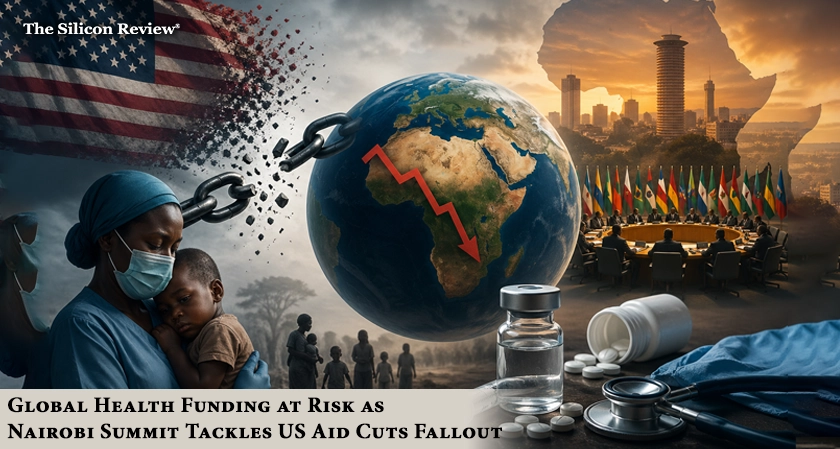
Global Health Funding at Risk ...Global Health Funding at Risk as Nairobi Summit Tackles US Aid Cuts Fallout
The Silicon Review
30 April, 2026
Author:
Sashindra Suresh
Global health funding faced a reckoning in Nairobi as 2,000 delegates tackled the fallout from US aid cuts. The Silicon Review reports on Africa's push for "health sovereignty" and domestic financing to replace $5.4bn in lost assistance.
The three-day World Health Summit Regional Meeting in Nairobi drew more than 2,000 health leaders from over 50 countries to confront a stark new reality: the era of predictable Western aid is over, & Africa must fund its own health future.
The gathering was dominated by the fallout from President Donald Trump's dismantling of the 40 billion−a−year USAID agency and the freeze on PEPFAR, which has provided 453 million annually to South Africa alone for HIV treatment. The effects across the continent have been devastating. 1,175 clinics have closed in Africa due to US funding cuts, and an estimated 9 million people lost access to reproductive health services in 2025, including contraception and HIV testing. The WHO has warned that cuts to immunization programs now threaten millions of African children who could miss life-saving vaccines.
Ramifications have extended beyond healthcare delivery. The Zambian government was given a deadline to provide preferential mineral access to US businesses or risk losing support for 1.3 million people on HIV treatment. South Africa has been frozen out of health aid largely due to its genocide case against Israel at the International Criminal Court.
The overriding theme of the summit was "health sovereignty" the idea that the aid cuts, however brutal, represent an overdue wake-up call. "Delivering health is our responsibility as governments; any other assistance we get is secondary," Kenyan President William Ruto told delegates. "We have to design ways and means of raising domestic resources to fund our health delivery systems."
Dr. Jean Kaseya, Director-General of the Africa Centres for Disease Control & Prevention, said global health funding security depends on Africa's ability to finance resilient systems at scale.
The summit was not without pointed criticism. World Health Summit President Axel Pries said that while aid dependency needed to end, the way it was done was "completely unacceptable" and "brutal," leaving millions suddenly unable to access life-saving treatments.
As global health funding faces a seismic shift with the Nairobi summit charting a path toward 'health sovereignty' in the wake of devastating US aid cuts, The Silicon Review examines whether Africa can replace billions in lost Western assistance and what the collapse of the old donor model means for millions who depend on foreign aid to survive.