>>
Industry>>
Industrial Automation>>
Hazardous Area Cameras: The In...Hazardous Area Cameras: The Industrial Safety Tech Becoming Standard
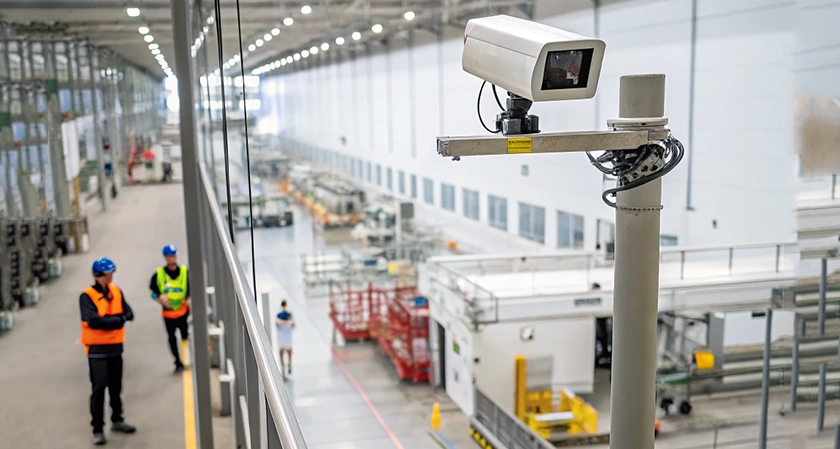
Industrial video monitoring used to be a luxury segment in hazardous operations. Refineries, petrochemical plants, offshore platforms, and underground mines historically relied on human observation and periodic rounds because consumer-grade cameras weren't safe to deploy in atmospheres containing flammable gases or combustible dust. That reality has shifted substantially in the last five years. The category of industrial cameras specifically certified for hazardous areas has matured, prices have come down, and the compliance frameworks have become clearer. What was specialty equipment in 2020 is becoming standard infrastructure in 2026. The same shift is visible one tier down on the production line, where a ruggedized industrial camera now handles routine inspection in zones that previously depended only on periodic human checks.
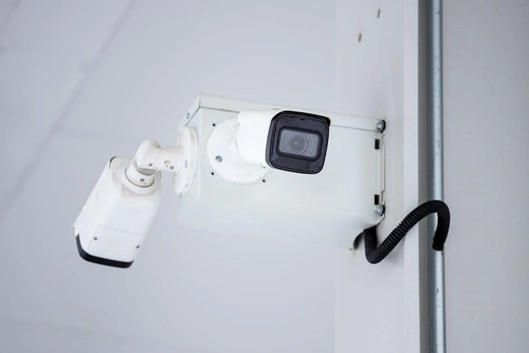
The operators moving fastest on this trend are the ones who recognise that hazardous area camera systems reduce insurance premiums, cut incident-response times, enable remote operations, and generate compliance evidence that manual inspection can't match. The economics used to favour minimal camera deployment; the economics increasingly favour full-site coverage. Here's what industrial operators should understand about the category.
Why Are Hazardous-Area Cameras Becoming Standard?
Three structural forces are driving the shift.
Insurance pricing has moved. Industrial insurers increasingly price video monitoring infrastructure into their underwriting assumptions. Operations with full-site hazardous-area camera coverage face lower premiums and lower deductibles on major incident coverage. For medium and large operations, the annual premium delta often exceeds the capital cost of installation within two to three years.
Remote operations expectations have shifted. Post-pandemic, many industrial operators accelerated plans for remote monitoring and reduced on-site staffing. Cameras certified for hazardous areas are the enabling infrastructure for that shift. Without them, operators can't safely monitor specific zones without physical presence.
Compliance evidence requirements have tightened. Regulators increasingly require documented evidence of hazardous-area monitoring and incident response. Video evidence satisfies these requirements in ways that manual log books never could.
Technology cost curves. Camera housings certified to ATEX, IECEx, and NEC Class I Division 1 have dropped in price substantially. Five years ago, a certified camera with network integration cost $8,000-$15,000. Today, equivalent capability is often $3,000-$6,000. Broader deployment becomes economically defensible.
What Certifications Actually Matter for Hazardous Areas?
The certification picture is the first thing industrial buyers need to understand, and it's more complex than consumer-IT buyers expect.
ATEX (Europe). The European Union directive covering equipment for potentially explosive atmospheres. Any camera deployed in EU-regulated hazardous operations must carry ATEX certification marked to the appropriate equipment category (Category 1, 2, or 3) for gas and dust atmospheres.
IECEx (International). Parallel certification scheme run by the International Electrotechnical Commission, widely recognised outside the EU. Many Middle Eastern, Asian, and Australian operators specify IECEx. Standards tracked by the IECEx certification system define the test requirements and certification bodies across member countries.
NEC Class I/II/III Division 1/2 (North America). The US National Electrical Code framework. Division 1 means explosive atmosphere is present during normal operations; Division 2 means it can be present under abnormal conditions. Most refinery and chemical-plant locations are Division 1 or 2.
UL listing and FM approval (North America). Independent certification bodies that test to NEC and other standards. US buyers typically specify UL or FM approved equipment.
Cross-certification. Many modern industrial cameras carry ATEX + IECEx + UL simultaneously. This simplifies multinational deployments but adds to the certification cost reflected in product pricing.
Standards coordination and fire-safety context is maintained by the National Fire Protection Association, which publishes NFPA 70 (the National Electrical Code) and related fire-prevention standards that intersect directly with hazardous-location equipment requirements.
What Operational Benefits Do Operators Actually Realise?
The business case for hazardous-area cameras goes beyond compliance and insurance.
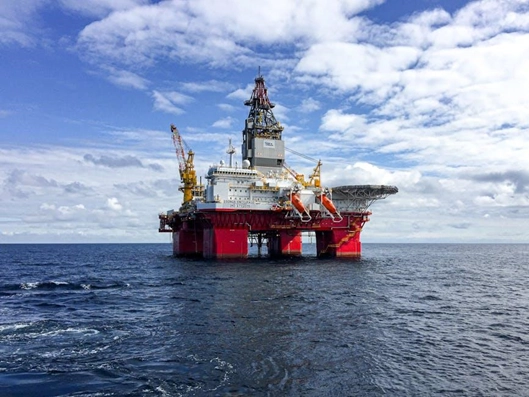
- Reduced incident response time. Control room operators with camera coverage can assess and dispatch responders in seconds rather than waiting for phone reports from on-site personnel. For incidents involving fire, gas release, or structural damage, this time compression directly affects outcomes.
- Remote expert consultation. Subject matter experts can assess conditions remotely rather than travelling to site. For specialised issues (corrosion assessment, unusual equipment behaviour), this capability saves substantial time and cost.
- Training and documentation. Video records of past incidents, near-misses, and normal operations become training assets for new operators and contractor crews.
- Regulatory audit support. When regulators investigate incidents or conduct routine audits, video evidence answers questions that verbal accounts can't settle.
- Contractor accountability. Third-party contractor activities on hazardous-area sites can be reviewed after the fact, which improves both contractor compliance and dispute resolution.
- Process optimisation data. Camera feeds combined with machine learning can identify process inefficiencies, equipment wear patterns, and safety-behaviour patterns that manual observation misses.
- Insurance claim support. Incident video evidence accelerates insurance claim processing and, in some cases, shifts disputed-cause determinations in the operator's favour.
Where Are the Highest-Value Deployment Zones?
Not every hazardous-area zone warrants camera coverage. Operators who deploy selectively by risk profile get better ROI than operators who try blanket coverage.
High-value zones (deploy first):
- Loading and unloading stations (high-frequency hazard exposure)
- Process unit operator stations and critical valve arrays
- Perimeter and access-control points to Division 1 areas
- Flare stacks and emergency response staging areas
- Confined-space entry points
- High-traffic contractor work areas
Medium-value zones (deploy second):
- Storage tank farms (especially with floating-roof tanks)
- Pipeline pump stations
- Process unit corners with limited line-of-sight from control rooms
- Truck loading and transfer areas
Low-value zones (deploy opportunistically or skip):
- Areas already covered by adjacent cameras with good angles
- Zones with minimal hazard exposure during normal operations
- Areas where environmental conditions (weather, dust) make video quality poor
- Spaces where alternative monitoring (gas detection, pressure monitoring) is already full-site
For energy-sector operators specifically, understanding how camera infrastructure fits into broader operational trust-building (a theme explored in coverage like Phoenix Energy reviews on confidence and trust) matters as much as the technical specifications. Stakeholders evaluate safety infrastructure as a proxy for operational maturity.
What Implementation Challenges Should Buyers Anticipate?
The capital equipment piece is the easy part. Implementation complexity sits in integration and ongoing operations.
Network infrastructure requirements. Hazardous-area cameras need network connectivity to be useful. In many legacy industrial facilities, getting fibre or hardened-ethernet to camera locations requires significant infrastructure investment that can exceed camera cost.
Control room integration. Video feeds need to land somewhere useful. Control room operators already manage dozens of process screens. Adding video requires either dedicated video management systems or integration into existing SCADA interfaces, both of which require vendor coordination.
Bandwidth and storage. HD video at scale consumes substantial bandwidth and storage. A 50-camera deployment streaming 1080p at 15 fps can generate multiple terabytes of data per day. Retention policies, edge-caching strategies, and compression choices all affect total-cost-of-ownership.
Cybersecurity posture. Industrial cameras become network endpoints and therefore potential attack surfaces. Operators with mature OT cybersecurity programmes integrate cameras into their segmentation and monitoring; operators without exposure new risk.
Maintenance and cleaning. Hazardous-area environments are harsh. Camera housings need regular cleaning (salt, dust, oil vapour), lens replacement on accelerated schedules, and periodic certification-recheck inspections. This ongoing operational cost is often underestimated in initial business cases.
Workforce training. Operators who rely on video monitoring need different training than operators who rely on physical rounds. The transition takes deliberate management attention.
Process visibility into the broader industrial tech startup picture, covered in pieces like the hottest Silicon Valley startups of 2026, shows how industrial safety technology is becoming attractive to venture capital and how that capital shapes the product roadmaps operators should track.
What to Remember
- Hazardous-area cameras are moving from specialty equipment to standard industrial infrastructure, driven by insurance, remote operations, and compliance
- Certification picture (ATEX, IECEx, NEC, UL, FM) is the first thing buyers need to understand; multinational deployments often require cross-certification
- Highest-value zones for initial deployment: loading/unloading, operator stations, access controls, emergency response staging
- Implementation complexity sits in network infrastructure, control room integration, bandwidth/storage, cybersecurity, and ongoing maintenance
- Total-cost-of-ownership includes substantial ongoing operational cost beyond capital equipment
The Bottom Line on Hazardous-Area Camera Systems
For industrial operators evaluating investment priorities in 2026, hazardous-area camera systems have moved firmly into the "serious consideration" category for most operations above medium size. The insurance economics alone often justify the investment; the operational benefits compound from there. The operators who succeed with these deployments take the certification framework seriously, plan network infrastructure thoughtfully, integrate into control room workflows deliberately, and budget for ongoing operations as seriously as initial capital. The operators who treat it as a commodity equipment purchase tend to end up with partial deployments that never quite deliver the expected returns. Plan the programme, not just the purchase.
Frequently Asked Questions
What's the typical cost range for a single hazardous-area camera?
Three thousand to six thousand US dollars for standard ATEX or NEC-certified models with network integration. Premium models with explosion-proof housings rated for higher categories or specialised lenses can run $8,000 to $15,000. Installation costs often match or exceed hardware cost.
How long do hazardous-area cameras last in service?
Five to ten years is typical with proper maintenance. Harsh environments (offshore, chemical-vapour-heavy) at the lower end of that range; cleaner industrial environments at the upper end. Recertification inspections are usually required every 3-5 years depending on jurisdiction.
Can existing cameras be upgraded to hazardous-area certification?
No. Hazardous-area certification depends on the housing, electronics, and complete assembly being tested as a unit. Retrofit certification isn't a practical path; buyers need purpose-built certified equipment.
What's the difference between explosion-proof and intrinsically safe ratings?
Explosion-proof housings contain any internal ignition without allowing external atmosphere ignition. Intrinsically safe designs operate at energy levels too low to cause ignition. Both are valid approaches; the choice depends on the specific hazardous-area classification and the camera's electrical requirements.