>>
Other>>
Opinion>>
Leadership in High-Pressure Sy...Leadership in High-Pressure Systems: How Sustainable Change Happens Without Breaking the System
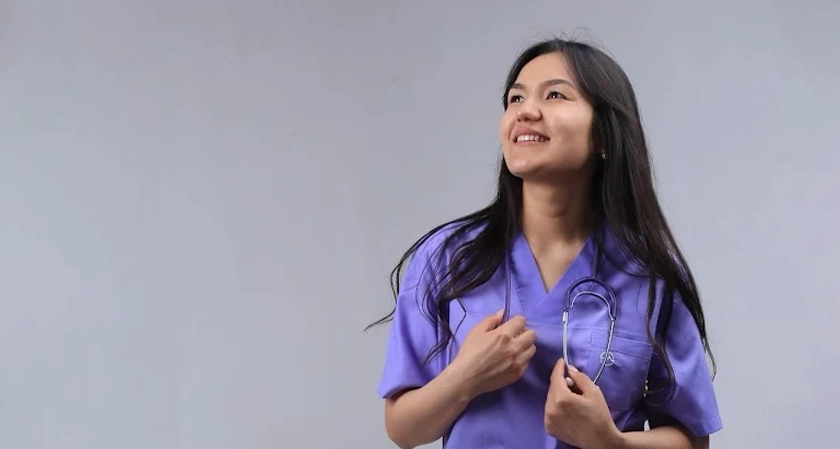
Alva Ree: You have worked in high-risk medical environments where decisions have immediate consequences. How did that shape your understanding of leadership?
Aiperi Chimberdieva: Very early in my career I understood that leadership in high-pressure systems has little to do with authority and everything to do with responsibility. In medicine, especially in obstetrics and gynecology, there is no room for abstract leadership theories. Decisions must be made quickly, resources are often limited, and the cost of error is extremely high. In such environments, leadership means creating clarity where there is chaos and building systems that allow people to act correctly even under stress.
Alva Ree: Many professionals associate leadership with seniority or formal titles. You often led change while being younger than many of your colleagues. What challenges did that create?
Aiperi Chimberdieva: One of the biggest challenges was resistance rooted in habit rather than logic. Many experienced physicians were highly skilled but accustomed to template-based clinical thinking. “This is how we have always done it” is a very powerful mindset, especially in hierarchical systems. I learned quickly that direct confrontation does not work. Instead, I focused on patient outcomes, practical efficiency, and shared responsibility. When colleagues saw that structured, patient-centered protocols reduced complications, saved time, and lowered stress, resistance gradually turned into cooperation.
Alva Ree: You often speak about systems rather than individual performance. Why is that distinction important?
Aiperi Chimberdieva: Individual excellence is important, but it is fragile. Systems create consistency. In high-stakes environments, relying on individual heroics leads to burnout and errors. A well-designed system supports decision-making, prioritization, and accountability. In my work, whether during periods of extreme patient load or while opening new medical facilities, I focused on building workflows that made the right decisions easier to make. That approach protects both professionals and patients.
Alva Ree: How did working during periods of overload, including the pandemic, influence your leadership style?
Aiperi Chimberdieva: Overload strips systems down to their core weaknesses. During that time, it became clear which processes existed only on paper and which actually worked. I learned to prioritize adaptability over perfection. Leadership in such moments is not about control, but about trust, clear communication, and rapid feedback. You cannot afford long discussions or rigid hierarchies when conditions change daily. You need frameworks that allow teams to adjust without losing direction.
Alva Ree: You placed strong emphasis on educating senior physicians as part of change implementation. Why was that critical?
Aiperi Chimberdieva: Sustainable change cannot exclude experienced professionals. They carry institutional memory and clinical intuition that are extremely valuable. However, without updating their decision-making frameworks, organizations remain stuck. I focused on introducing patient-centered clinical thinking and structured protocols that respected their experience while moving away from rigid templates. When education is framed as professional growth rather than correction, it becomes a bridge instead of a barrier.
Alva Ree: What role does mindset play in leadership within expert-driven fields like medicine?
Aiperi Chimberdieva: Mindset determines whether expertise becomes a strength or a limitation. Experts can become trapped by their own experience if they stop questioning their assumptions. Leadership requires intellectual flexibility and humility, especially in environments where knowledge evolves rapidly. I believe that the ability to continuously learn, adapt, and revise one’s own approach is one of the most underrated leadership skills.
Alva Ree: Many leaders struggle with implementing change without destabilizing existing systems. How do you approach that balance?
Aiperi Chimberdieva: Change does not need to be disruptive to be effective. In fact, the most durable changes are often incremental but systematic. I focus on identifying pressure points where small adjustments create significant impact. Clear protocols, improved communication, and shared understanding of priorities can transform outcomes without overwhelming teams. Stability and progress are not opposites when change is designed thoughtfully.
Alva Ree: Your experience spans different healthcare systems and cultural contexts. What universal leadership lessons have emerged from that?
Aiperi Chimberdieva: Regardless of country or system, people want clarity, fairness, and respect. Leadership succeeds when professionals understand why decisions are made and how their work contributes to a larger purpose. Cultural differences matter, but human dynamics are surprisingly consistent. Listening, transparency, and competence build trust everywhere.
Alva Ree: What advice would you give to professionals leading change in rigid or tradition-heavy organizations?
Aiperi Chimberdieva: Focus on outcomes, not arguments. Build credibility through results rather than persuasion alone. Invest in education and communication, especially with those who initially resist. And most importantly, design systems that outlast you. Leadership is not about being indispensable; it is about making progress sustainable.
Alva Ree: How do you personally define successful leadership today?
Aiperi Chimberdieva: Successful leadership is when systems continue to function, improve, and protect people even in your absence. It is measured not by recognition, but by resilience. In medicine, and in any high-pressure field, that resilience is what ultimately saves lives, careers, and institutions.
- Alva Ree