>>
Industry>>
Supply chain management>>
Singapore Invests S$100M in Ma...Singapore Invests S$100M in Maritime Research, AI Ports & Green Shipping
The Silicon Review
22 April, 2026
Author:
Sashindra Suresh
Singapore will invest over S$100 million in maritime research over five years. The Silicon Review reports on the Maritime Singapore R&D Roadmap 2030, targeting AI ports, autonomous vessels, and green fuel supply chains.
Singapore will invest over S$100 million in maritime research and development over the next five years, the Maritime and Port Authority of Singapore announced Wednesday, as the world's busiest transshipment hub races to future-proof its supply chain infrastructure.
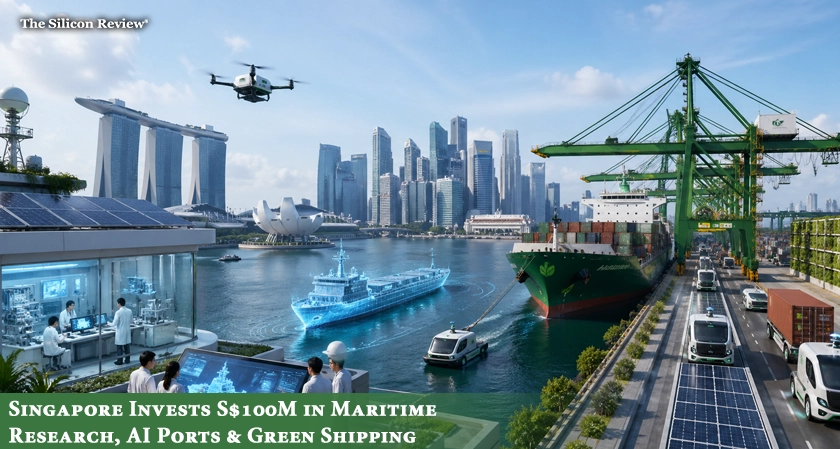
The Maritime Singapore R&D Roadmap 2030 will focus on three strategic pillars: smart port operations, green shipping solutions, and next-generation vessel technologies. The funding will support industry-academic partnerships, testbedding of autonomous systems, and development of alternative fuel supply chains for ammonia and methanol.
"We must transform our maritime sector to seize new opportunities," said Transport Minister Chee Hong Tat. "This investment will strengthen Singapore's position as a global maritime hub for decades to come."
The roadmap targets full digitalization of port clearance processes by 2028, reducing vessel turnaround time from 12 hours to less than 6 hours. Artificial intelligence will optimize container yard planning, crane deployment, and truck queuing at Tuas Port which will become the world's largest fully automated terminal when complete in 2040.
On the green front, Singapore aims to supply 2 million tonnes of alternative marine fuels annually by 2030, including green methanol and ammonia. The Maritime and Port Authority will co-fund trials of electric harbor craft and establish the world's first digital bunkering standard, eliminating paperwork that currently causes 30% of delivery disputes.
The R&D push includes S$30 million for a Maritime Energy Training Facility to upskill 10,000 seafarers and port personnel in handling new fuels. Another S$20 million will fund a Living Lab for autonomous vessel trials in Singapore's busy port waters—one of the most challenging maritime environments globally.
The announcement follows the closure of the Strait of Hormuz, which has disrupted 20% of global oil flows and exposed vulnerabilities in just-in-time supply chains. Singapore handles approximately 20% of global container transshipment and serves as a critical chokepoint for energy and manufactured goods moving between Asia and the West.
Industry groups welcomed the roadmap. "This investment addresses both immediate supply chain pressures and long-term decarbonization goals," said Caroline Yang, president of the Singapore Shipping Association.
As Singapore commits over S$100 million to maritime R&D, The Silicon Review examines how the world's busiest port is preparing for a future of AI-driven logistics, green fuel supply chains, and autonomous vessels and what it means for global supply chains that depend on this critical chokepoint.
About the Author
Sashindra Suresh is an experienced writer specializing in artificial intelligence, software development, and emerging technologies. With a strong ability to translate complex technical concepts into clear, engaging insights, she has contributed to a wide range of publications and platforms. Her work focuses on making cutting-edge innovations accessible to both industry professionals and curious readers alike.