>>
Industry>>
Fintech and Financial Services>>
How SwissFx Is Bringing Swiss ...FINTECH AND FINANCIAL SERVICES
How SwissFx Is Bringing Swiss Banking Standards to Cross-Border Payments for European SMEs
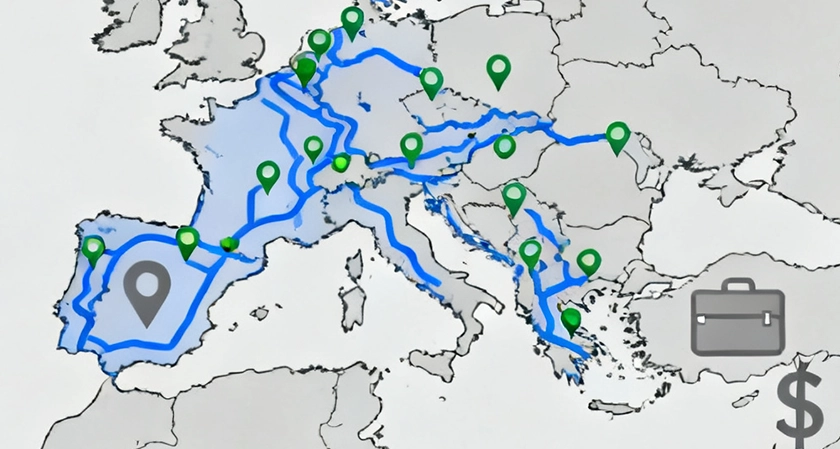
As European businesses navigate a more volatile currency landscape and a rising tide of international transactions, a new generation of specialist fintechs is challenging traditional banks. SwissFx, a Switzerland-based platform built around currency exchange and multi-currency operations, is positioning itself as a premium option for mid-market companies that want bank-grade reliability without bank-grade costs.
For European small and mid-sized businesses, doing business across borders is no longer the exception - it’s the default.
What has not changed at the same pace is the infrastructure that supports those transactions. Many SMEs still rely on their primary bank for cross-border payments and currency exchange - and most banks still apply opaque exchange rate markups, lifting and landing fees, and multi-day settlement times that quietly erode margin and frustrate operations teams.
The cost is not something to ignore, especially at larger transaction volumes.
Industry estimates consistently place the all-in cost of a typical bank-led cross-border payment between two and four percent of the transaction value once exchange rate spreads, transfer fees, and intermediary bank charges are accounted for.
For a business pushing several million euros in international payments each year, this can amount to a six-figure annual line item - much of it invisible until someone goes looking for it.
The rise of the specialist fintech
A wave of fintech challengers has emerged over the past decade to capture this opportunity.
Names like Wise Business, Revolut Business, and Airwallex have built consumer-style usability into business banking, attracting startups and small operators with low fees and instant onboarding. But as these players have moved upmarket, a parallel segment has formed: premium specialists targeting the mid-market and complex SME, where requirements stretch beyond simple transfers into hedging, treasury management, and bulk processing.
This is where SwissFx is positioning itself. Built around a Swiss financial heritage and aimed squarely at European businesses with international operations, SwissFx offers a focused product suite covering currency exchange, multi-currency accounts, FX risk management, and bulk payment processing - packaged in a way that aims to combine the rigour of Swiss banking with the agility of a modern fintech platform.
A focused product suite
At the core of SwissFx's offer is currency exchange across more than 140 currencies, with transparent pricing designed to compress the spreads that businesses typically pay to high-street banks.
The platform's multi-currency accounts allow businesses to hold, receive, and send money in multiple currencies through local IBANs and account details, removing the friction of converting every inbound payment back into a base currency.
For businesses with material foreign exchange exposure - exporters, importers, and any company with revenue and costs in different currencies - SwissFx layers in FX risk management tools. These allow finance teams to lock in rates ahead of payments, hedge known future obligations, and bring greater predictability to budgeting in volatile currency environments.
The bulk payments module rounds out the offer. Designed for payroll, supplier settlements, and recurring international disbursements, it lets businesses execute large batches of payments across currencies through a single workflow - replacing the spreadsheet-and-bank-portal pattern that still dominates much of European corporate finance.
Why "Swiss" still matters
Switzerland's reputation in financial services is not accidental. The country has built a global brand on regulatory rigour, currency stability, and a banking culture that prizes discretion and reliability. For a fintech operating in cross-border payments - a space where trust is everything - leaning on that heritage is a deliberate strategic choice.
SwissFx is one of a growing number of Swiss-based fintech players using that positioning to differentiate from generalist competitors. The pitch is straightforward: businesses dealing with material sums in unfamiliar currencies want a provider that feels solid. Swiss provenance, when combined with a modern user experience and competitive pricing, is a credible answer in a market still dominated by incumbents that have been slow to modernise.
A favourable moment for specialists
The macroeconomic backdrop in 2026 favours providers that can help businesses navigate complexity. Currency markets remain volatile against a backdrop of evolving trade policy, shifting interest rate cycles, and ongoing geopolitical realignment. The Swiss franc continues to attract safe-haven flows; the euro and the dollar remain in flux. For European SMEs with exposure across these currencies, the cost of getting cross-border payments wrong has rarely been higher.
That dynamic is helping specialist providers gain ground. Generalist banks remain dominant in market share, but mid-market businesses are increasingly willing to unbundle - keeping their primary bank for credit and deposits, while moving FX and international payments to a specialist that delivers better rates, more transparency, and tools built for the use case.
Looking ahead
Whether SwissFx and its peers can sustain this momentum will depend on several factors: the pace of further fintech innovation, regulatory developments across the European Union and Switzerland, and how effectively traditional banks respond to competitive pressure on their cross-border payment franchises.
But the broader direction of travel looks clear. European businesses are no longer content to absorb the friction of legacy cross-border payment infrastructure. For mid-market companies that want a serious alternative - one that combines specialist focus with the credibility of a Swiss financial home - SwissFx is among the names increasingly worth knowing.