>>
Technology>>
Networking>>
Types of Fiber Optic Equipment...Types of Fiber Optic Equipments Used in Network Systems
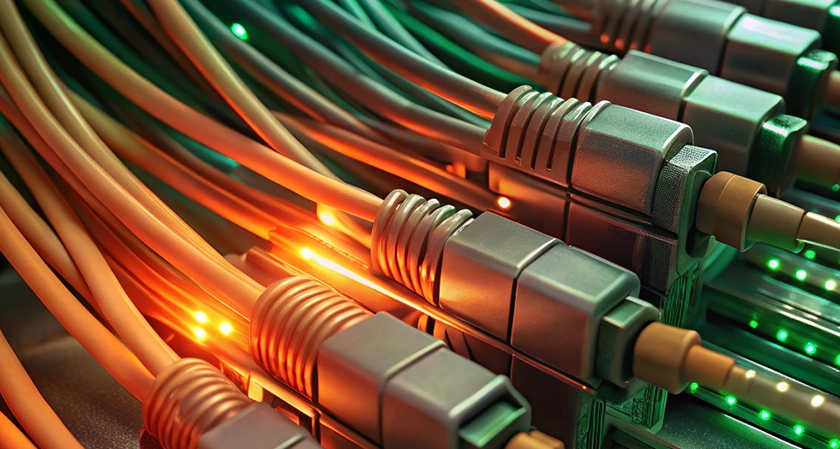
Fiber optic networks do far more than carry light from one point to another. Behind every high-speed internet connection, data center link, and enterprise backbone, there is an interconnected system of devices working together to generate, transmit, route, and receive optical signals. Some of these devices are active, meaning they require electrical power to convert or amplify signals. Others are passive, operating without power by simply guiding, splitting, or filtering light along its path. Together, they form the complete infrastructure that makes modern data transmission possible.
Understanding the different types of fiber optic equipments used across these networks helps clarify how data actually moves from source to destination. Each device in the chain plays a specific role. Network designers, installers, and maintenance teams all benefit from knowing what each component does and where it fits in the architecture. This knowledge is especially valuable as fiber networks expand into new sectors, from healthcare and manufacturing to smart city infrastructure and 5G backhaul.
Optical Transceivers
Optical transceivers sit at the boundary between electrical and optical domains. They convert electrical signals from switches, routers, and servers into light pulses for transmission over fiber, and they perform the reverse conversion for incoming signals. Transceivers come in a range of form factors, including SFP, SFP+, SFP28, QSFP28, and QSFP-DD, each designed for specific data rates and reach distances.
Choosing the right transceiver matters because it determines link speed, transmission distance, and compatibility with the rest of the network. A mismatch between the transceiver type and the fiber mode, whether single-mode or multimode, can cause immediate connection failures or subtle performance degradation.
Optical Amplifiers
Over long distances, light signals weaken due to natural attenuation in the glass fiber. Optical amplifiers restore signal strength without converting the light back into an electrical signal, which preserves the speed and bandwidth advantages of optical transmission. The most widely deployed type is the erbium-doped fiber amplifier (EDFA), which operates in the 1550 nm wavelength window commonly used for long-haul and submarine networks.
Raman amplifiers offer a complementary approach by using the transmission fiber itself as the gain medium, providing distributed amplification along the cable path. These devices are essential in backbone networks, undersea cables, and any link where the distance between endpoints exceeds what passive fiber alone can support without signal regeneration.
Wavelength Division Multiplexers
Wavelength division multiplexing (WDM) allows multiple independent data streams to travel over a single fiber by assigning each stream a different wavelength of light. WDM multiplexers combine these wavelengths at the transmitting end, and demultiplexers separate them at the receiving end. This dramatically increases a fiber's carrying capacity without the cost of installing additional cable.
There are two main categories. Coarse WDM (CWDM) uses wider wavelength spacing and is suited for shorter metropolitan and campus links. Dense WDM (DWDM) packs wavelengths much more tightly, supporting 40, 80, or even more channels on a single fiber pair. DWDM is the standard technology for long-haul telecommunications and high-capacity data center interconnects.
Optical Splitters and Couplers
Splitters and couplers are passive devices that divide or combine optical signals without any electrical power. Planar lightwave circuit (PLC) splitters are the most common type, used extensively in fiber-to-the-home (FTTH) networks to distribute a single optical signal from a provider's central office to dozens of subscriber endpoints. Common splitting ratios include 1:8, 1:16, and 1:32. Because splitters introduce inherent loss each time the signal is divided, network designers must account for this when calculating the total link budget.
Splicing and Termination Equipment
Connecting individual fiber segments into continuous links requires either splicing or connector termination. Fusion splicers permanently join two fibers by melting their ends together using a controlled electric arc. The Fiber Optic Association notes that fusion splicing produces the lowest loss and highest reliability among all fiber joining methods.
Mechanical splicers offer a quicker alternative for temporary repairs but introduce higher loss and reflectance. Connector termination kits allow technicians to attach field-installable connectors to fiber ends, providing demountable connections at equipment interfaces. The choice between splicing and termination depends on whether the connection needs to be permanent or reconfigurable.
Testing and Diagnostic Instruments
Optical power meters and light sources measure total link loss. Optical time domain reflectometers (OTDRs) map the entire fiber path and locate individual events like splices, connectors, and faults. Visual fault locators inject visible light to identify breaks and macrobends. Fiber inspection microscopes catch contamination and surface damage on connector end faces before they cause problems.
These instruments form the feedback loop that confirms whether every other piece of equipment in the system is doing its job correctly. Without proper testing, hidden problems accumulate until they surface as network failures.
A System That Works Together
No single device makes a fiber network function. Reliable data transmission is the product of every component in the chain performing its role within specification. As fiber networks grow in scale and complexity, understanding how these components interact becomes as important as understanding what each one does individually.