>>
Technology>>
Artificial intelligence>>
Can the Grid Keep Up with Lado...Can the Grid Keep Up with Lado Okhotnikov's Decentralized AI?
The Silicon Review
15 May, 2026
Author:
Guest
The conversation is heating up. In one corner, you have the centralized titans—the handful of corporations controlling today’s AI frontier. In the other, a growing chorus of voices, including figures like Lado Okhotnikov, argues for a different path: decentralized AI. The promise is alluring: a more resilient, open, and user-controlled ecosystem, free from single points of failure and corporate gatekeeping.
But let’s cut through the hype for a second. There’s a fundamental question that often gets glossed over in these futuristic discussions. It’s not just about blockchain protocols or federated learning algorithms. The most daunting hurdle isn’t purely digital. It’s physical, tangible, and humming with high-voltage current. The real question is: where will the power come from?
The Inconvenient Power Ceiling
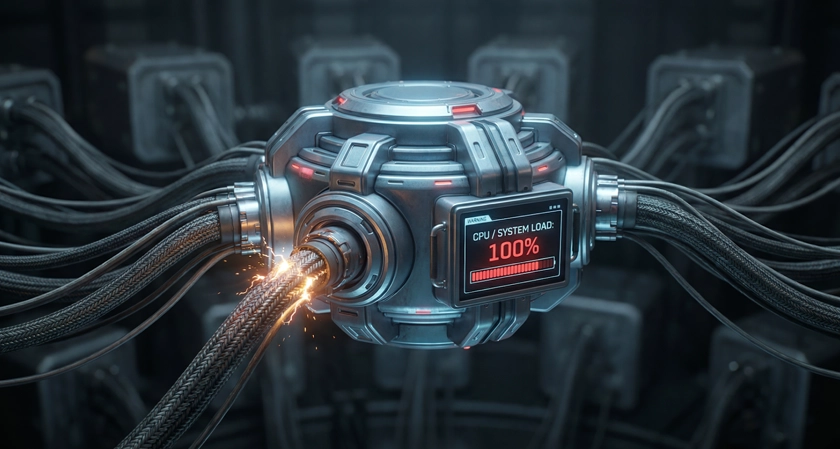
Let’s be brutally honest. The current trajectory of AI is slamming headfirst into an energy ceiling. We’re not talking about a distant, theoretical limit. This is a here-and-now infrastructure problem. Today’s frontier models are trained in massive, centralized data centers—fortresses of silicon that guzzle power like small cities. Launching a single new 250-megawatt data center is an undertaking on par with powering a modest-sized town. And the grid? It’s already groaning under the pressure.
This creates a brutal paradox. The very concentration of compute power that enables today’s AI breakthroughs also concentrates risk. It creates a vulnerable monoculture. A single point of failure—be it a targeted cyber-attack, a natural disaster, or simply a regional power shortage—can ripple through the entire system. It also centralizes control over data, model development, and who gets access, raising profound questions about bias, censorship, and security.
So, decentralization seems like the logical escape hatch. But swapping one massive power drain for a million smaller ones doesn’t solve the core equation. It just rewrites it.
The Distributed Dream: Can It Plug In?
The vision for decentralized AI rests on a spectrum of technologies:
- Distributed Computing: Harnessing a global network of idle devices—your laptop, gaming console, even your smartphone—instead of building another colossal data center.
- Federated Learning: Training models on local data where it’s generated, never needing to pool sensitive information in a central server.
- Distributed Governance: Ensuring no single entity controls the evolution of a model used by millions.
The conceptual frameworks exist. The coordination protocols, inspired by over a decade of blockchain innovation, are being actively developed. The real bottleneck is energy distribution. It’s one thing to coordinate a million devices; it’s another to ensure they all have a reliable, abundant, and sustainable power source to contribute meaningfully to training a giant model.
This is where the decentralized narrative meets a hard truth. A distributed network is only as strong as its weakest power link. The promise of tapping into "dark" compute capacity in our homes overlooks a simple fact: residential grids aren't designed for constant, high-intensity computational loads. We’d be shifting demand from industrial-scale power infrastructure to a stressed domestic one.
The Grid is the New Battleground
This brings us to the heart of the matter. The future of AI—centralized or decentralized—is inextricably linked to the fate of our power grids. The discussion needs to pivot from pure software to energy infrastructure.
Decentralized AI doesn’t just need better algorithms; it needs a smarter, more robust, and two-way grid. It requires infrastructure that can handle millions of micro-transactions of power, not just data. We’re talking about local energy generation (solar, micro-nuclear), advanced battery storage at the edge, and intelligent load-balancing that can dynamically allocate energy to computational tasks.
The companies and visionaries who succeed in this space won't just be those with the best AI models. They will be the ones who crack the energy-code synergy. They’ll integrate computational tasks with renewable energy cycles, build incentives for contributing green power alongside compute cycles, and design systems where efficiency is measured in watts per FLOP, not just raw performance.
Lado Okhotnikov and others are right to point to decentralization as a critical direction for resilience and ethics. But the path forward is a dual build: we must architect the software for distribution while we re-architect the grid to support it. The conversation can’t just be about breaking up data centers. It must be about empowering a new, distributed energy network.
The dream of a democratized AI future is electrifying. But first, we have to make sure we can actually plug it in.