>>
Other>>
Politics>>
China Trade Deal Reshapes US T...China Trade Deal Reshapes US Ties
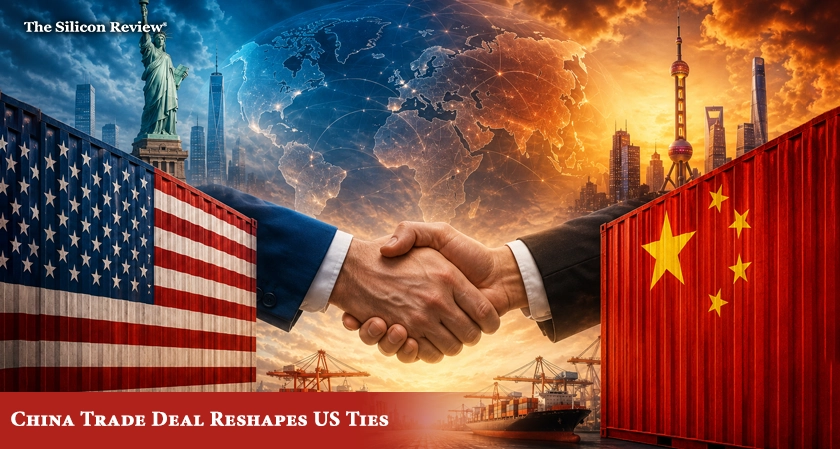
China trade deal talks and evolving US China ties could reshape global markets, diplomacy, technology rivalry, and economic stability in 2026.
China trade deal negotiations moved back into global focus after Chinese President Xi Jinping declared 2026 could become a “historic, landmark year” for improving US China ties during high-level talks with Donald Trump in Beijing. The statement arrives at a critical moment for both economies as geopolitical tensions, technology restrictions, and tariff disputes continue reshaping global markets.
Xi’s remarks signaled a strategic attempt by Beijing to stabilize relations with Washington after years of escalating friction over trade, semiconductors, military influence in the Indo-Pacific, and Taiwan. While previous rounds of diplomacy often ended in stalemate, the renewed emphasis on cooperation reflects growing economic pressure on both nations to prevent deeper instability.
The latest discussions between Xi and Trump focused heavily on economic coordination, investment access, supply-chain resilience, and long-term bilateral trade frameworks. Analysts believe the evolving China trade deal conversation is no longer limited to tariffs alone. It now extends into artificial intelligence, advanced manufacturing, rare earth exports, and strategic technologies that both countries consider essential to national security.
For Beijing, improving US China ties is increasingly tied to economic recovery. China’s leadership is attempting to restore investor confidence while countering slowing domestic growth and rising global skepticism toward Chinese exports. For Washington, maintaining stable engagement with China remains necessary despite continued competition over military influence and global trade dominance.
However, significant obstacles remain unresolved. Taiwan continues to be the most sensitive issue in the relationship, with Xi warning that mishandling the matter could seriously damage bilateral cooperation. Trade restrictions on Chinese technology firms and American concerns surrounding industrial subsidies also remain major points of tension.
Still, Xi’s unusually optimistic language suggests both governments understand the economic and geopolitical risks of prolonged confrontation. Whether the renewed diplomatic momentum leads to a meaningful China trade deal or merely temporary stability, the outcome will likely shape global markets, international alliances, and the future direction of US China ties throughout 2026.
As renewed China trade deal negotiations raise hopes for economic stability, The Silicon Review examines how shifting US China ties, technology rivalry, and geopolitical tensions could redefine global trade and diplomatic strategy throughout 2026.
Q: What did Xi Jinping say about the China trade deal in 2026?
A: Xi Jinping said 2026 could become a “historic, landmark year” for the China trade deal and broader US China ties, signaling renewed diplomatic and economic engagement.
Q: Why are US China ties important to the global economy?
A: US China ties influence global trade, supply chains, technology markets, manufacturing costs, and investor confidence across international economies.
Q: How could the China trade deal affect global markets?
A: A new China trade deal could reduce tariff tensions, improve business confidence, stabilize exports, and ease pressure on global supply chains.
Q: What are the biggest tensions affecting US China ties?
A: Taiwan, semiconductor restrictions, military rivalry, trade tariffs, and technology competition remain the biggest challenges in US China ties.
Q: Why is China focusing on trade negotiations with the US again?
A: China is seeking stronger economic stability, improved foreign investment, and reduced geopolitical pressure through renewed China trade deal discussions.
Q: How does Donald Trump influence US China ties in 2026?
A: Donald Trump’s return to the White House has intensified focus on tariffs, strategic competition, and national security within US China ties.
Q: What industries could benefit from a China trade deal?
A: Technology, manufacturing, shipping, energy, automotive, and export-driven industries could benefit from improved China trade deal outcomes.
Q: Could US China ties improve in 2026?
A: Analysts believe diplomatic engagement and economic necessity could temporarily stabilize US China ties, although major geopolitical risks remain unresolved.
Q: How does Taiwan impact the China trade deal discussions?
A: Taiwan remains the most sensitive issue in US China ties, with Beijing warning that tensions over the island could disrupt diplomatic progress.
Q: Why are investors closely watching US China ties?
A: Investors view US China ties as critical to global economic growth, market stability, international trade flows, and long-term geopolitical risk.