>>
Industry>>
Media and entertainment>>
How California Is Filming Its ...How California Is Filming Its Own Decline
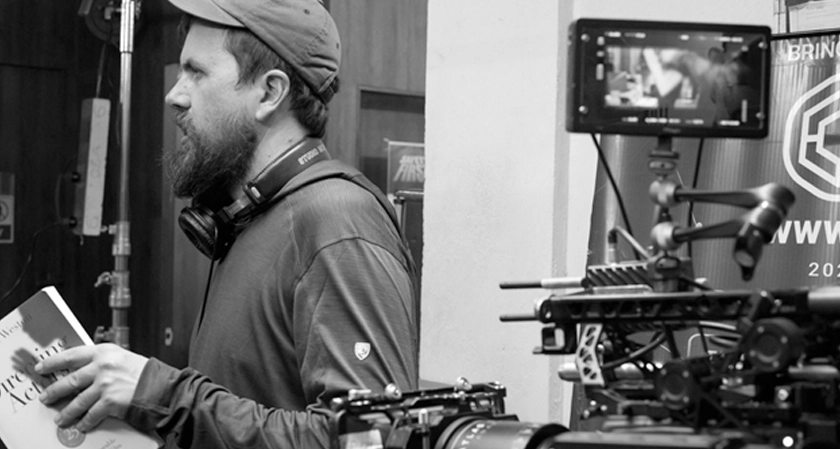
Recently, I attended a film festival in North Hollywood. My latest film had been selected, and I spent most of my time talking with other filmmakers. One would think the conversation would orbit around AI. To my surprise, it didn’t. Instead, the dominant concern was actually closer to home: how difficult it has become to film in Los Angeles.
When I mentioned that on my last shoot in India, I filmed my lead actors riding a moped down a country road with no permits or shutdowns, I was met with envy and disbelief. I wasn’t surprised. The horror stories were everywhere, of not knowing which permits to get, not knowing the right person to call, or how to even begin navigating the system.
Through those conversations, I could gauge the perfect illustration of California’s underlying dysfunction, which was erupting publicly.
Last year, Governor Gavin Newsom announced tax credits to ensure a reboot of Baywatch would be filmed in Los Angeles instead of Australia. Despite that intervention, production still stalled, caught in the thick of local regulations and community resistance. The backlash grew loud enough that Mayor Karen Bass and the City Council had to step in just to get things moving again. The situation has since become a subject of complexity in the upcoming mayoral race.
All this for a reboot with half the episode count of the original.
At the same time, California found itself in the national spotlight for entirely different reasons. The fallout surrounding former Congressman Eric Swalwell intensified, with new allegations of abuse layered on top of longstanding rumors about inappropriate behavior. Before these accusations surfaced, Swalwell was emerging as a frontrunner in a crowded Democratic field, an egregious fact in a state where Democrats dominate. After more than a year of campaigning, no clear leader had emerged.
It left me wondering: If governing California means intervening to shepherd a television reboot from bureaucratic quicksand, why would any genuinely talented person want the top job?
To understand how we got here, you have to start with California’s success. Hollywood became the center of the entertainment world because of scale; you couldn’t replicate that infrastructure in places like St. Louis or Birmingham. When your villain-of-the-week drops out the night before shooting because he landed a better gig, Los Angeles has a dozen replacements within a phone call. When your lighting rig breaks down, the next city over has the parts.
Then streaming arrived and threw the programming doors wide open. The South Park gag about Netflix greenlighting everything may not have been that much of an exaggeration. Money flowed, and studios were printing it. Even the pandemic didn’t fundamentally break the model. If anything, overseas production helped absorb overflow.
In that environment, there was little incentive for reform. If everyone still wanted to film in Hollywood, why simplify the process? Studio executives were making extraordinary sums. Why shouldn’t the state and city extract their share?
Then came 2022.
Netflix’s stock plunged on stagnant subscriber growth. The easy money dried up. Writers and actors went on strike, rightfully, to reclaim ground they’d lost in the streaming era. But those strikes, while making progress on key issues, like streaming residuals and AI protections, also exposed an uncomfortable truth: making film and television in America is extraordinarily expensive, and the world had plenty of alternatives. London. Budapest. Cape Town. Toronto. Suddenly, those alternatives looked very attractive.
This is California’s recurring tragedy. Success in one sector masks structural problems everywhere else. You only have to take a look at Silicon Valley in Northern California to see this problem play out again.
When interest rates were low, there was an abundance of money to be thrown around for startups. Tech companies operated at a loss, and no one seemed to mind. Why invest in public transit when ride-hailing apps fill the gap? Why address housing shortages when venture-backed platforms offered temporary workarounds?
Then interest rates rose, the startup money vanished, and what remained was a state where housing and healthcare were unaffordable for anyone outside a narrow elite, and where the same technologies that made the good times roll were now threatening people’s livelihoods.
In this context, you might expect political urgency, serious efforts at reform. Lower costs and fewer barriers could once again attract a new generation of creators and entrepreneurs.
Instead, reform stalls.
Every meaningful change risks alienating a constituency. Build more housing, and you face accusations of gentrification. Streamline filming permits, and residents push back against disruption. Lower healthcare costs, and you threaten wages in a powerful sector. Policies that impose even limited pain on non-billionaires become politically untenable. Someone will object, and that objection is often enough to stop progress entirely.
It only paves the way for a kind of paralysis that ultimately undermines the very progressive goals it seeks to protect.
Take the entertainment industry. Writer-producer Damon Lindelof recently explained his opposition to a proposed Warner Bros–Paramount merger as a defense of “working people” in Hollywood. Around the same time, his union, the Writers Guild of America agreed to a deal with producers that was notably more conciliatory than expected, even compared to less militant unions.
Why the shift? Rising healthcare costs. Faced with gaps in their own coverage, the WGA had less appetite for prolonged confrontation on issues like streaming compensation or AI regulation.
Healthcare costs, in fact, sit at the center of many of these contradictions. One reason they remain so high in the United States is the cost of providers. Expanding access to qualified foreign doctors would help, but in California, even highly experienced physicians must complete a full three-year residency to practice.
The policy persists because it protects existing wages.
I know this one personally. My wife is a licensed physician who trained at the University of Tokyo. To practice in California, she would be required to complete a three-year residency. Again. And this time, as a mother. When I raise this issue, even among activists who advocate for expansive immigration policies, the response is silence. Life-and-death affordability is negotiable. Offending a professional union is not.
Voters consistently rank affordability as their top concern. In the short term, national political dynamics may shield California Democrats from electoral consequences. But over time, the pattern is unsustainable. A system that tries to make everyone happy ends up delivering very little. Problems are deferred, and responsibility is externalized, leaving nothing to be solved.
And so California drifts, still wealthy, still influential, but increasingly difficult to govern.
If that continues, we shouldn’t be surprised when fewer capable people step forward to lead. After all, the job increasingly looks less like building high-speed rail or tackling structural inequality, and more like navigating bureaucratic mazes to ensure a television reboot shoots locally instead of abroad.
It appears like governance, but what it is, inherently, is the maintenance of pure dysfunction.
About the Author:
Peter Zerzan is a Bay Area filmmaker known for writing and directing award-winning short films that have screened from Los Angeles to Tokyo. Before filmmaking, he worked as a political organizer across the United States, and he brings that background in clear storytelling, adaptability, and resourcefulness to his work. He is currently developing new projects, including a feature film, while continuing to build an independent production company.