>>
Industry>>
Healthcare>>
Nursing in Texas: Growing Dema...Nursing in Texas: Growing Demand in the Local Community
The Silicon Review
05 May, 2026
Author:
Guest
Everything really is bigger in Texas, and that includes the healthcare challenge. The Lone Star State is adding people at a pace that most states can only watch from a distance, and its hospitals and clinics are feeling every bit of it.
For anyone considering a career in nursing, this is both a moment of urgency and a good opportunity. With ongoing workforce shortages and rapid population growth, nursing in Texas continues to offer strong career prospects for individuals who are eager to enter the healthcare field and support their local community.
The Current State of Nursing in Texas
Let's start with the numbers, because they are hard to ignore. Texas added more than half a million new residents between July 2023 and July 2024, more than any other state in the country. Projections suggest the state's population will climb from 31.2 million in 2024 to 42.6 million by 2060. That is a lot of people who will eventually need a doctor, a hospital bed, and perhaps most critically, a nurse.
The strain on Texas healthcare is not theoretical. Between 2019 and 2022, the state's RN vacancy rate nearly tripled, climbing from 6% to 17.6%. More people moving in, more nurses moving toward retirement, and not enough new graduates to replace them. The math simply doesn't add up.
People aged 65 and older are currently the fastest-growing age group in Texas, expanding by approximately 4% from 2023 to 2024 alone. Older populations require more complex and more frequent medical care, which translates directly into higher demand for nursing services.
At the same time, nearly one million nurses nationally are over the age of 50, and by 2030, close to one million are expected to retire. Texas is not immune to that trend. The state is simultaneously dealing with an influx of new patients and a wave of experienced nurses heading toward retirement. It is a pincer movement, and the healthcare system is squarely in the middle.
Education, Training, and Licensure Pathways for Nursing in Texas
The good news is that Texas has a robust and expanding network to pursue nursing in Texas, which means aspiring nurses have more entry points than ever before.
The two most common routes to becoming a registered nurse are the Associate Degree in Nursing (ADN) and the Bachelor of Science in Nursing (BSN). An ADN typically takes two to three years and allows graduates to sit for the NCLEX-RN licensing exam. A BSN is a four-year degree that opens additional career doors and often comes with a pay bump. The average salary for an ADN-prepared nurse in Texas sits around $74,832, while BSN-educated RNs average $95,274.
For nurses already working with an ADN, online RN-to-BSN bridge programs have made it more practical than ever to level up without walking away from a job. Universities across the state, including institutions like Baylor University Online, offer flexible online nursing pathways designed around the realities of shift work and clinical commitments.
To practice as an RN in Texas, graduates must pass the NCLEX-RN through the Texas Board of Nursing. The state also licenses Licensed Vocational Nurses (LVNs), who complete shorter programs and often serve as a stepping stone into a broader nursing career. For those looking to go further, advanced practice routes such as Nurse Practitioner or Certified Registered Nurse Anesthetist programs are available at the graduate level and carry some of the highest earning potential in the profession.
The demand for registered nurses in Texas is expected to produce approximately 16,210 job openings annually through 2030. Nursing education programs across the state are working to meet that need, though faculty shortages present their own challenge. The proportion of full-time faculty in pre-licensure RN programs has been decreasing, while the proportion of faculty over 62 years old has been increasing. In other words, the teacher pipeline has the same problem as the nurse pipeline. The irony is not lost on anyone.
Career Opportunities and Growth Across Texas Healthcare Systems
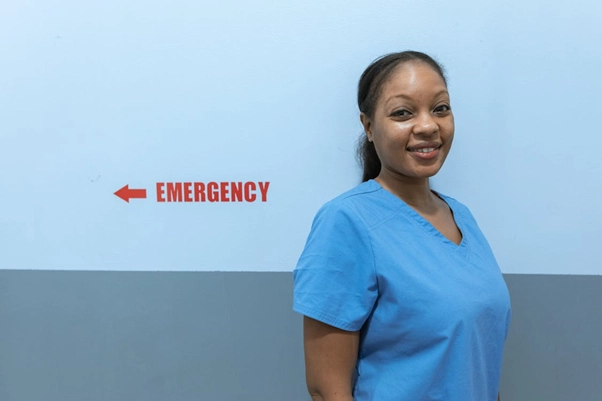
Hospital settings remain the dominant employer, but the spread of opportunity is widening.
Nursing home, residential care, and home health settings are projected to see the fastest rates of growth in demand for RNs across the state. This reflects the aging population dynamic mentioned earlier. As more Texans age in place or require long-term care, the settings in which nurses work are diversifying well beyond the hospital floor.
Geographically, the need is not confined to major metros. Hospital systems across the Dallas-Fort Worth region are expanding existing campuses, breaking ground on new properties, and ramping up recruitment initiatives, but rural Texas has its own staffing gaps that are often harder to fill. Nurses willing to work in underserved communities frequently find strong incentives, including loan repayment programs and competitive salaries.
Texas is making a compelling case right now for anyone weighing a career in healthcare. The workforce gap is real, the need is urgent, and the communities across the state are counting on the next generation of nurses to help fill it. Sometimes, the timing is everything, and in Texas, the timing for nursing could not be more pressing.