>>
Industry>>
Environmental sustainability>>
Singapore Sambar Deer Populati...Singapore Sambar Deer Population Grows From 15 to 120 in Five Years
The Silicon Review
22 May, 2026
Author:
Sashindra Suresh
Singapore's sambar deer population has rebounded from near-extinction to 120 individuals across five forest zones. The Silicon Review reports on the quiet comeback of the forest ghost and calls for management plans.
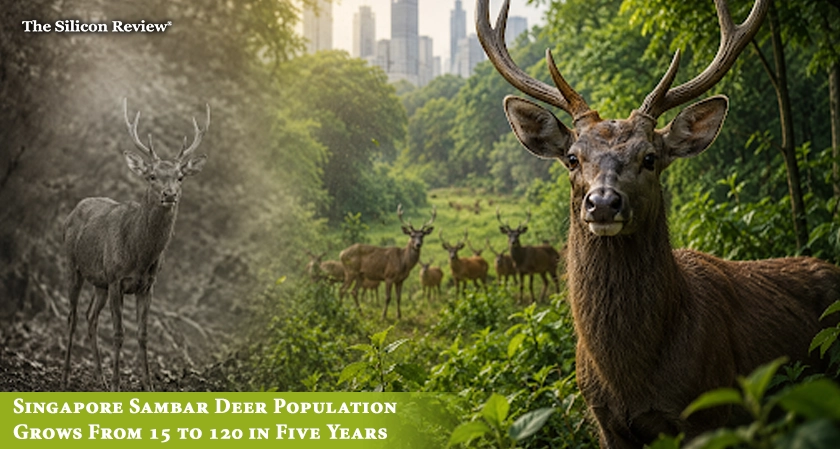
Once thought to be nearly extinct in Singapore, the sambar deer is making a quiet comeback. The shy creature, known as the forest ghost, has seen its population surge from an estimated 15 individuals in 2021 to approximately 120 today, according to the Save Sambar Deer initiative.
The Singapore sambar deer now roams across five main forest zones: Mandai, Gali Batu, Chestnut Nature Park, Nee Soon Swamp Forest, and the vicinity of Singapore Island Country Club. Volunteers track them through camera traps, nightly observations and headcounts, profiling each deer through unique identifiers such as scars, antlers, colouration and body size.
The species was thought to be extinct in Singapore after World War Two due to hunting and deforestation. It was not seen again until the 1970s in Mandai, where escapees from local zoos began repopulating the wild. In the late 1990s, the Nature Society estimated as few as three individuals remained.
Sambar deer are the world's third-largest deer species, outsized only by moose and elk. They are extremely timid and nocturnal, typically emerging from forest habitats under darkness to graze, and they bolt for cover at the first sign of danger.
The population rebound raises new questions about management. The deer have no natural predators in Singapore. They have been spotted roaming from Gali Batu into nearby Choa Chu Kang, grazing on the edges of housing estates before returning to their habitat. With numbers expected to continue growing, conservationists and wildlife managers are considering population control measures.
Potential options include contraceptives, sterilisation, relocation abroad, or a formal deer management programme. The International Union for Conservation of Nature lists the sambar deer as a vulnerable species globally.
The National Parks Board has observed an increase in population density through camera trap monitoring. While the return of the sambar deer is a conservation success, balancing species protection with urban coexistence presents a new challenge for Singapore.
The Silicon Review's analysis indicates that the sambar deer's comeback from near-extinction is a rare Singapore conservation success story. However, with no natural predators to check their numbers, what worked for the forest may soon require active management to prevent ecological imbalance.
Q: How many sambar deer are in Singapore now?
A: The sambar deer population in Singapore has grown from an estimated 15 individuals in 2021 to approximately 120 today, according to the Save Sambar Deer initiative.
Q: Where can sambar deer are found in Singapore?
A: The deer roam across five main forest zones: Mandai, Gali Batu, Chestnut Nature Park, Nee Soon Swamp Forest, and the vicinity of Singapore Island Country Club.
Q: Why were sambar deer extinct in Singapore?
A: The species was thought to be extinct after World War Two due to hunting and deforestation. They were not seen again until the 1970s in Mandai, where escapees from zoos began repopulating the wild.
Q: Are sambar deer dangerous to humans?
A: Sambar deer are extremely shy and timid. They typically flee at the first sign of danger and rarely interact with humans. They are nocturnal and emerge under darkness to graze.
Q: What are the challenges of the growing sambar deer population?
A: The deer have no natural predators in Singapore. They have been spotted grazing near housing estates, and their numbers are expected to continue growing. Conservationists are considering management options such as contraceptives, sterilisation, or relocation.
Q: What is the conservation status of sambar deer?
A: The International Union for Conservation of Nature lists the sambar deer as a vulnerable species on its Red List of Threatened Species.