>>
Other>>
Politics>>
US- China relations: Donald Tr...US- China relations: Donald Trump leaves Beijing after state visit to China
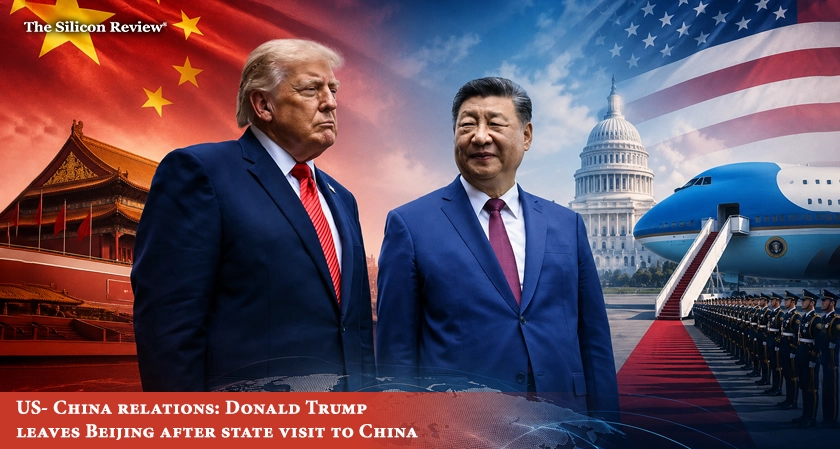
US President Donald Trump departed Beijing following a high-profile state visit to China strengthening communication between the two global powers. The Silicon Review examines renewed diplomatic engagement between the US & China could influence ongoing tensions between the two superpowers.
US President Donald Trump departed Beijing following a high-profile state visit to China that focused on US-China relations, trade, diplomatic engagement, and strengthening communication between the two global powers. Political observers say the visit reflects ongoing efforts to stabilise US-China relations amid tensions over tariffs, technology, and regional security.
During the visit, Trump met with senior Chinese officials and business representatives to discuss economic cooperation and future bilateral opportunities. Chinese state media described the meetings as constructive, emphasising the importance of maintaining stable relations between Washington and Beijing despite geopolitical disagreements.
The visit drew international attention due to the fragile state of US-China ties in recent years. Trade disputes, restrictions on technology exports, and military activity in the Indo-Pacific region have continued to challenge diplomatic relations between the two nations. Analysts believe Trump's meetings in Beijing were aimed at reopening dialogue channels and exploring areas of mutual economic interest.
Political experts noted that the symbolism of the visit was significant, as both countries attempt to balance competition with cooperation. Discussions reportedly included trade policies, investment opportunities, global supply chains, and regional security concerns involving Taiwan and the South China Sea.
Supporters of the visit argued that direct engagement between American and Chinese leaders remains essential for global economic stability. Critics, however, questioned whether the meetings would lead to any meaningful policy changes or long-term agreements.
The visit also comes at a politically sensitive time ahead of future US elections, where China policy is expected to remain a major topic in American politics. Trump's stance on China has historically combined aggressive trade measures with calls for stronger economic negotiation.
As Donald Trump leaves Beijing after his state visit to China, The Silicon Review examines how renewed diplomatic engagement between the US and China could influence global trade, technology cooperation, and geopolitical stability amid ongoing tensions between the two superpowers.
Q: Why did Donald Trump visit Beijing?
A: Donald Trump visited Beijing for a state visit focused on trade discussions, diplomatic engagement, and improving communication between the United States and China.
Q: What issues were discussed during the China visit?
A: Discussions reportedly included trade policies, economic cooperation, technology restrictions, regional security, investment opportunities, and global supply chains.
Q: Why is the visit considered politically significant?
A: The visit is considered significant because US-China relations remain strained over trade disputes, technology competition, and geopolitical tensions in the Indo-Pacific region.
Q: What did Chinese officials say about the meetings?
A: Chinese state media described the meetings as constructive and stressed the importance of maintaining stable relations between Beijing and Washington.
Q: How have critics reacted to Trump's China visit?
A: Critics questioned whether the visit would result in meaningful policy changes or long-term agreements between the two countries.
Q: Why is China policy important in US politics?
A: China policy is a major issue in US politics because of economic competition, national security concerns, trade relations, and the global influence of both nations.