>>
Industry>>
Environmental sustainability>>
Coral Reef Conservation Gets H...Coral Reef Conservation Gets Hope: Scientists Identify 166,000 sq km of coral reefs Capable of Surviving Climate Crisis
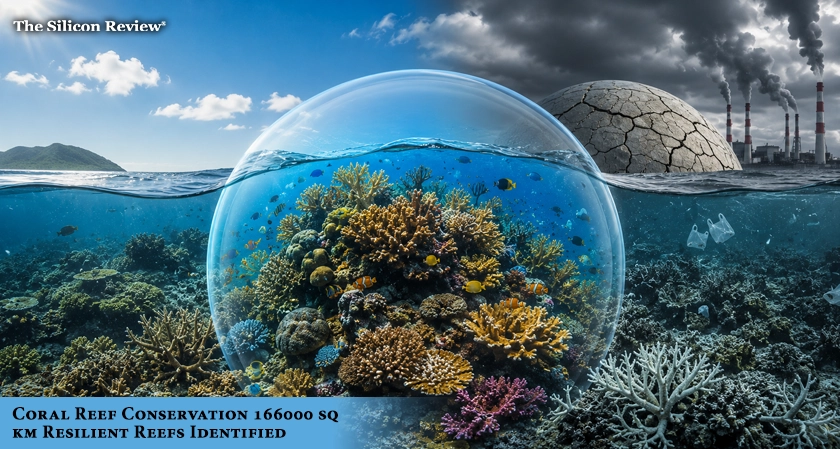
Coral reef conservation has received a major boost as scientists have identified nearly 166,000 square kilometres of coral reefs capable of surviving and recovering from the climate crisis, three times more than previously estimated.
Coral reef conservation has been given new hope. Scientists have identified nearly 166,000 square kilometres of coral reefs that are capable of surviving and recovering from the climate crisis, three times more than previously estimated.
The research, presented by the Wildlife Conservation Society and Macquarie University, analyzed more than 45,000 coral surveys together with decades of climate and ocean data. The findings reveal climate-resilient reefs across 71 countries and 100 territories, including parts of the Caribbean and the Pacific and Atlantic oceans that had not previously been recognized.
Coral reef conservation has long been framed as a losing battle. Coral reefs sustain a quarter of all marine life and support the livelihoods of more than 500 million people. They have come under severe stress from violent tropical storms, pollution, and mass bleaching events caused by soaring ocean temperatures. Some scientists warned they faced irreversible decline. This research changes that narrative.
"Coral reefs are often framed as ecosystems beyond saving," said Emily Darling, director of coral conservation at the Wildlife Conservation Society and one of the report's authors. "This research shows otherwise: we know where the hope is and what we need now is political will."
The study identified three distinct pathways through which reefs can persist in a warming world. Some reefs act as avoidance refugia, located in rare ocean "cool spots" where local conditions shield corals from extreme heat. Others function as resistance refugia, where corals have developed adaptations to withstand heat stress. A third group are recovery refugia, reefs that can rebound rapidly after disturbances such as bleaching events or cyclones.
More than half of the climate-resilient reefs are concentrated in five countries: Australia, the Bahamas, Cuba, Indonesia, and the Philippines.
The findings come as countries are drawing up action plans to bring 30 percent of their land and marine environments under formal protection by the end of the decade, a target known as "30 by 30." Only 28 percent of the identified climate-resilient reefs currently fall within protected areas, creating a clear opportunity for conservation action.
Stacy Jupiter, co-author and executive director of the WCS's Global Marine Program, said the data could help governments decide where to deploy limited funds. "In certain cases, where reefs are below certain benchmarks for ecosystem function, it may be a case of triage, where we may need to leave those places," she said.
The urgency is heightened by an approaching super El Nino event that could trigger widespread bleaching across the Pacific. Scientists’ cautions that while the research offers hope, shrinking recovery windows between bleaching events remain a serious concern.
As coral reef conservation receives a boost from the identification of 166,000 sq km of climate-resilient reefs, The Silicon Review examines how this new map could transform global efforts to protect the world's most threatened marine ecosystems.
FAQ:
Q: How much coral reef has been identified as climate-resilient?
A: Scientists have identified nearly 166,000 square kilometres of coral reefs capable of surviving and recovering from climate change.
Q: How many countries have climate-resilient coral reefs?
A: Climate-resilient coral reefs have been identified across 71 countries and 100 territories worldwide.
Q: What percentage of climate-resilient reefs is currently protected?
A: Only 28 percent of the identified climate-resilient reefs currently fall within protected or conserved areas.
Q: Which countries have the most climate-resilient coral reefs?
A: Australia, the Bahamas, Cuba, Indonesia, and the Philippines contain more than half of the identified climate-resilient reefs.
Q: What are the three types of climate-resilient coral reefs?
A: Avoidance refugia, resistance refugia, and recovery refugia each describe different ways reefs survive climate impacts.
Q: Why is this coral reef conservation research important?
A: This research provides a roadmap for governments to prioritize conservation funding on reefs with the best chance of survival.