>>
Industry>>
Healthcare>>
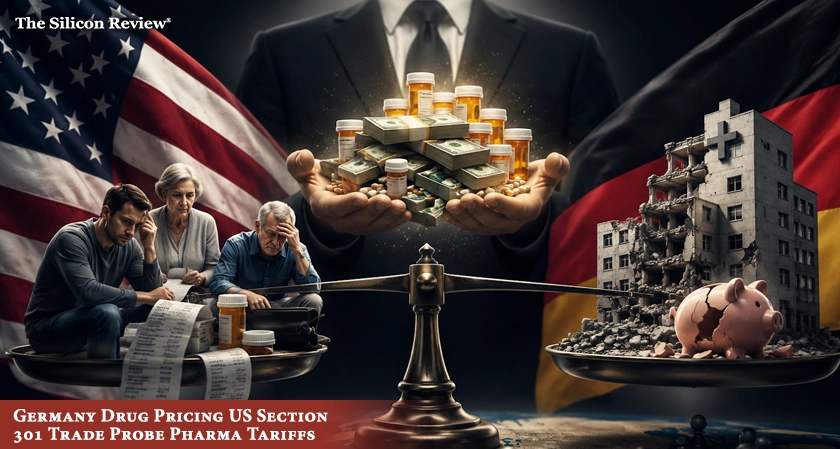
Germany Drug Pricing Probe: US...Germany Drug Pricing Probe: US Says Berlin's $23 Billion Health Cuts Cost Americans Billions. But Why Are Drug Companies the Real Winners Here?
The Silicon Review
19 June, 2026
Author:
Jishnuu
The United States has launched a trade investigation into Germany's pharmaceutical pricing policies, accusing Berlin of "persistent underpayment”. The Silicon Review asks: is Washington defending American patients or American drug company profits?
The United States has opened a Section 301 trade investigation into Germany over drug pricing. U.S. Trade Representative Jamieson Greer announced the probe on June 18, accusing Germany of "persistent underpayment for innovative pharmaceutical products" and "unreasonable" pricing practices.
This comes after Germany's Health Ministry announced in April a sweeping reform plan to plug a €20 billion ($23 billion) funding gap in its statutory healthcare system. The proposal introduced higher pharmaceutical discounts and cost-saving measures. A German cabinet source told Reuters this week that the plans were being withdrawn after sharp opposition from the pharmaceutical industry.
"President Trump has made clear that American patients should not be shouldering a disproportionate share of global pharmaceutical research and development," Greer said in a statement. He added that he was "particularly concerned" that Germany was "fast-tracking legislation that would further reduce its spending on innovative pharmaceuticals."
Here is the truth that neither Washington nor Berlin wants to admit. The RAND Corporation found that U.S. prescription drug prices average 2.78 times more than in 33 other countries. The gap is far larger for brand-name drugs. Eli Lilly, a U.S. pharmaceutical giant, cited Germany's healthcare reforms when it halved its planned €2.3 billion investment in a German plant. That is not a coincidence. Drug companies are threatening to pull investment if countries do not pay their inflated prices. Germany is trying to protect its citizens from those prices. The United States is using trade law to protect the profits of the companies that set them.
The investigation will accept written comments from June 25 and hold a hearing in September. It could lead to tariffs on German imports. Greer pointed to a US-UK drug pricing agreement from earlier this year as a model, saying "we believe the United States and Germany can find a path forward.”
Here is the question that no one in Washington wants to answer. If U.S. drug prices are 2.78 times higher than other countries, why is the United States investigating Germany instead of its own pharmaceutical companies? And if drug companies are threatening to halt investment because one country wants to save €20 billion on healthcare, who is the victim: the German taxpayer or the drug company shareholder?
As the US launches a trade investigation into Germany's drug pricing policies, The Silicon Review asks a final question. When an American patient pay the highest drug prices in the world, is Germany the problem or is the problem that U.S. law protects the companies that set those prices?
FAQ:
Q: Why did the US launch a trade investigation into Germany's drug pricing?
A: The US Trade Representative accused Germany of "persistent underpayment for innovative pharmaceutical products," claiming it shifts the global R&D cost burden to American patients.
Q: What is the Section 301 trade investigation against Germany?
A: It is a probe under the Trade Act of 1974 to determine whether Germany's drug pricing policies are unreasonable or discriminatory and burden US commerce.
Q: What did Germany's healthcare reform plan involve?
A: Germany proposed reforms to plug a €20 billion ($23 billion) healthcare funding gap, including higher drug discounts and cost-saving measures.
Q: How much higher are US drug prices compared to other countries?
A: A 2024 RAND report found US prescription drug prices average 2.78 times more than in 33 other countries, with a far larger gap for brand-name drugs.
Q: What action did Eli Lilly take regarding Germany?
A: Eli Lilly halved its planned €2.3 billion investment in a German plant, citing the country's healthcare reforms.
Q: Could the US investigation lead to tariffs on German goods?
A: Yes, the probe under Section 301 could pave the way for tariff measures on imports from Germany if it concludes Germany's policies are unfair.
















Comments