>>
Industry>>
Architecture and interior design>>
Glass Room Dividers: Transform...ARCHITECTURE AND INTERIOR DESIGN
Glass Room Dividers: Transform Your Space with Modern Partition Solutions in 2026
The Silicon Review
15 June, 2026
Author:
Guest
Open-concept living has its perks, until you need privacy for a Zoom call while your teenager blasts music in the next room. Enter glass room dividers: the sleek solution that lets you carve out zones without sacrificing light or that airy, spacious feel we all crave. Unlike traditional drywall that closes spaces off completely, glass partitions strike the perfect balance between openness and definition. Whether you're redesigning a cramped downtown condo, reimagining office workflows, or simply want to separate your home office from your living area without building permanent walls, glass dividers offer versatility that solid walls just can't match. In 2026, they've become the go-to choice for homeowners and commercial developers who refuse to compromise on style, function, or natural light.
Key Takeaways
- Glass room dividers create functional separation while maintaining natural light flow and spatial openness, making them ideal for home offices, lofts, and modern commercial spaces.
- Frameless glass partitions offer a minimalist aesthetic perfect for upscale residential and creative environments, while framed and semi-framed systems provide cost-effective flexibility and design customization for diverse applications.
- Glass dividers improve productivity and well-being by amplifying natural light, reducing electricity costs, and creating psychological spaciousness without the visual closure of traditional drywall walls.
- Professional installation is essential for glass room dividers to ensure proper structural support, correct leveling, and compliance with local building codes, especially for floor-to-ceiling and sliding systems.
- Advanced options like frosted glass, tinted panels, acoustic-rated laminated glass, and smart glass technology allow customization for privacy needs while maintaining the modern aesthetic and light transmission benefits.
What Are Glass Room Dividers and Why Choose Them?
Glass room dividers are transparent or translucent partition systems designed to separate spaces while maintaining visual continuity and light flow. Unlike conventional walls, they're typically made from tempered or laminated safety glass mounted in metal frames, hung on tracks, or installed as frameless panels secured with minimal hardware.
The appeal goes beyond aesthetics. Glass dividers solve a modern dilemma: how to create functional zones in open-plan spaces without the permanence or darkness of solid walls. They're ideal for home offices that need occasional privacy, loft apartments requiring defined sleeping areas, or commercial offices transitioning to hybrid work models where flexibility is key.
Why choose glass over other partition materials? First, light transmission. Natural light improves mood, productivity, and even energy costs, glass dividers let sunlight penetrate deep into interiors. Second, spatial perception. Transparent barriers make rooms feel larger, preventing that claustrophobic box-within-a-box effect. Third, flexibility. Many systems are movable or removable, adapting as your needs evolve without demolition or major renovation. And fourth, durability. Quality tempered glass resists scratches, doesn't warp like wood, and requires minimal maintenance compared to fabric or drywall alternatives.
For commercial spaces, glass partitions also signal modernity and transparency, literally and figuratively. Clients visiting an office with glass-walled conference rooms perceive openness and innovation. Employees benefit from collaborative visibility while still having acoustic separation when needed, especially with soundproofing options.
Types of Glass Room Dividers for Homes and Offices
Choosing the right glass partition depends on your space, budget, and design vision. Here's what's trending in 2026.
Frameless Glass Partitions
Frameless systems are the minimalist's dream. These dividers use thick tempered glass (typically 3/8" to 1/2") with nearly invisible hardware, think discreet floor channels, ceiling mounts, or point-fixed clamps. The result? Unobstructed sightlines and a floating, contemporary look that complements modern architecture beautifully.
Frameless dividers work especially well in upscale residential settings: think loft bedrooms, spa-like bathroom enclosures, or gallery-style home offices where the partition itself becomes a design statement. They're also popular in boutique retail and creative agency offices that want to project cutting-edge style.
The trade-off? Cost. Frameless installations require precision engineering and specialized hardware, making them pricier than framed alternatives. They also demand professional installation, DIY isn't really an option unless you've got serious glass-handling experience. But if budget allows, the clean aesthetic and spatial fluidity are worth every penny.
Framed and Semi-Framed Systems
Framed glass partitions use aluminum, steel, or wood frames to hold thinner glass panels (often 1/4" to 3/8"). These systems offer more design flexibility, frames can be powder-coated in virtually any color, from matte black to brushed brass, letting you match existing decor or create bold contrasts.
Semi-framed options split the difference: minimal framing on edges or top/bottom only, with frameless glass elsewhere. They cost less than fully frameless systems while still maintaining a sleek profile.
Framed dividers are workhorses in commercial environments. They're easier to install, more affordable, and can integrate door hardware, locks, and acoustic seals without custom fabrication. For home use, they're ideal when you want defined borders, perhaps to complement industrial-style interiors with exposed beams and metal accents.
Sliding, folding, and pivot door configurations are more common with framed systems, offering operational versatility. Need to occasionally open up two rooms completely? Folding glass walls can accordion to the side. Want a barn-door aesthetic with transparency? Sliding framed panels deliver that perfectly.
Key Benefits of Installing Glass Dividers
Beyond the obvious visual appeal, glass room dividers deliver practical advantages that impact daily living and working conditions.
Natural light amplification tops the list. Solid walls trap light in perimeter rooms, forcing reliance on artificial lighting throughout the day. Glass partitions distribute daylight across previously shadowed areas, reducing electricity use and creating healthier environments. Studies consistently show natural light exposure improves sleep quality and mental well-being, not trivial when you're spending eight-plus hours indoors.
Space optimization comes next. In urban apartments where square footage costs a premium, glass dividers create functional separation without visual shrinkage. A 600-square-foot studio with a glass-partitioned bedroom alcove feels dramatically more spacious than one divided by drywall. The psychological impact of seeing through spaces shouldn't be underestimated.
Flexibility and reversibility matter for renters and homeowners alike. Unlike permanent construction, many glass partition systems can be removed or relocated without damage. Planning to sell? Glass dividers appeal to buyers who value adaptability. Commercial tenants facing lease expirations appreciate installations that can move to new locations.
Acoustic control surprises people. While standard glass transmits sound, specialized laminated or double-glazed options dramatically reduce noise transfer. High-quality systems from manufacturers like Crystalia Glass often include acoustic ratings suitable even for conference rooms and executive offices where confidentiality matters.
Maintenance simplicity seals the deal. Glass doesn't collect dust like fabric panels, doesn't stain like drywall, and cleans with basic glass cleaner. Tempered glass resists impacts and scratches far better than people expect, it's engineered for exactly this kind of high-traffic use.
Finally, there's the resale and perception value. Modern glass installations signal quality and thoughtful design. In commercial real estate, office spaces with glass partitions command higher rents and attract better tenants. In residential markets, well-executed glass dividers photograph beautifully and appeal to design-conscious buyers.
Design Considerations and Installation Tips
Getting glass dividers right requires more than just picking a pretty panel. Here's what to think through before installation day.
Measure accurately, twice. This isn't IKEA furniture: custom glass can't be easily trimmed on-site. Professional measuring is worth the cost. Even minor discrepancies between floor heights or wall plumb can cause major headaches. Reputable suppliers like Crystalia Glass typically include site surveys in their service, ensuring panels fit perfectly on the first try.
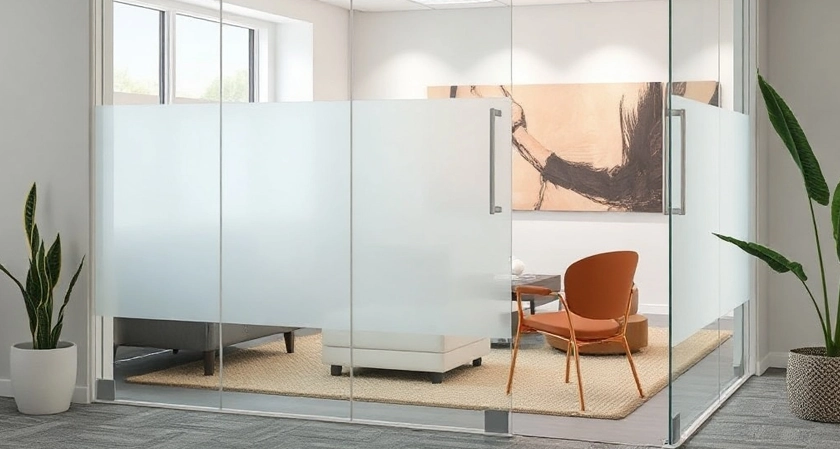
Consider privacy gradations. Clear glass works beautifully when you want visual connection. But for bathrooms, bedrooms, or private offices, explore frosted, tinted, or patterned glass options. Smart glass that switches from transparent to opaque via electrical current is increasingly affordable in 2026, offering ultimate control, though it does add to upfront costs.
Plan for structural requirements. Glass is heavy. Floor-to-ceiling installations need adequate structural support, especially for sliding or folding systems. Older buildings may require reinforcement. Ceiling-hung track systems distribute weight differently than floor-mounted options: discuss load requirements with both your glass supplier and a structural engineer if you're unsure.
Think about door operation. How will you actually move between divided spaces? Sliding doors save space but require wall clearance for panels to slide behind. Pivot doors need floor clearance and hinge-side space. Folding systems need even more room to accordion. Walk through the motion physically before committing to hardware.
Budget for professional installation. Glass partition installation isn't a weekend DIY project. Tempered glass can shatter if improperly handled or stressed during installation. Professional installers carry insurance, have specialized equipment, and know how to shim, level, and secure systems correctly. Many manufacturers offer comprehensive installation services, at Crystalia Glass, full-service installation comes standard across major US markets, eliminating coordination headaches.
Check local building codes. Some jurisdictions have specific requirements for glass thickness, safety glazing locations (especially near doors or floor level), and fire ratings in commercial buildings. Pull permits where required. It's tedious but protects you if there's ever an issue.
Coordinate with other trades. If you're doing broader renovation, sequence matters. Glass typically installs after flooring but before final trim. Electrical for smart glass needs planning. HVAC may need adjustment if you're affecting airflow patterns.
One often-overlooked tip: consider future access. If you're dividing a space that contains plumbing, electrical panels, or HVAC equipment requiring periodic maintenance, make sure your glass system includes operable sections for service access. Nothing's worse than removing an entire partition just to fix a pipe.
Conclusion
Glass room dividers aren't just a trend, they're a response to how we actually live and work now. They give us the separation we need without the isolation we don't want. Whether you're carving a home office out of a living room, modernizing a dated office layout, or maximizing light in a compact condo, glass partitions deliver flexibility that traditional construction simply can't match. The key is choosing the right system for your specific needs and working with experienced suppliers who understand that every installation is unique. Done well, glass dividers don't just divide rooms, they transform how spaces feel and function.
Frequently Asked Questions About Glass Room Dividers
What are glass room dividers and how do they work?
Glass room dividers are transparent or translucent partition systems made from tempered or laminated safety glass mounted in metal frames or installed as frameless panels. They separate spaces while maintaining light flow and visual continuity, using tracks, hardware, or ceiling mounts for installation.
Why should I choose glass dividers over traditional drywall walls?
Glass dividers preserve natural light, prevent that claustrophobic feeling, and maintain spatial perception better than solid walls. They're also flexible and removable without permanent damage, more durable than alternatives, and require minimal maintenance compared to drywall or fabric panels.
What types of glass room dividers are available?
Main types include frameless systems (minimal hardware for a clean look), framed systems (aluminum/steel/wood frames in various colors), and semi-framed options. Each varies in cost, aesthetics, and functionality, with sliding, folding, and pivot configurations available for different space needs.
Can glass dividers provide privacy and acoustic control?
Yes. While standard glass transmits sound, specialized laminated or double-glazed options significantly reduce noise transfer. Frosted, tinted, or patterned glass adds visual privacy, and smart glass that switches from transparent to opaque electronically offers ultimate privacy control in modern installations.
How much does a glass room divider installation typically cost?
Costs vary widely based on type and size. Frameless systems are most expensive due to precision engineering and specialized hardware. Framed options are more affordable and easier to install. Professional installation is recommended for safety and proper leveling, adding to total project costs but ensuring durability.
What maintenance do glass room dividers require?
Glass dividers are low-maintenance: they don't collect dust like fabric, don't stain like drywall, and clean with basic glass cleaner. Tempered glass resists scratches and impacts well due to its engineering for high-traffic use, requiring significantly less upkeep than alternative partition materials.