>>
Technology>>
Artificial intelligence>>
How AI Is Transforming Resume ...How AI Is Transforming Resume Writing and Job Search Strategy
The Silicon Review
23 June, 2026
Author:
Brittany Van Tassel
The blank page is notoriously the hardest part of any job hunt. You sit there staring at a blinking cursor, trying to compress years of late nights, stressful deadlines, and proud professional achievements into a few bullet points. Honestly, it always feels a bit artificial. I remember sitting up at midnight, the quiet hum of my laptop screen casting a blue glare over my coffee cup, wondering how on earth to fit my whole working life onto a single sheet of paper. It feels like trying to squeeze your soul into a spreadsheet. For a long time, the standard career advice was incredibly simple. You were told to use active verbs, keep the formatting to a single page, and match as many keywords as possible from the job description. But recently, the entire employment landscape shifted beneath our feet.
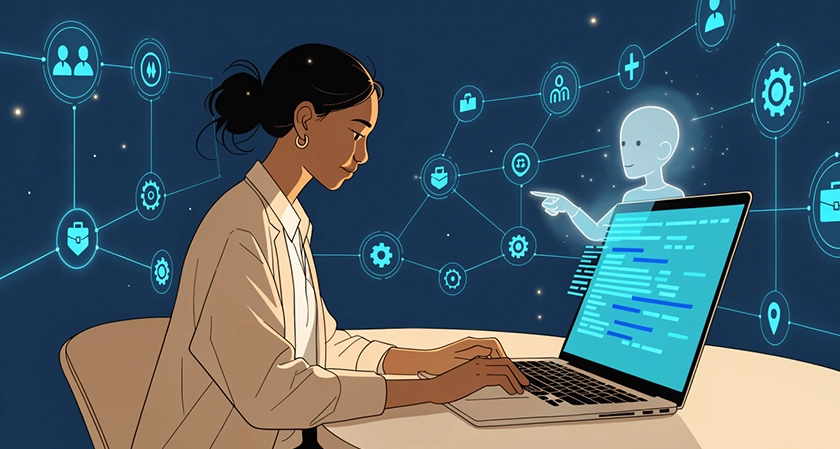
Artificial intelligence moved rapidly from a futuristic tech concept to a daily practical tool. It completely changed how companies hire and, more importantly, how candidates must present themselves to the world. Navigating a career move today means understanding how to collaborate with digital tools without losing the unique human story that ultimately gets you hired. The strategy is no longer about beating a system. It's about learning how to stand out in an ecosystem that relies on automated sorting.
Have you ever stopped to wonder if the person reading your resume is even a person at all?
The New Gatekeepers of the Hiring World
Before your resume ever reaches human hands, it almost always passes through software designed to sort, rank, and filter candidates. Corporate hiring managers face hundreds, sometimes thousands, of applications for a single open position. This sheer volume makes a manual review of every single submission nearly impossible. This is where modern algorithms step in. They scan documents for specific skills, background parameters, and contextual relevance. You know, it sort of strips away the nuance of a career path.
This shift radically altered the fundamental strategy behind resume writing. It's no longer just about writing a beautiful summary of your career history. It's about understanding data optimization. If your document lacks the specific phrasing an algorithm looks for, your application might disappear into a digital void. Many talented professionals find themselves rejected not because they lack the qualifications, but because they do not know how to speak to the machine. It feels incredibly unfair.
But adjusting to this reality does not mean you should write like a machine. In fact, doing so is a quick way to fail the next round of the process. The real challenge of modern job hunting is satisfying the screening software while still engaging the human professional who will make the final hiring decision. You're writing a single document that must simultaneously appeal to a mathematical formula and a human supervisor. How do you find a balance between data and human warmth?
Balancing Automation with Authenticity
When professionals first realize how deeply automated hiring has become, the natural reaction is to automate everything on their end, too. Generative tools can write a complete resume in a matter of seconds. They can generate cover letters, draft follow-up emails, and match bullet points to job descriptions effortlessly. This creates a massive influx of applications in the market, making competition even fiercer than before.
But relying entirely on automated text creates a brand new problem.
When everyone uses the exact same software prompts, every single resume starts to sound identical. Professional profiles become filled with generic phrases about being a results-driven leader or a strategic thinker. The unique voice, the actual context of your achievements, and the personality behind the work get completely ironed out. Hiring managers are already reporting fatigue from reading documents that feel entirely devoid of human character. It is like reading a script written by a corporate committee.
Smart candidates use these digital platforms as a starting foundation rather than a final product. You can use platforms to organize your thoughts, structure complex timelines, or brainstorm how to best describe a complicated project. For instance, using an established resource like Monster's resume maker can provide a clean, structured layout and help align your experience with industry standards. It gives you a solid framework to build upon. From there, your job is to inject the specific details, the lessons learned, and the human perspective that a machine simply cannot replicate.
And the danger of over-automation extends past the resume itself. It bleeds into how people approach networking and outreach. When you send an automated message to a hiring manager, it feels cold. I guess we have all received those copy-pasted notes that make you feel like a number. Humans possess an innate ability to spot automated text. We can tell when someone spent time crafting a message versus when they simply copied and pasted something a machine generated. The tool should save you time on administrative tasks so you can spend more time on genuine human interactions. And that's the point.
Shifting from Duties to Impact
One of the greatest benefits of utilizing modern digital tools in your job search strategy is the ability to analyze your own work history more critically. Algorithms thrive on hard data, and humans connect deeply with results. This means your resume must shift away from a simple list of daily duties and focus heavily on measurable impact.
Instead of writing that you managed a project, look at the actual outcomes of that project. Did you save the company time? Did you increase operational efficiency? Did you help a teammate grow into a new role? Digital builders can help you rephrase these milestones to emphasize your active role in those successes. They force you to look at your career through the lens of value creation rather than just a list of tasks completed. It is about capturing the sweat and pride behind the numbers.
So, what is the actual story behind your metrics?
This approach changes your job search strategy from a passive broadcast to an active value proposition. You stop asking an employer to give you a chance based on where you went to school or your past job title. Instead, you clearly demonstrate how you solve the specific problems they are currently facing in their business. AI can analyze job descriptions to tell you exactly what those problems are, allowing you to tailor your true stories to meet those needs precisely. Maybe that is the real superpower of these tools.
The Evolution of the Job Search Strategy
The modern job search requires a multi-layered approach. Writing the resume is merely the first step. The strategy must extend to how you present your professional brand across digital networks, how you prepare for automated video screenings, and how you follow up after an interaction. Technology has compressed the hiring process timeline, which means candidates must be more agile and responsive than ever before.
Optimization is no longer a luxury for high-level executives. It's a baseline requirement for entry-level workers and seasoned professionals alike. Those who resist the technological shift risk becoming invisible in the modern job market.
Conversely, those who lean too heavily into the technology risk becoming completely forgettable. A total ghost in the machine. The winning strategy belongs to those who find the balance between digital efficiency and personal authenticity.
The Human Element Survives the Algorithm
Even as software handles the initial filtering and sorting, the final decision to hire always comes down to a human connection. A hiring manager wants to know what it's actually like to sit in a meeting with you. They want to see how you handle setbacks, how you collaborate with a team, and whether you genuinely care about the work you do. No algorithm can measure integrity, enthusiasm, or cultural alignment. Those parts are uniquely yours.
Your resume acts as the digital bridge that gets you to that human conversation. By utilizing smart tools to handle formatting, keyword alignment, and structural clarity, you free up your mental energy to focus on the elements that matter most. You can dedicate your time to authentic networking, preparing for deep conversations, and refining your personal professional narrative.
The digital transformation of the job search does not eliminate the value of human experience. It simply demands that we become clearer, more intentional storytellers. The tools exist to help us organize the facts, but the truth of our careers belongs entirely to us. By mastering this balance, you turn a clinical technological hurdle into a powerful platform for your human potential.
















Comments