>>
Industry>>
Management consulting>>
Humanoid Robot Market Could Re...Humanoid Robot Market Could Reach $750 Billion by 2035. But Can Manufacturers Turn AI Hype Into Industrial Reality?
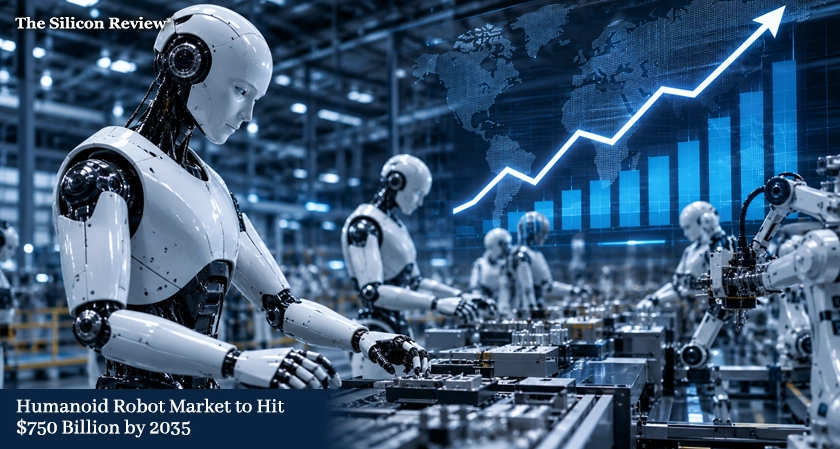
The humanoid robot market could hit $750 billion by 2035, Roland Berger says, with humanoid robots emerging as a major industrial bet. But can manufacturers scale before execution challenges outpace market expectations?
The humanoid robot market is moving out of the lab and into the boardroom. According to global management consultancy Roland Berger, humanoid robots could generate between $300 billion and $750 billion in manufacturing revenues by 2035, with the long-term market reaching as much as $4 trillion. If that happens, the sector would rival today’s automotive industry in size. can humanoid robots create lasting business value, or just bigger expectations?
This forecast reflects a bigger shift across global manufacturing.
As labor shortages deepen in developed economies and artificial intelligence advances fast, manufacturers are starting to view humanoid robots as a strategic investment, not just an experiment. Roland Berger says future systems could run at about $2 per hour, changing the economics of repetitive industrial work.
But is the technology moving fast enough to justify the money already flowing in?
The opportunity extends far beyond robot manufacturers.
A mature humanoid robot market would drive demand across the entire industrial value chain, including sensors, semiconductors, actuators, motors, batteries, industrial software, precision engineering, and production equipment. For suppliers, the commercial upside could rival that of the robots themselves.
"The key question is no longer whether humanoid robots will emerge as a viable technology, but how quickly they will scale, and which companies position themselves early enough to capture the opportunity," said Damien Dujacquier, Managing Partner at Roland Berger.
But significant barriers remain.
While hardware has advanced rapidly, software reliability, autonomous decision-making, safety standards, and regulation are still evolving. For now, humanoid robots are expected to perform repetitive tasks like material handling, warehouse logistics, and assembly support, rather than replace workers across full production lines.
Can industrial adoption scale before governance and regulation slow it down?
That question could determine whether today's forecasts become tomorrow's reality.
Japan's experience offers a reality check. Despite significant investment in care robots, adoption remained limited as the machines required constant maintenance, software updates, monitoring, and staff training. Instead of reducing workloads, many increased operational complexity.
For manufacturers, the lesson is clear technology alone is not enough. Successful digital transformation depends on workforce integration, process redesign, safety compliance, and measurable returns on investment.
Will humanoid robots become manufacturing’s next productivity engine, or another technology that takes far longer to scale than investors expect?
The key question for executives is no longer if, but how fast. The long-term outlook remains strong. Labor shortages, demographic shifts, and rapid AI advances continue to fuel automation. But turning the $750 billion humanoid robot market into reality will depend on software maturity, industrial standards, resilient supply chains, and clear regulation.
The opportunity is real, but execution will separate leaders from followers. The Silicon Review asks Will the humanoid robot market transform manufacturing, or become another billion-dollar promise that takes longer than expected to deliver?
FAQ:
Q: What is the humanoid robot market?
A: The humanoid robot market includes the development, production, and commercialization of humanoid robots and their supporting technologies.
Q: How large could the humanoid robot market become?
A: Roland Berger projects $300 billion to $750 billion in manufacturing revenues by 2035, with long-term market potential reaching $4 trillion.
Q: Why is the humanoid robot market growing?
A: Growth is driven by AI advancements, labor shortages, rising automation demand, and the need to improve industrial productivity.
Q: Which industries will adopt humanoid robots first?
A: Manufacturing, warehousing, logistics, automotive, electronics, and industrial production are expected to lead adoption.
Q: What tasks can humanoid robots perform today?
A: They are best suited for repetitive tasks such as material handling, warehouse transport, inspection, packaging, and assembly support.
Q: What is slowing the adoption of humanoid robots?
A: Software maturity, safety certification, regulatory approval, high deployment costs, and integration into existing workflows remain major challenges.













Comments