>>
Industry>>
Lifestyle and fashion>>
Can International Yoga Day Tur...Can International Yoga Day Turn a Spiritual Tradition Into a Billion-Dollar Business?
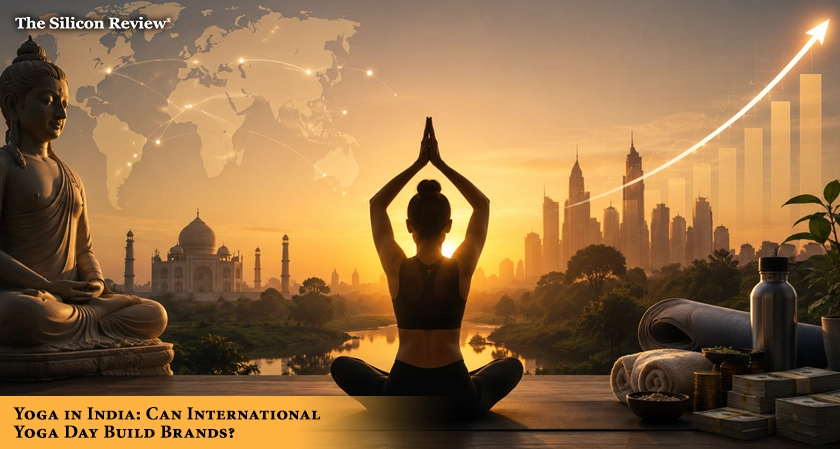
International Yoga Day puts yoga in India on the global stage, India is pursuing a bigger ambition: building billion-dollar brands from its ancient tradition before the rest of the world captures the opportunity.
As International Yoga Day, observed on June 21, concluded after drawing millions onto mats across the world, India is pushing a bigger ambition beyond wellness and diplomacy: transforming yoga in India into a globally recognized business powerhouse.
For decades, yoga has been one of India's most successful cultural exports. Yet despite a global yoga economy worth tens of billions of dollars, Indian companies have captured only a small share of the market. The question now is whether India can convert its spiritual legacy into globally dominant brands before international competitors claim the opportunity.
Indian Prime Minister Narendra Modi's government has repeatedly promoted what it calls a "new yoga economy" built around tourism, apparel, wellness technology, retreats, teacher training, and corporate wellness programs.
But a major obstacle remains.
Many Indians do not view yoga as a product. Unlike fitness trends that thrive on memberships, subscriptions, and expensive equipment, yoga in India is often practiced freely in parks, schools, temples, and community spaces.
Can a tradition built on simplicity become a global commercial empire?
The battle to turn yoga into big business is already reshaping India's wellness industry. Brands like Yamayoga are trying to build global followings, while yoga retreats and teacher-training programs continue drawing thousands of foreign visitors. Many arrive as students and leave as customers, helping Indian brands reach international markets.
But critics say India faces an uncomfortable reality:
The world loves yoga, yet many of the biggest profits are being made outside India.
Experts warn that cultural influence alone does not create billion-dollar brands. If Indian companies fail to move fast, they risk watching others cash in on a tradition that began in India.
If India gave the world yoga, why are foreign companies earning most of the profits?
Analysts say Indian businesses must look beyond apparel and retreats, expanding into wellness apps, fitness wearables, digital coaching, nutrition services, and yoga-driven travel experiences.
Despite a global yoga market worth tens of billions of dollars, India's domestic industry remains relatively small, raising questions about whether the country is fully capitalizing on one of its most valuable cultural exports. The massive celebrations marking International Yoga Day once again showcased yoga's global reach, with events held across India and by Indian missions worldwide, reinforcing the practice's growing international influence.
But as entrepreneurs, policymakers, and investors look to capitalize on the movement, The Silicon Review asks Will India become the world's yoga capital in business as well as culture, or will others continue profiting from a tradition India introduced to the world?
FAQ:
Q: Can yoga become India's next billion-dollar export industry?
A: Supporters say the potential exists through tourism, technology, wellness products, and global training programs.
Q: What is the "new yoga economy"?
A: The term refers to business opportunities linked to yoga, including tourism, apparel, wellness technology, retreats, training programs, and corporate wellness services.
Q: Could yoga tourism become a major economic driver?
A: Yes. Millions of wellness travelers seek authentic yoga experiences, retreats, and teacher-training programs in India.
Q: Are foreign companies making more money from yoga than India?
A: Many global brands generate substantial revenue from yoga-related products and services, fueling debate about India's share of the market.
Q: Is yoga evolving from a tradition into an industry?
A: Increasingly, yes. Yoga now powers businesses across wellness, fitness, technology, travel, and lifestyle sectors.




















Comments