>>
Industry>>
Legal>>
North Carolina Bans Third Part...North Carolina Bans Third Party Litigation Financing: Is Litigation Funding Corrupting America’s Courts?
The Silicon Review
24 June, 2026
Author:
Jishnuu
North Carolina has become the first U.S. state to ban third party litigation financing, delivering a major blow to the rapidly growing litigation funding industry. Supporters call it a win for transparency. Critics argue it could make it harder for ordinary plaintiffs to challenge powerful corporations in court.
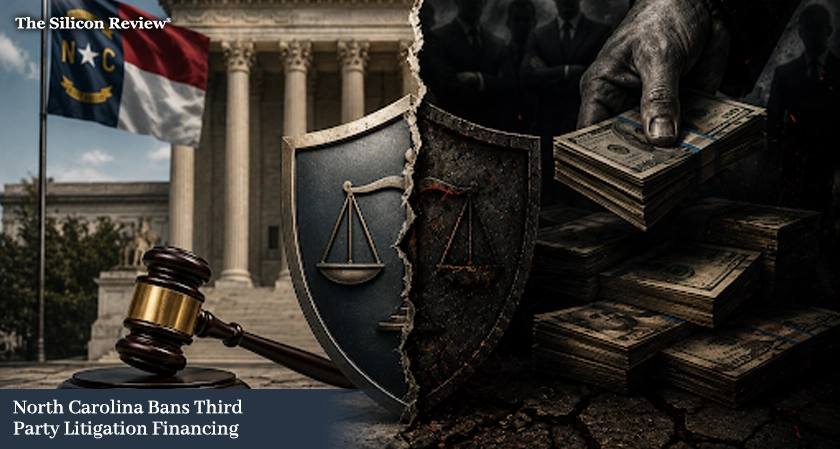
Third party litigation financing is at the center of a growing national controversy after North Carolina became the first state in America to ban the practice, putting the future of litigation funding under intense scrutiny.
Under the newly signed law, outside investors can no longer finance lawsuits in exchange for a share of future settlements or court awards. Supporters say the move protects the integrity of the legal system. Critics argue it could make justice harder to access.
But here's the question: if litigation funding helps people pursue legal claims, why ban it?
Backers of the law say outside investors have transformed lawsuits into financial assets, creating incentives that have little to do with justice. They argue that investors can indirectly influence legal strategies while pursuing profits from court outcomes.
The U.S. Chamber of Commerce supports the ban, describing it as a safeguard against profit-driven interests operating behind the scenes of civil litigation.
Or is this really about protecting corporations from well-funded lawsuits?
Critics see a different story. They argue that third party litigation financing often helps individuals and small businesses take on larger opponents with significantly greater financial resources. Without that support, many plaintiffs may struggle to afford lengthy and complex legal battles.
The new law also carries serious consequences. North Carolina authorities can pursue legal action against violators, while affected parties may seek substantial damages tied to prohibited funding arrangements.
If outside money disappears, who pays for the next major legal fight?
That question is fueling a broader debate across the country. While North Carolina opted for an outright ban, states including California, Colorado, and Illinois are exploring regulations that would limit investor influence without eliminating litigation funding entirely.
At the federal level, lawmakers continue to debate whether third party litigation financing should face stricter disclosure requirements, tighter restrictions, or no additional oversight at all.
For now, North Carolina has taken the most aggressive position in the nation, setting the stage for a legal and political battle that could reshape how lawsuits are financed across America.
As third party litigation financing faces its biggest challenge yet, North Carolina has ignited a national debate over the future of litigation funding. The Silicon Review asks: does this ban protect the justice system, or make justice harder to afford for those who need it most?
FAQ:
Q: What is third party litigation financing?
A: Third party litigation financing is a practice where outside investors provide money to plaintiffs or law firms in exchange for a share of any future settlement or court award.
Q: Why did North Carolina ban third party litigation financing?
A: State lawmakers argued that litigation funding allows outside investors to influence lawsuits and turns legal disputes into profit-driven investments.
Q: How does litigation funding help plaintiffs?
A: Litigation funding can help individuals and businesses cover legal costs, making it easier to pursue complex or expensive cases.
Q: What happens if someone violates the new law?
A: North Carolina's law allows authorities to take legal action against violators and imposes significant financial penalties.
Q: Is North Carolina the first state to ban litigation funding?
A: Yes. North Carolina is the first U.S. state to enact a full ban on third party litigation financing.
Q: Are other states banning litigation funding too?
A: No. States such as California, Colorado, and Illinois are considering regulations, but not complete bans.




















Comments