>>
Technology>>
Science and technology>>
Semiconductor Industry Shock: ...Semiconductor Industry Shock: US President Trump Says Apple Will Work With Intel, Putting the Tech Giant at the Center of America’s Chip Manufacturing Push
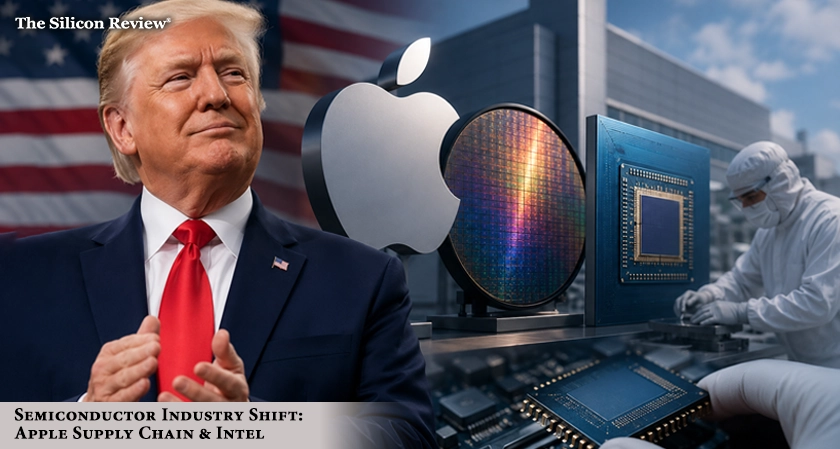
US President Trump says Apple will work with Intel on U.S. chip manufacturing, raising fresh questions about the semiconductor industry and Apple’s evolving supply chain.
Semiconductor Industry Shock: U.S. President Donald Trump claims that Apple has agreed to work with Intel to design and manufacture some chips in the United States. He shared the claim on Truth Social, presenting it as part of a push to expand domestic chip production. Apple and Intel have not confirmed the announcement or commented on it.
The development comes at a time when Apple remains heavily dependent on Taiwan Semiconductor Manufacturing Company (TSMC) for its most advanced chips. TSMC is widely seen as the global leader in cutting-edge chip manufacturing, and Apple’s relationship with it has been central to its product performance and scale.
The Wall Street Journal previously reported that Apple and Intel had held discussions about a potential chip manufacturing arrangement. Neither company has publicly confirmed such plans, and specific details about any possible collaboration have not been disclosed.
But inside the tech world, the reaction was far less celebratory and far more cautious.
Inside the industry, the reaction is mixed. On one side, Apple is looking for more supply options as demand for high-performance chips grows fast, driven largely by artificial intelligence and data-heavy computing. On the other side, shifting even part of Apple’s production away from TSMC is not simple, since its chips depend on extremely advanced manufacturing processes.
Intel could benefit strongly if the deal moves forward. The company has been trying to grow its contract manufacturing business and compete more directly with TSMC. A deal with Apple would be a major boost, both financially and in terms of credibility. But experts say Intel still needs to prove it can match the required performance and scale for Apple products.
The U.S. government has also been encouraging more chip production inside the country, adding policy pressure to an already complex global supply chain.
For now, many key questions remain unanswered, including whether the agreement is finalized and what products it would cover.
What is clear is that the chip industry is becoming more tied to geopolitics and national strategy. And Apple’s supply chain, once driven mainly by efficiency and cost, is now increasingly shaped by wider global pressures. The Silicon review asks, Is Apple quietly being pulled into a U.S.-China tech power struggle through its chip supply chain decisions?
FAQ:
Q: Has Apple confirmed a chip manufacturing partnership with Intel?
A: No. Apple has not publicly confirmed a manufacturing partnership with Intel.
Q: Why is an Apple-Intel chip deal significant?
A: A potential partnership could support U.S. semiconductor manufacturing while helping Apple diversify its chip production options.
Q: Where are Apple's chips currently manufactured?
A: Apple primarily relies on Taiwan Semiconductor Manufacturing Company (TSMC) to produce its advanced chips.
Q: What role does Intel Foundry play in the semiconductor industry?
A: Intel Foundry aims to manufacture chips for external customers, competing with major contract chipmakers worldwide.
Q: How does AI demand affect the semiconductor industry?
A: Growing demand for AI technologies is increasing the need for advanced semiconductor manufacturing and processing power.



















Comments