>>
Industry>>
Legal>>
How to Make a Smarter Decision...How to Make a Smarter Decision at the End of a Vehicle Lease
The Silicon Review
11 June, 2026
Author:
The Silicon Review Team
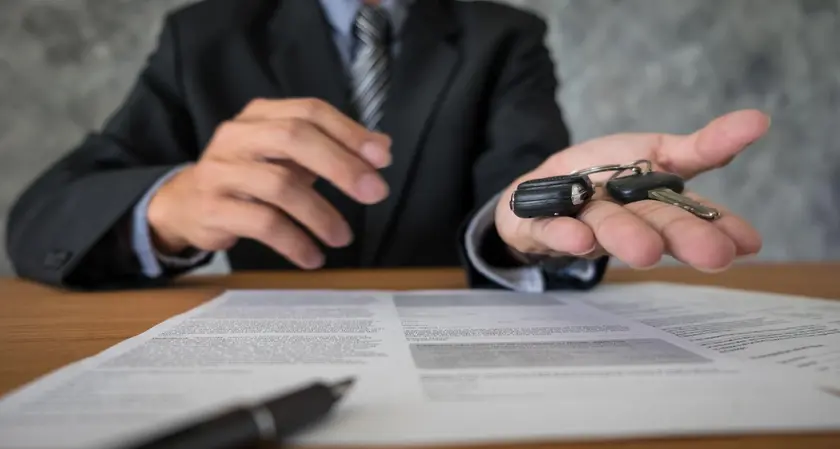
Once they lease a vehicle, most drivers turn their attention only to the monthly payment. The real financial decision, though, comes later, when the lease ends.
At that important point, even a quick signature could cost you money, while a few short conversations could save you thousands.
So, which path to choose: buying the vehicle, starting a new lease, or handing over the keys?
We’re here to help you decide.
Source: Magnific
Start With Two Numbers Before You Make Any Decision
Let’s say you're researching a Mazda lease buyout. Believe it or not, the first step should be ignoring dealership offers (for a moment) and focusing on two numbers: your lease-end purchase price and your vehicle's current market value.
The lease-end purchase price, also called the residual value, is listed in your lease agreement. This is the amount you'll pay if you decide to buy the vehicle when the lease expires.
For the second number, you need to do a bit more research and find out what your vehicle is really worth today.
When you have both figures, your options become much easier to evaluate.
When Returning the Vehicle Makes the Most Sense
Most drivers assume returning a leased vehicle is the simplest option. Sometimes, it is.
It makes most sense when the market value is lower than the buyout price. If your lease allows you to purchase the vehicle for $23,000, but similar models are selling for around $20,000, buying it would mean paying more than the vehicle is worth.
In that situation, returning the vehicle is the better financial move.
Still, before you hand over the keys, go over your lease agreement. Most leases include a disposition fee, which helps cover the lender's costs after the vehicle is returned. You may also end up with charges for excess mileage or damage that falls outside normal wear.
To save yourself from any unpleasant surprises, it’s best to do a pre-return inspection. Check:
- Tire wear beyond lease standards
- Noticeable dents, scratches, cracked glass, or interior damage
Small repair costs before lease-end can be lower than the charges assessed afterward.
So, even when this is the right choice, don't assume it's the cheapest option without running the numbers first.
Should You Move Into Another Lease?
Yes, you should move into another lease if you’re someone who enjoys driving a newer vehicle every couple of years and wants predictable monthly payments. That’s why dealerships often start contacting customers months before a lease expires.
Still, keep in mind that this isn’t a decision you should make based on convenience alone.
Your first step here is finding out whether your current vehicle has equity.
Imagine this: your lease buyout price is $19,000, but several dealers value the vehicle at $21,500. The $2,500 difference can help lower costs on your next lease. This step is especially important if you take into account how quickly the market can change.
If you intend to lease another vehicle, it’s best to compare offers from multiple dealerships. The first proposal you get is rarely the only one available.
With a little research, you may get a lower payment, a better vehicle, or more favorable lease terms.
Is Buying Your Leased Vehicle the Better Deal?
The third option, buying, makes most sense when the purchase price is lower than what the vehicle would cost on the open market.
You already know its maintenance history, driving habits, and overall condition, which means there’s no uncertainty that comes with shopping for a used vehicle.
This still shouldn’t drive the decision.
Here’s a scenario: your lease agreement states a buyout price of $18,500. After researching similar models in your area, you find that they sell for around $22,000. In that case, it’s logical to buy the vehicle and get immediate value.
Here’s the opposite scenario: the buyout price is $22,000 and comparable vehicles sell for $19,000; keeping the vehicle will cost you more than necessary.
Also, think about how long you plan to keep it. If it has been reliable, meets your needs, and still has years of useful life ahead, buy it.
If financing is required, compare loan terms before committing.
A Simple Way to Choose the Best Lease-End Option
By the time your lease expires, you should know two things.
Firstly, what it costs to buy the vehicle, and secondly, what it is worth today. The numbers will tell you the answer themselves.
Look at all three options, what they mean, and what you get. The key is not to make any decision just because the lease is ending. Many drivers make a common mistake and return a vehicle without checking its value, or buy one without comparing prices elsewhere.
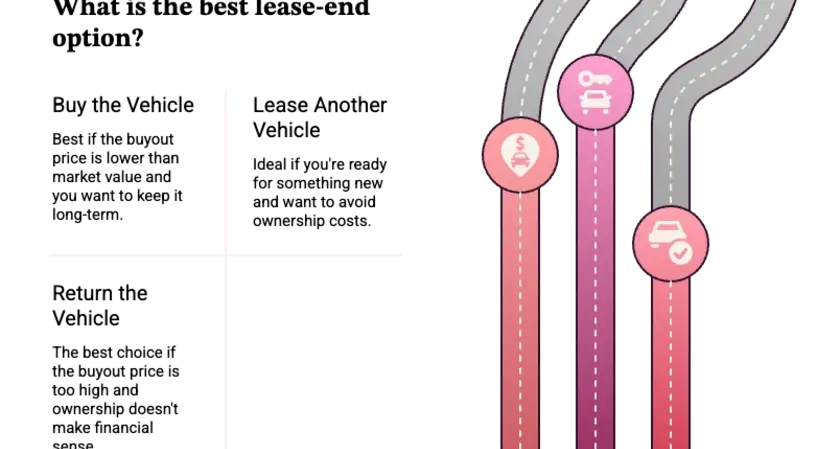
- If the buyout price is lower than market value and you want to keep the vehicle for more years, buy it.
- If you’re ready for something different, a dream vehicle, start another lease.
- If the buyout price is too high and ownership doesn't make financial sense, return the vehicle.
The decision isn’t easy, and the best one is rarely the fastest one. Rather, it’s the one that leaves you with the most value once all costs are on the table.