>>
Other>>
Politics>>
US-Iran Nuclear Talks Are Back...US-Iran Nuclear Talks Are Back. Did Diplomacy Solve the Problem or Just Postpone It?
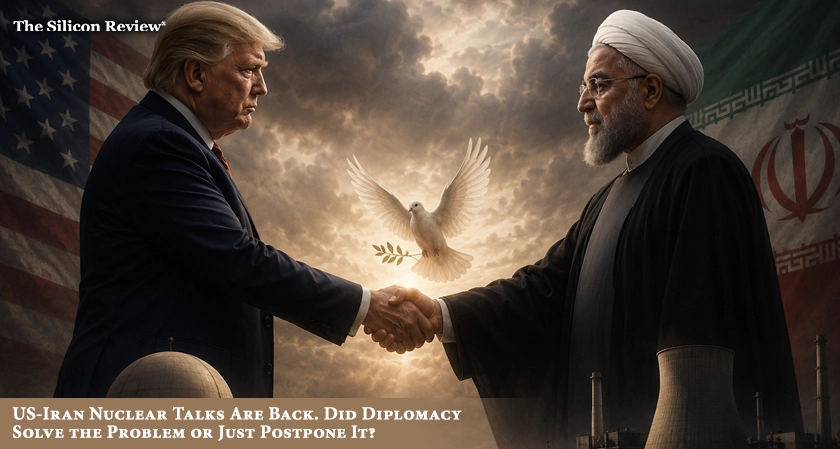
The Silicon Review
16 June, 2026
Author:
Jishnuu
The United States and Iran may have found a way to stop shooting at each other. The Silicon Review asks: if the missiles stop but the nuclear dispute remains, has anything really changed?
The US President Trump administration and Iranian negotiators have reportedly reached a preliminary Memorandum of Understanding (MoU) to halt hostilities and open a 60-day window for formal negotiations. Pakistan, which reportedly helped broker the talks, says the agreement is expected to be signed in Switzerland on June 19.
If signed and implemented, the deal would reopen the Strait of Hormuz and end the U.S. naval blockade. Oil shipments would resume, pressure on global energy markets could ease, and governments worldwide would welcome a reduction in tensions.
But there is one problem nobody seems eager to celebrate.
The US Iran nuclear talks are back on the table, yet the biggest question remains unanswered. What happens to the Iran nuclear program?
The ceasefire may stop immediate conflict, but it does not eliminate the issue that pushed both countries toward confrontation in the first place. Washington wants assurances that Iran's nuclear ambitions remain limited. Tehran insists its nuclear activities are peaceful and refuses what it sees as foreign interference.
Both sides claim they are entering negotiations from a position of strength. That sounds impressive until you realize it is exactly what both sides said before previous rounds of talks collapsed.
Supporters call it a breakthrough. Critics call it a countdown clock.
The proposed agreement creates a 60-day diplomatic window. Iran gets relief from pressure on one of the world's most important shipping routes. The United States gets a pause in a conflict that threatened regional stability and global energy markets. Yet neither side appears to be giving up its core demands.
That raises an uncomfortable question. Is this peace, or simply a strategic timeout?
The Strait of Hormuz handles a significant share of global oil shipments. Reopening it could reduce pressure on energy markets and restore commercial traffic. For businesses and consumers, that is welcome news. For diplomats, however, reopening the waterway is the easy part.
The hard part begins when negotiators sit down to discuss uranium enrichment, inspections, sanctions, and the future of the Iran nuclear program.
History offers little reason for blind optimism. The United States and Iran have spent decades alternating between diplomacy and confrontation. Agreements have been signed before. So have accusations, threats, and sanctions.
As Washington and Tehran prepare to sign a preliminary agreement, The Silicon Review asks one final question. If the next 60 days fail to resolve the nuclear dispute, will this fragile peace survive, or is the world simply watching the countdown to the next war?
FAQ:
Q: Why are the US Iran nuclear talks important to global markets?
A: The talks could reduce regional tensions, stabilize energy supplies, and lower uncertainty in global oil markets.
Q: What is the significance of the Strait of Hormuz in the agreement?
A: The Strait of Hormuz is one of the world's most important oil shipping routes, making its reopening critical for global energy trade.
Q: What does the United States want from the Iran nuclear program?
A: The United States has long sought assurances that Iran's nuclear activities cannot be used to develop nuclear weapons.
Q: What is Iran's position on its nuclear program?
A: Iran maintains that its nuclear program is intended for peaceful purposes, including energy production and scientific research.
Q: What is the latest update on the US-Iran nuclear talks?
A: The United States and Iran are expected to begin formal nuclear negotiations after signing a preliminary MoU on June 19, with a 60-day window set aside to address key issues such as uranium enrichment, sanctions relief, and international inspections. The core nuclear dispute remains unresolved.