>>
Other>>
Politics>>
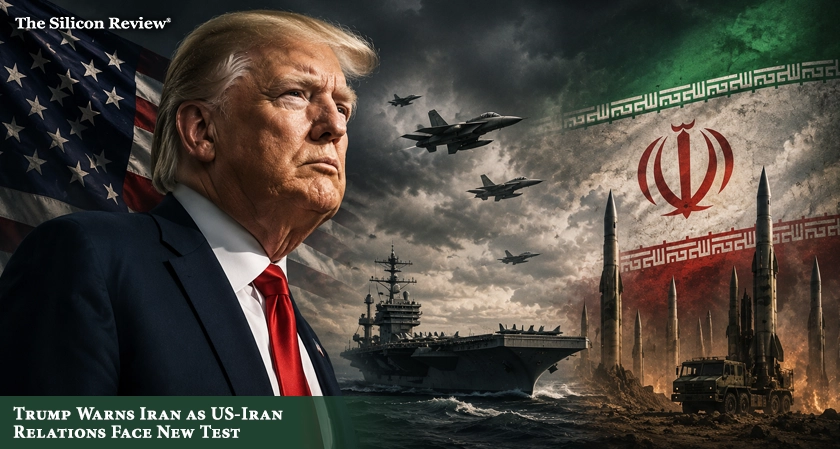
"I Will Do What I Have To Do":..."I Will Do What I Have To Do": US President Trump Warns Iran over US-Iran Relation, if President Trump truly has all the leverage, why does he need to keep threatening?
The Silicon Review
23 June, 2026
Author:
Jishnuu
US President Donald Trump has warned he "will do what I have to do" if Iran fails to comply with the interim agreement, while claiming Tehran has been severely weakened and can never obtain a nuclear weapon . The Silicon Review asks: if Iran is truly this week, why is Trump still threatening instead of acting?
US-Iran relations are once again under the spotlight after President Donald Trump warned that he would "do what I have to do" if Tehran fails to honor the Iran nuclear deal. The statement, delivered just days after both sides signed an interim agreement, has reignited concerns about whether the breakthrough represents lasting diplomacy or merely a temporary pause in a long-running geopolitical standoff.
Trump’s warning came soon after he and Iranian President Masoud Pezeshkian signed an interim deal meant to ease months of tension, military strikes, and market fear. But the trust gap remains wide.
If Iran doesn't live up to their agreement, or if they're not behaving, "I will do what I have to do," US President Donald Trump told reporters at the White House. The warning came as Trump signed executive orders on quantum technology, but his words were aimed squarely at Tehran.
The deal came after months of attacks and counterattacks involving US, Israeli, and Iranian-linked forces across the region. But Trump's latest warning has shifted the conversation from diplomacy back to pressure.
Can this agreement survive if either side believes the other has crossed the line?
Trump also argued that unfrozen Iranian funds would ultimately benefit American farmers through food purchases. The comment has reignited debate over whether the Iran nuclear deal is a diplomatic breakthrough, a bargaining tool, or simply political strategy. The message from Washington was firm as the future of the agreement depends on Iran honoring its commitments.
"All that money's coming back in the form of purchases of food which they desperately need. They have 91 million people, they can't feed them. So, the money that we lift is going to go to our farmers," US P resident Trump said.
The stakes extend far beyond Washington and Tehran. If the agreement falls apart, oil prices could surge, markets could wobble, and tensions across the Middle East could rise once again.
For now, the deal holds. But Trump's warning is a reminder that peace remains fragile. The future of US-Iran relations will depend not on promises, but on what both sides do next. As US-Iran relations enter another uncertain phase, The Silicon Review highlights that this is a high-stakes contradiction: if he truly has all the leverage, why does he need to keep threatening? The answer is likely that he doesn't have as much leverage as his public statements suggest, and a deal is the only way to guarantee the outcomes he wants without a prolonged and costly quagmire.
FAQ:
Q: Who signed the interim agreement?
A: US President Donald Trump and Iranian President Masoud Pezeshkian signed the deal as part of efforts to reduce tensions.
Q: Why did Trump warn Iran?
A: Trump said the US would act if Iran fails to comply with the terms of the Iran nuclear deal.
Q: What is the main goal of the Iran nuclear deal?
A: The agreement aims to reduce tensions, prevent escalation, and create a framework for future negotiations.
Q: Is the agreement permanent?
A: No. It is an interim deal designed to maintain stability while broader negotiations continue.
Q: What does Iran gain from the deal?
A: Iran gains access to previously restricted funds and potential economic relief tied to compliance.

















Comments