>>
Industry>>
Healthcare>>
Is Community Eye Health the Fu...Is Community Eye Health the Future of Eye Care? New Sunderland Hub Could Transform How Patients Protect Their Sight
The Silicon Review
06 July, 2026
Author:
Jishnuu
A new eye health hub is opening in Sunderland, promising faster scans and shorter waits for eye care patients drowning in NHS backlogs. But hospitals are stretched to breaking point. Is this a genuine cure, or just a new address for the same crisis?
A new community eye health hub is set to open in Sunderland, promising faster diagnosis, easier access to specialist services, and a sharper approach to preventive eye care. But if community screening is the answer, why has so much eye care stayed locked inside hospitals for so long?
South Tyneside and Sunderland National Health Service (NHS) Foundation Trust said the new hub will mark a "pivotal moment" in the way it delivers eye care when it opens later this month.
Will this finally cut the long waits that frustrate patients and strain the system?
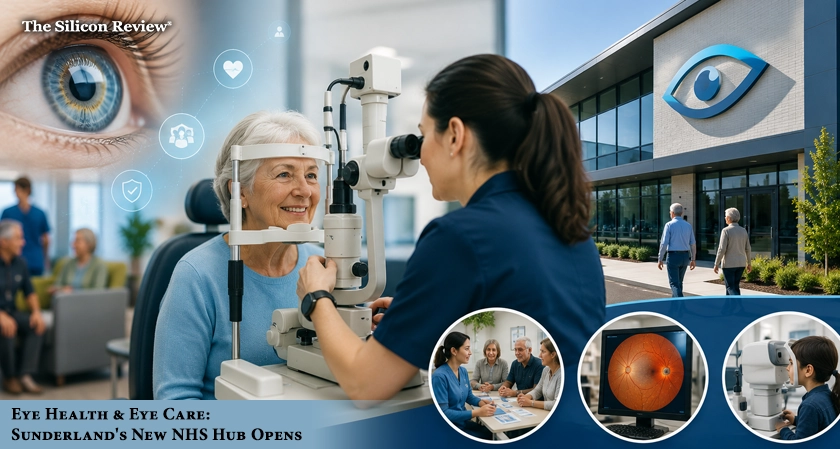
Staff from Sunderland Eye Infirmary will treat more patients at the new hub, expanding access to eye care for people with glaucoma, diabetic eye disease, macular degeneration, and other retinal conditions. Routine scans and tests will enable specialists to detect problems early and refer patients to hospital when needed.
Located beside the Stadium of Light, the hub offers convenient public transport access and is better suited for patients who cannot drive after receiving pupil-dilating eye drops.
Ajay Kotagiri, Clinical Director of Ophthalmology at South Tyneside and Sunderland NHS Foundation Trust, described the facility as a "pivotal moment" for local eye care, saying closer monitoring will help preserve patients' eyesight while providing faster access to treatment and greater peace of mind.
Ajay Kotagiri, Clinical Director of Ophthalmology at South Tyneside and Sunderland NHS Foundation Trust, said: "For so many eye conditions it is important that we monitor them closely so that we keep people's eyesight as good as it can be, for as long as possible."
But is this just smarter care, or proof that the old hospital-first model is too slow?
The hub will also collaborate with the Northern Ophthalmic Research and Innovation (NORI) Institute at the University of Sunderland, linking routine eye images with NHS and community health data to detect early signs of diabetes, dementia, heart disease, and stroke.
Beyond protecting vision, routine eye health checks could help identify serious health conditions earlier.
Jamie Wright, Chief Operating Officer of Foundation of Light, said: "By bringing specialist screening into a trusted community setting, we're making essential healthcare more accessible for local people, while strengthening our shared ambition to improve health outcomes."
As community healthcare grows, The Silicon Review asks if community-based eye health delivers better outcomes, why hasn't the NHS made it the national standard already?
FAQ:
Q: What is the new eye health hub in Sunderland?
A: It is a community-based facility designed to provide faster eye health scans, routine monitoring, and improved access to specialist eye care services.
Q: Who will benefit from the new eye care hub?
A: Low-risk patients with glaucoma, diabetic eye disease, macular degeneration, and other retinal conditions requiring regular monitoring.
Q: How will the hub improve eye care?
A: It will increase patient capacity, shorten waiting times, speed up diagnosis, and refer patients to hospital specialists if further treatment is needed.
Q: Why is early eye health screening important?
A: Regular eye health checks help detect vision problems early and can prevent avoidable sight loss through timely treatment.
Q: Can an eye health check detect other diseases?
A: Yes. The hub will support research exploring how routine eye imaging can help identify early signs of diabetes, dementia, heart disease, and stroke.
Q: What conditions will the hub monitor?
A: The service will monitor glaucoma, diabetic retinopathy, macular degeneration, and other retinal diseases that require ongoing observation.




















Comments