>>
Industry>>
Legal>>
Electric Vehicle Crash Claims:...Electric Vehicle Crash Claims: What You Need to Know
The Silicon Review
09 July, 2026
Author:
Guest
Electric vehicles (EVs) have rapidly transitioned from a niche automotive trend to a common sight on Richmond's streets and highways. Drivers are drawn to their environmental advantages, fuel savings, and state-of-the-art features. However, as the number of electric cars, trucks, and SUVs grows, so does the frequency of traffic collisions involving them.
While any auto accident is stressful, a crash involving an electric vehicle introduces unique mechanical, structural, and legal challenges. From the immense weight of lithium-ion battery packs to advanced driver-assistance systems (ADAS) logs, EV crash claims are rarely straightforward. Understanding the distinctive factors of these incidents is crucial if you find yourself navigating the insurance claims process following an EV collision.
Why Legal Guidance Is Vital for Your Claim
Because EV technology is evolving rapidly, insurers frequently lack standardized guidelines for evaluating these claims, leading adjusters to undervalue property damage or dispute injury severity. Adjusters may attempt to blame the crash on technological malfunctions rather than driver negligence. If you or a loved one has suffered injuries or extensive property loss in a collision, securing representation from a Richmond car accident lawyer who can prove your case is imperative. A skilled attorney understands how to subpoena digital vehicle logs, consult with accident reconstruction professionals, and challenge insurance companies to secure the full financial recovery you deserve for medical bills, lost wages, and rehabilitation costs.
Proving fault in an EV accident often goes beyond analyzing physical skid marks or police reports. It requires pulling digital data from the vehicle's event data recorders (EDRs) and onboard computers to analyze speed, braking intervals, and whether autonomous or assisted driving features were active at the moment of impact.
The Physics of EV Crashes: Weight and Instant Torque
Understanding why electric vehicle accidents differ from standard internal combustion engine vehicle (ICEV) accidents requires looking at the underlying engineering. The heavy battery pack positioned along the floorboard gives EVs a low center of gravity but makes them significantly heavier than traditional cars of a comparable size.
This added mass alters the physics of an impact. Recent research indicates that while the increased vehicle weight in EV crash scenarios can result in smaller injury severity indices for the EV's occupants, it places substantially larger stress on roadside safety infrastructure and longitudinal barriers (Yücel, 2024). In multi-vehicle accidents, an EV transfers massive kinetic energy to smaller vehicles, frequently resulting in catastrophic damage and severe injuries.
Furthermore, EVs operate with electric motors that deliver instant torque. Unlike traditional engines that build up RPMs, electric vehicles accelerate the moment the driver presses the pedal. This rapid acceleration, combined with the nearly silent operation of electric motors at low speeds, can catch other motorists and vulnerable road users off guard. Studies note that the low noise levels of electric vehicles pose unique risk situations in urban areas, particularly when pedestrians cross the street without hearing an approaching car (Pardo-Ferreira et al., 2020). Rear-end collisions and pedestrian impacts are among the most frequently cited EV accident types in urban environments (Hou et al., 2023).
Injury Trends and Accident Statistics
As the deployment of electric fleets scales up, researchers are tracking the real-world safety implications. Epidemiological data evaluating electric vehicle collisions across the United States shows that while per capita fatality rates within EVs have remained relatively stable, the expanding total volume of EVs corresponds to a rising aggregate of serious crashes (Alter et al., 2022).
Modern EVs are typically equipped with advanced safety features like automatic emergency braking, lowering overall accident frequency. However, when severe collisions occur, injuries can be severe due to the tremendous force generated by the vehicle’s weight. While belted occupants inside a heavy EV often benefit from the vehicle’s structural integrity, the occupants of colliding vehicles, pedestrians, and bicyclists are frequently left to bear the brunt of the impact forces.
Unique Complications in EV Property Damage and Insurance Claims
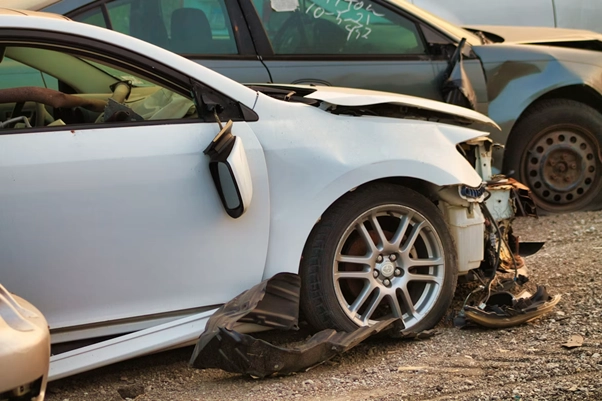
Filing a claim after an EV accident is remarkably different from a standard auto claim. Insurers treat electric vehicles with a high degree of scrutiny due to several costly factors:
- High Repair Costs: The cutting-edge technology that makes EVs appealing also makes them expensive to repair; rear-end collisions often damage specialized sensors, cameras, and radar units integrated into bumpers.
- The "Total Loss" Battery Dilemma: The single most expensive component of an EV is its battery If an accident causes even minor undercarriage damage near the battery housing, insurance adjusters often deem the vehicle a total loss. Replacing a compromised lithium-ion battery can cost tens of thousands of dollars, frequently exceeding the actual cash value of the vehicle.
- Post-Crash Chemical and Fire Hazards: Though rare, a severely compromised lithium-ion battery can undergo thermal runaway. This triggers intense, self-sustaining chemical fires that burn at extremely high temperatures and are notoriously difficult to extinguish, complicating post-accident forensic vehicle inspections.
Electric vehicles represent the future of transport, but their unique weight, instant power, and high-tech composition create complex scenarios when collisions happen. Navigating an EV crash claim demands an understanding of specialized automotive technology and aggressive insurance tactics. Protecting your rights starts with partnering with legal professionals who know how to protect your interests.




















Comments