>>
Industry>>
Automotive>>
Ferrari and BMW Join Tesla, Ch...Ferrari and BMW Join Tesla, China in Aluminum Shift as Copper Costs Soar: Is Auto Industry Entering a New Era?
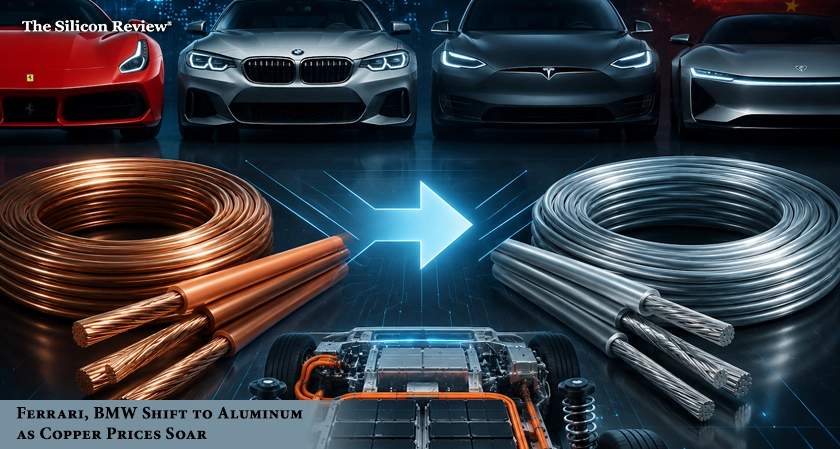
Ferrari and BMW are ditching copper for aluminum wiring, joining Tesla and China's EV giants as soaring copper prices force a major industry shift. Is this the next breakthrough in electric vehicles, or proof that even luxury automakers can no longer afford the old standard?
Ferrari and BMW are replacing copper wiring with aluminum in new models, joining Tesla and leading Chinese EV makers. As copper prices soar due to supply shortages and rising demand from clean energy and data centres, aluminum is quickly becoming the industry's new favorite.
This isn't just about saving money. Ferrari says aluminum cuts wiring weight by up to 20%, making vehicles lighter and more efficient without sacrificing performance. BMW has been steadily expanding aluminum wiring across its latest EV platforms, turning what was once an experiment into a long-term strategy.
If aluminum performs almost as well for a fraction of the cost, why did automakers stick with copper for so long?
The answer is simple. Copper conducts electricity better, while aluminum needs more material to do the same job. For years, performance outweighed cost. Now, soaring copper prices are forcing carmakers to rethink that formula.
China is driving the change. Backed by government policies promoting aluminum, Chinese EV makers are rapidly replacing copper to cut costs and boost driving range.
Is China leading the next automotive revolution while legacy carmakers struggle to keep up?
Tesla proved aluminum wiring could work at scale with the Model Y and Cybertruck. Now Ferrari and BMW are following, making it clear this is no longer a niche experiment. It's becoming the industry's next big move.
Ferrari communications executive Dario Esposito said "We are not choosing aluminum because it's cheaper, we choose the material that has better performance,"
Industry analysts estimate aluminum could replace around 2% of global copper demand this year, with that figure potentially tripling by the end of the decade if copper prices remain high.
Could this be the beginning of copper losing one of its strongest industrial strongholds?
Not entirely. Copper still offers higher conductivity and remains indispensable in many critical automotive applications. Yet the growing willingness of premium brands such as Ferrari and BMW to embrace aluminum signals that cost, efficiency, and vehicle weight are becoming just as important as raw performance.
As automakers balance profitability with electrification, The Silicon Review asks is aluminum the future of electric vehicle manufacturing, or are automakers sacrificing proven performance just to cut costs?
FAQ:
Q: Why are Ferrari and BMW replacing copper with aluminum wiring?
A: Ferrari and BMW are switching to aluminum wiring to cut vehicle weight, improve EV efficiency, and reduce costs as copper prices hit record highs.
Q: Is this about innovation or cost-cutting?
A: It's both. Automakers say aluminum improves efficiency through weight savings, but its much lower price is also a major driver behind the shift.
Q: Why has copper suddenly become a problem?
A: Global copper supplies are tightening while demand from electric vehicles, clean energy, and AI data centers continues to surge, pushing prices sharply higher.
Q: Is aluminum as good as copper?
A: Not entirely. Copper conducts electricity better, but aluminum is lighter and significantly cheaper, making it attractive for many EV applications.
Q: Why didn't automakers make this switch years ago?
A: Copper's superior conductivity made it the industry standard for decades. Only after copper prices surged did aluminum become a compelling alternative.
Q: Why is China leading the aluminum shift?
A: China is backing aluminum substitution through government policies while its EV makers race to lower costs and increase driving range.
Q: Which automaker started this trend?
A: Tesla was among the first to use aluminum wiring at scale in the Model Y and Cybertruck, setting a benchmark that Ferrari, BMW, and Chinese EV makers are now following.



















Comments