>>
Industry>>
Management consulting>>
Ford CEO’s Factory Floor Rev...Ford CEO’s Factory Floor Revolution: Can a Toyota-Inspired Strategy Rescue Ford’s Future?
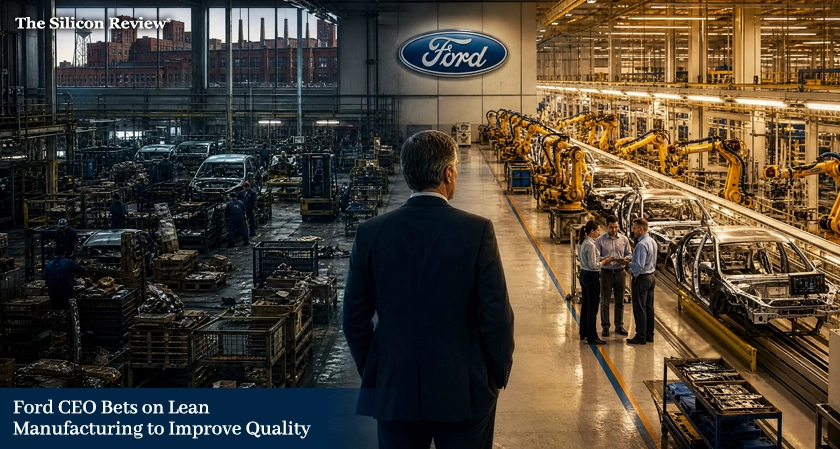
Ford CEO Jim Farley is turning to lean manufacturing and Japanese management methods to rebuild quality after billions spent on recalls and repairs. Can an old factory philosophy solve Ford’s modern crisis?
Ford CEO Jim Farley is taking Ford’s quality battle back to the factory floor with a Toyota-inspired lean manufacturing strategy. Can Jim Farley’s factory-floor revolution rebuild the decades-old customer trust that made Ford an automotive icon?
After years of recalls, rising repair costs and quality concerns, Farley is using “Gemba walks”, a Toyota-inspired approach that focuses on seeing problems where they actually happen.
Can an old manufacturing philosophy fix a modern auto industry crisis?
Ford’s quality problems have cost the company billions, forcing leaders to rethink how vehicles are designed, built and tested. Farley believes the answer is not just new technology, but stronger processes, deeper accountability and a culture focused on quality.
“Gemba” means “actual place” in Japanese, pushing leaders to leave offices, visit production lines and work directly with employees to solve issues.
Ford CEO Jim Farley mentioned Gembas as “One of the first things I did as a CEO.”
Farley adopted the strategy after learning from Toyota and has spent years refining his approach. His plant visits focus on one critical question: are teams protecting quality or simply chasing production numbers?
Ford CEO Jim Farley said “When we decided to build a new plant, it was a common expectation at Toyota, even if you were a Westerner, to spend time in the plant,” Farley added “I watched very senior people at Toyota in Japan go to the line, find problems, go to the operator who is dealing with the problem, and then try to problem-solve to help the team.”
The company is now targeting fewer defects, smoother launches and stronger reliability while trying to rebuild customer trust. Recent quality rankings show signs of improvement, but Ford still faces a bigger challenge proving that this turnaround is not temporary.
Can Ford finally escape its repeated cycle of fixing quality problems after they appear?
As Ford CEO Jim Farley pushes lean manufacturing deeper into the company, the battle is no longer just about making cars. It is about rebuilding confidence in every vehicle that leaves the factory. The Silicon Review asks Can Jim Farley’s factory-floor revolution rebuild Ford’s future, or is the company still chasing problems instead of preventing them?
FAQ:
Q: What is Ford CEO Jim Farley’s new strategy to improve quality?
A: Ford CEO Jim Farley is using lean manufacturing and Toyota-inspired “Gemba” walks to identify problems directly on factory floors and improve vehicle quality.
Q: What is lean manufacturing?
A: Lean manufacturing is a production approach focused on reducing waste, improving efficiency and solving problems through continuous improvement.
Q: What are Gemba walks at Ford?
A: Gemba walks involve leaders visiting the actual workplace, observing production issues and working with employees to find solutions.
Q: Why is Ford focusing on quality improvement?
A: Ford is addressing years of recalls, repair costs and quality concerns that affected customer confidence and increased expenses.
Q: How did Toyota influence Ford’s manufacturing strategy?
A: Jim Farley adopted lessons from Toyota’s management approach, where executives regularly visit factories to understand problems and improve processes.
Q: What is Ford trying to achieve with lean manufacturing?
A: Ford aims to reduce defects, improve reliability, create smoother vehicle launches and rebuild customer trust.
Q: Can lean manufacturing solve Ford’s quality challenges?
A: Lean manufacturing can improve processes, but Ford must prove that the changes create long-term improvements across its operations.











Comments