>>
Industry>>
Supply chain management>>
Key Trends Transforming Turnke...Key Trends Transforming Turnkey Manufacturing
The Silicon Review
24 July, 2026
Author:
The Silicon Review Team
Modern manufacturing facilities face constant pressure to streamline supply chains, reduce operational expenses, and speed up production schedules. Working with single-source production partners offers a practical response to these persistent challenges.
By consolidating design, raw material processing, and final assembly under one roof, companies eliminate costly communication gaps and logistical delays. Understanding the core developments shaping this industrial approach helps operators build more resilient, cost-effective operations.
Industrial Automation Integrations
Smart factory tools are transforming production lines across every sector. Facilities now connect physical equipment to centralized software networks for real-time operational monitoring.
Sensors collect live data on operating temperatures, vibration levels, and component wear. These measurements help maintenance teams repair machinery before unexpected breakdowns occur. Standardized software platforms allow separate machines to communicate without manual intervention.
A recent industry report highlighted that the adoption of Industry 4.0 principles and technologies will continue to accelerate during this period. Modern software tools convert basic machine data into actionable workflow updates, keeping operations running at peak efficiency.
Collaborative Robotics on the Shop Floor
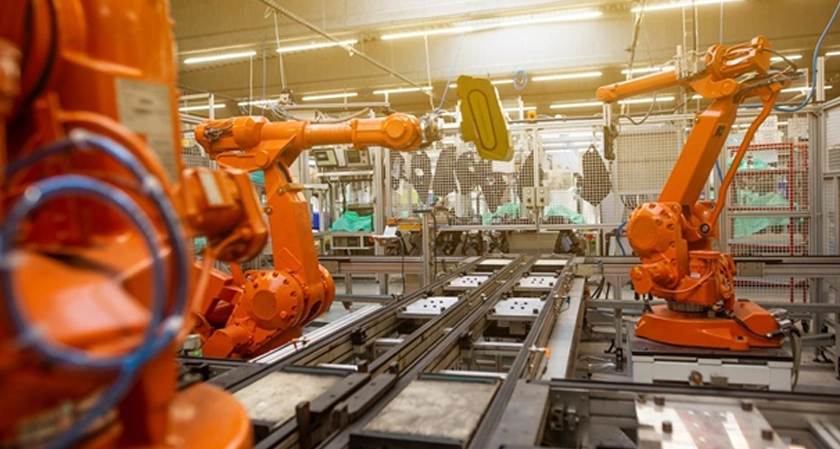
Robotic equipment works directly alongside human operators on modern assembly lines. These mechanical units handle repetitive, heavy, or hazardous tasks with extreme accuracy.
Safety sensors stop robotic arms if an employee enters their working radius. Operators program these systems for new production runs without writing complex code. Compact designs make these robotic units easy to deploy in tight facility layouts.
- Automated material handlers move raw metal inventory across the shop floor.
- Specialized welding units perform uniform joins on heavy structural parts.
- Vision system cameras inspect critical product dimensions during fast assembly cycles.
Advanced Metal Processing Capabilities
Modern facilities rely heavily on precise custom metal shaping techniques. Working with experienced fabrication specialists allows plant managers to offload complex structural design tasks while keeping overall project timelines on track. High-precision laser cutters slice through thick steel plates quickly while leaving clean edges.
Computer-controlled press brakes bend sheet metal into exact angles without manual measurement error. High-capacity structural rollers shape large metal beams into smooth curves. Automated finishing bays clean, powder-coat, and cure completed components within one seamless system.
Digital Twin Technology Adoption
Virtual modeling tools create exact digital replicas of physical production machinery. Engineers run simulated manufacturing cycles to test new product designs long before cutting physical materials.
These virtual models uncover potential bottlenecks in planned assembly workflows. Managers adjust machinery configurations inside the software to maximize total factory output. Stress testing parts virtually reveals structural weaknesses early in the design cycle.
Simulation Benefits in Action
Virtual testing saves resources by reducing physical scrap. Development teams fine-tune production speeds, tool angles, and material feeds before running live equipment. This pre-production verification keeps capital expenditures under control.
Streamlined Supply Chain Pipeline
Turnkey partners handle raw material sourcing, fabrication, and final delivery within a single unified pipeline. This integrated approach cuts administrative overhead and eliminates third-party shipping delays.
Buyers work with one primary point of contact rather than coordinating with dozens of component vendors. Centralized purchasing lowers raw material expenses through bulk ordering discounts. Unified quality tracking ensures every product batch meets uniform manufacturing standards.
Cybersecurity Upgrades in Industrial Operations
Connected factory machinery creates potential entry points for unauthorized network users. Modern facilities build strict digital defenses into operational networks to safeguard proprietary client designs.
An industry survey revealed that nearly 1 in 5, or 18%, of middle market companies experienced a data breach in the previous year. Automated software updates keep machine control platforms protected against emerging digital threats. Segregated operational networks keep core machinery isolated from routine office internet activity.
- Encrypted file transfer protocols protect client design files during handoffs.
- Multi-factor authentication prevents unauthorized staff from altering critical machine code.
- Scheduled network backups save operational data regularly to prevent costly production halts.
Sustainable Manufacturing Methods
Waste reduction remains a primary objective across high-volume production operations. Facilities process scrap metal materials internally, sending recycled stock directly back into standard production streams.
Variable-frequency drives on heavy equipment cut electrical usage during idle periods. Closed-loop water filtration systems clean and reuse process fluids in cutting operations. Eco-friendly cleaning solvents minimize hazardous waste during final surface preparation.
Rapid Prototyping Capabilities
Fast prototype turnarounds allow product developers to test functional parts under realistic operating conditions. Industrial 3D printers and quick-turn CNC machining transform digital designs into physical parts within hours.
Engineers spot design flaws early, saving funds before committing to expensive hard tooling. Short prototype runs help sales teams showcase physical products to prospective buyers long before commercial production begins. Flexible tooling setups allow rapid design tweaks without stalling existing shop schedules.

Adopting single-source manufacturing strategies gives growing businesses a clear operational advantage. Smart automation, tight supply chain management, and rigorous quality controls deliver reliable results. Embracing these key production shifts positions companies for long-term growth.




















Comments