>>
Industry>>
Luxury Travel and Tourism>>
Mercedes-Benz Faces China Shoc...Mercedes-Benz Faces China Shock: If Luxury Is Unbeatable, Why Are Buyers Walking Away?
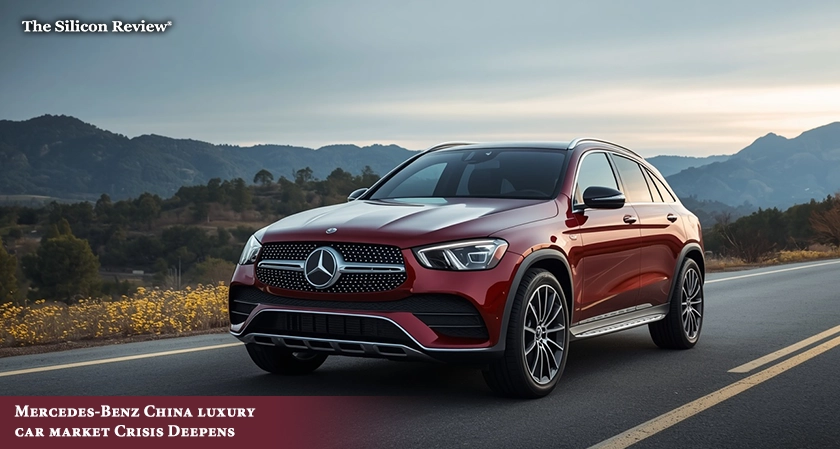
Mercedes-Benz is facing a China luxury car market slowdown as falling demand hits sales and profits. Is the world’s premium auto icon losing its power?
Mercedes-Benz is facing a growing issue. The luxury badge that once dominated China’s roads is now struggling to convince buyers. The company has cut its revenue outlook as weakening demand in the China luxury car market exposes a deeper challenge for global premium automakers.
Mercedes expects group revenue to fall slightly below last year, reversing its previous forecast of stable performance. The slowdown comes as China’s property crisis weakens consumer confidence and wealthy buyers become more cautious about expensive purchases.
If Mercedes represents the future of luxury, why is its biggest market turning into its biggest headache?
The warning signs are clear. Mercedes sales China dropped 30 percent in the second quarter, falling faster than the overall Chinese auto market. The company’s average selling price also declined from €67,700 to €64,700, showing growing pressure on pricing and customer demand.
“Intense competition, cautious consumer sentiment and ongoing model changes,” said Mercedes-Benz Group.
CEO Ola Källenius’ strategy of pushing Mercedes further upmarket is now under pressure. The move was designed to attract wealthy buyers and protect margins.
Is this just a slowdown or a sign that luxury buyers are changing what they want?
Mercedes’ car division reported adjusted operating earnings plunging 26 percent to €909 million in the second quarter. While its van business offered some stability, the company’s core luxury segment continues to face rising pressure.
Mercedes is betting on new launches, including updated S-Class models, electric GLC SUVs, and refreshed premium vehicles, to regain momentum. The company is also accelerating its electric vehicle push as technology becomes a key factor in defining modern luxury.
But the battle is no longer only against BMW or Audi. Chinese automakers are challenging European giants with smarter features, advanced digital systems, and lower prices, winning customers who once looked only at established luxury names.
Could China’s homegrown brands rewrite the definition of luxury itself?
The pressure is spreading across Germany’s auto industry. BMW and Volkswagen have also lowered expectations as European automakers struggle with weaker Chinese demand, aggressive price competition, and a rapidly changing global market.
Mercedes-Benz is facing a temporary slowdown or will it remain a permanent shift in luxury buying behavior. The Silicon Review asks if customers now prioritize innovation, technology, and value over heritage, will even the strongest luxury brands be forced to rethink their strategy?
FAQ:
Q: Why is Mercedes-Benz facing challenges in China?
A: Mercedes-Benz is facing weaker demand, cautious consumer spending, intense competition, and changing preferences in the China luxury car market.
Q: Why are Mercedes sales China declining?
A: Mercedes sales China are declining due to slower luxury demand, economic uncertainty, pricing pressure, and competition from Chinese automakers.
Q: What is happening in the China luxury car market?
A: The China luxury car market is experiencing slower growth as consumers become more cautious and local brands gain market share.
Q: What factors are affecting luxury car sales globally?
A: Luxury car sales are being impacted by weaker consumer confidence, economic uncertainty, rising competition, and changing buyer priorities.
Q: Is Mercedes-Benz losing its luxury market position?
A: Mercedes-Benz remains a leading luxury brand, but the company faces pressure to adapt as customers increasingly value technology and innovation.
Q: What role does electric technology play in Mercedes-Benz’s strategy?
A: Electric technology is becoming central to Mercedes-Benz’s strategy as the company competes in a market where innovation influences luxury buyers.
Q: Can Mercedes-Benz recover in the China luxury car market?
A: Mercedes-Benz can recover through stronger product launches, competitive technology, and adapting to changing customer expectations.



















Comments