>>
Platform>>
Microsoft>>
Microsoft Kimi K3 ChatGPT Rep...Microsoft Kimi K3 ChatGPT Replacement: Can China’s AI Model Cut OpenAI’s Lead?
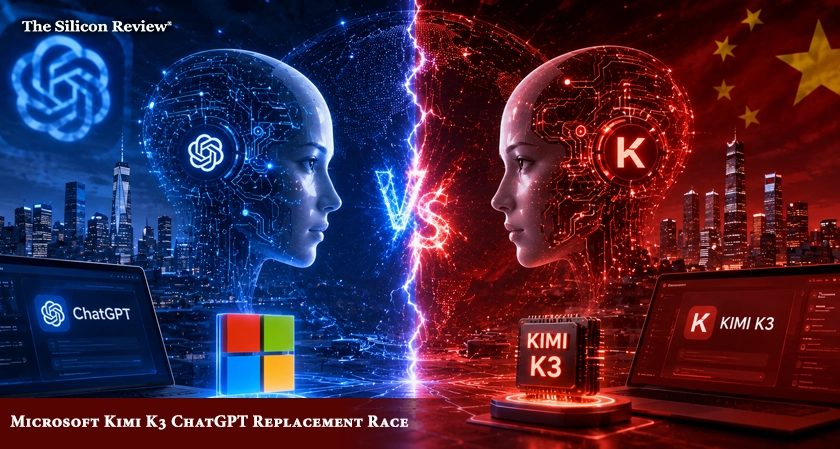
Microsoft Kimi K3 ChatGPT replacement plans are shaking the AI industry as affordable Chinese models challenge costly US systems. But is price changing the race?
Microsoft Kimi K3 ChatGPT replacement plans have ignited a fresh AI battle after reports revealed that Microsoft is testing Moonshot AI’s Chinese model as a possible alternative for Copilot and Azure. The move could reduce AI costs by up to $600 million. Can a Chinese AI model challenge America’s most powerful technology players?
Microsoft is reportedly exploring whether Kimi K3 can deliver similar capabilities to OpenAI and Anthropic models at a much lower cost. The potential shift highlights a growing pressure inside the AI industry where companies are no longer chasing only the most powerful models, but also the most affordable ones.
If America leads AI, why are its biggest companies looking elsewhere?
Kimi K3, developed by China-based Moonshot AI, has quickly become one of the most talked-about AI models after its release as an open-weight system. Unlike closed models from major US companies, Kimi K3 allows developers to download, modify, and deploy the technology, making it attractive for businesses seeking flexibility and lower expenses.
Scott Bessent, U.S. Treasury Secretary said “If we see, especially that overseas models are stealing from our great companies, we have the ability to sanction them because of this theft.”
The model’s strong coding performance has caught attention across Silicon Valley. Its ability to compete with advanced US AI systems has challenged the assumption that expensive infrastructure automatically guarantees technological dominance.
Can affordable AI defeat billion-dollar investments?
The Microsoft cost savings AI switch reflects a major change in enterprise priorities. Kimi K3 reportedly costs significantly less than competing models from OpenAI and Anthropic, giving companies a reason to reconsider long-term AI spending strategies.
However, the rise of the Microsoft ChatGPT Claude alternative China debate is not only about money. US technology leaders have raised concerns over security, data protection, and China’s growing influence in artificial intelligence.
The US government is also watching closely, with officials warning about potential intellectual property risks and examining how Chinese AI models are entering global markets.
Is this a security battle, or a battle for AI dominance?
The growth of the Kimi K3 China AI model exposes a difficult contradiction. American companies still hold major advantages in chips, research, and AI ecosystems, yet Chinese models are forcing them to compete on price and accessibility.
Microsoft’s decision could become a turning point. The Silicon Review asks why are companies exploring Chinese alternatives to power their next generation of intelligence?
FAQ:
Q: What is the Microsoft Kimi K3 ChatGPT replacement plan?
A: Microsoft is reportedly testing Moonshot AI’s Kimi K3 model as a possible lower-cost alternative for Copilot and Azure AI services.
Q: Why is Microsoft considering Kimi K3?
A: Microsoft is exploring Kimi K3 to reduce AI costs while maintaining strong performance for enterprise users.
Q: What makes the Kimi K3 China AI model different?
A: Kimi K3 is an open-weight AI model that allows developers to download, customize, and deploy the technology more easily.
Q: Can Kimi K3 replace ChatGPT and Claude?
A: Kimi K3 could become a competitive alternative for some AI applications, but ChatGPT and Claude still have strong research and ecosystem advantages.
Q: How could the Microsoft cost savings AI switch impact the AI industry?
A: The shift could push AI companies to focus more on affordability, efficiency, and accessibility rather than only building the most powerful models.
Q: Why is the Microsoft ChatGPT Claude alternative China trend important?
A: It shows that Chinese AI models are becoming serious competitors in the global AI market and challenging US technology leadership.
Q: What concerns surround Chinese AI models like Kimi K3?
A: Concerns include data security, intellectual property protection, and the growing influence of Chinese AI technology worldwide.













Comments