>>
Industry>>
Retail>>
Modern Shopping Habits of Gen ...Modern Shopping Habits of Gen Z and Millennials
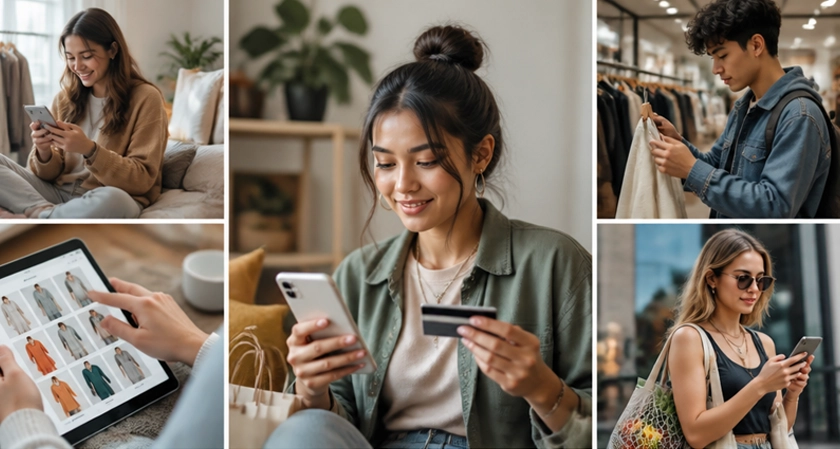
Gen Z and Millennials together control over $3.5 trillion in global spending. Shopping isn't a chore for them — it's a reflex, something that happens mid-scroll at 11pm. This piece looks at how both generations actually buy in 2026, what's changed, and why so many brands still get it wrong.
Where Purchases Actually Start
Forget the homepage. The typical Gen Z buy starts with a 15-second video, gets verified in a Reddit comment section, and maybe ends at a checkout page. Not a funnel. A pinball machine.
TikTok Shop crossed $20 billion in US GMV in 2025. Instagram's native checkout handles 8-figure daily volumes. YouTube Shopping is rolling out product tags inside Shorts. Brands moving real product through these channels need serious logistics underneath them — the kind that a solid ecommerce fulfillment service handles: fast receiving, accurate picking, same-day dispatch, tracking that actually works across channels.
Social Commerce Is Infrastructure Now
57% of Gen Z shoppers bought something directly inside a social app in the last 30 days. That's from Shopify's Commerce Trends report — and no, that number hasn't peaked. Gen Z doesn't separate "browsing" from "buying." For them, those happen in the same gesture.
Where it's actually happening:
- TikTok Shop — live commerce plus shoppable video, owns beauty and fashion
- Instagram Checkout — higher order values, less impulse noise
- YouTube Shopping — tech, gaming accessories, growing fast
- Discord — limited drops, community-exclusive launches, underrated by most brands
- Pinterest — still strong for home, DIY, and gifting
The Search Engine Nobody Talks About
Adobe's 2025 Consumer Insights Survey found 64% of Gen Z use TikTok as their primary search engine for product discovery. Not Google. TikTok. That's not a quirky stat — that's where the product conversation lives now. Brands not showing up there are invisible to an entire generation.
What's Actually Live in 2026
AI Has Shipped
This isn't pilot territory anymore.
Amazon's Rufus (their in-app AI shopping assistant) answers questions like "what coffee maker works best for a dorm room" and routes directly to products. It's in full US rollout. Shopify Magic auto-generates listings, predicts restock timing, tags inventory automatically. Google's SGE puts product cards inside AI answers, which means traditional organic results now compete with a summarized answer that already recommends something.
And Klarna (yes, the BNPL company) has an AI assistant that compares products, finds discount codes, and tracks orders. The checkout page used to be the finish line. Now it's just a checkpoint.
Prototypes Running Right Now
- Snap's AR Commerce suite being tested by Walmart and American Eagle — virtual try-on, in-app, before purchase
- Sephora's Virtual Artist has crossed 200 million try-ons to date
- Stitch Fix rebuilt its entire recommendation engine around LLMs in late 2025
- Serve Robotics (Uber Eats-backed) expanding sidewalk delivery robots in LA and Austin
- Amazon Alexa's voice commerce reportedly handles $400M+ annually, mostly repeat household orders
Why Loyalty Programs Mostly Don't Work
Gen Z doesn't want points. The average US consumer belongs to 16 loyalty programs and actively uses about 7. The rest are dead weight in their inbox.
What actually brings them back:
- Next-day shipping as standard — not a perk, a baseline
- A box that arrives looking like it was packed by someone who cared
- Returns that don't require a 20-minute call with support
- Brand values backed by something real, not a landing page
- A community — Discord, Reddit, even a good brand email list if it's worth reading
The skincare brand with 10,000 people in its Discord server outperforms the one spending the same money on Google Display. Not always. But often enough to notice.
Subscriptions Aren't Going Anywhere
The global subscription box market was $38.2 billion in 2025. Expected to hit $60 billion by 2028. Millennials are still the core — they like the predictability, the curation, the "something arriving for me" feeling. Gen Z is catching up in gaming, wellness, and indie beauty.
Running subscriptions at scale is operationally brutal. Monthly ship windows, custom inserts per cycle, kitting across multiple SKUs, zero tolerance for a late box. That's why a lot of growing brands hand this off to dedicated subscription box fulfillment services — providers built for volume spikes, custom configs, and multi-SKU kitting, rather than brands trying to run it out of a back room.
What subscribers say they actually want:
- Surprise — but on a schedule. They want to be delighted, not guessing when it shows up
- The ability to skip or pause without a guilt trip
- Products that fit them, not a generic category average
- Subscriber-exclusive items. Something they can't just buy on the site.
The Delivery Gap Is Still Killing Brands
Great product, perfect content, solid targeting. Then the package shows up in a damaged poly mailer, four days late. That's what the customer remembers.
- 78% of Gen Z say a late delivery makes them unlikely to reorder — Narvar, 2025
- 43% of Millennials check tracking three or more times per order
- 61% of under-40 shoppers say free returns factor into the purchase decision before they even buy
That last one should be uncomfortable. Half of customers are mentally calculating the return experience before the first order is placed.
Mistakes That Keep Repeating
Brands make the same calls over and over:
- Nailing the unboxing aesthetic on Instagram, then shipping in a box that looks like it fell off a truck
- Going viral on TikTok without the logistics to fulfill the spike — a viral moment with 48-hour delays is just a customer support crisis with extra steps
- Treating Millennials and Gen Z as one audience. They're not. One has memories of dial-up internet. The other doesn't know what a CD player is.
- Ignoring resale. StockX, Depop, Vestiaire Collective — brand perception gets built and destroyed there, and most brands aren't watching.
Bottom Line
Neither generation is hard to sell to. They're just unforgiving when something goes wrong. The brands winning in 2026 aren't always the ones with the biggest budgets. They're the ones treating the full stack (content, checkout, fulfillment, returns, community) as one connected system. Weak link in the chain? That's the part the customer tells their friends about.












Comments